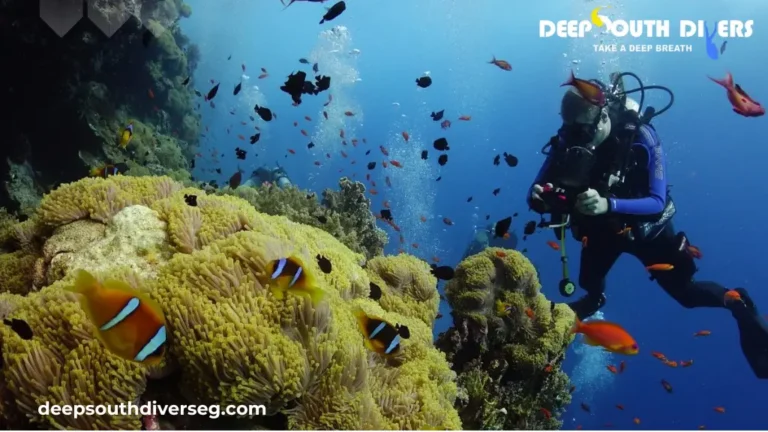
Located just off the coast of Marsa Alam, Dolphin House (Shaab Samadai) is one of Egypt’s most iconic and enchanting dive sites. This natural horseshoe-shaped reef is a protected marine area, famous for offering divers and snorkelers the unique opportunity to encounter spinner dolphins in their natural habitat.
Whether you’re a seasoned diver or a beginner seeking a once-in-a-lifetime experience, diving at Dolphin House promises a memorable journey beneath the Red Sea’s surface with Deep South Divers, your local experts in responsible marine exploration.
Features & Topography of Shaab Samadai Reef
Shaab Samadai is a crescent-shaped coral reef, forming a natural lagoon that shelters marine life and creates calm waters ideal for diving and snorkeling. The topography includes:
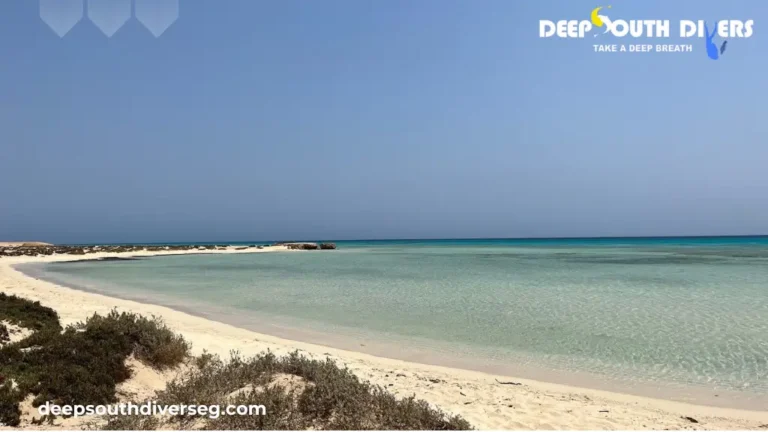
Lagoon zone with shallow sandy areas perfect for dolphin watching and snorkelers
Outer reef walls plunging to depths of 30+ meters, ideal for certified divers
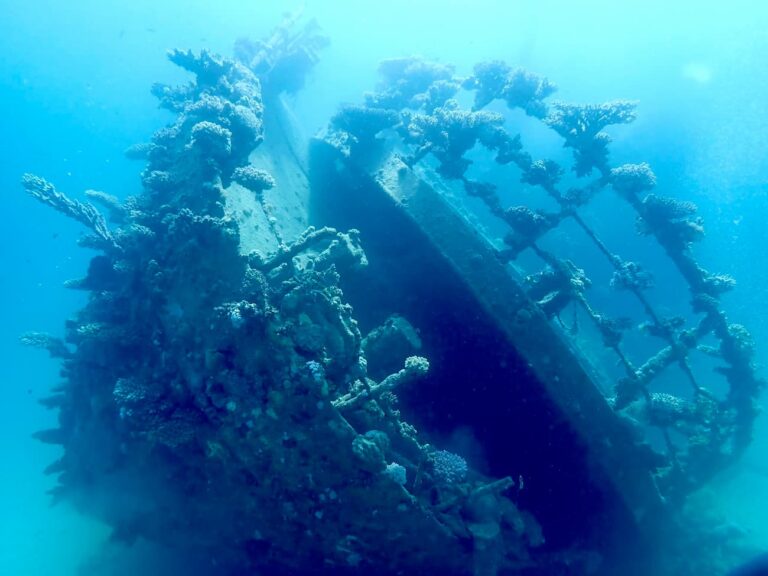
Caves, swim-throughs, and coral pinnacles that create dramatic underwater landscapes
Separate diving and snorkeling zones to protect wildlife and ensure safety
Its unique structure allows both thrilling wall dives and relaxed exploration of the inner reef.
Marine Life at Dolphin House – What You Can Expect to See
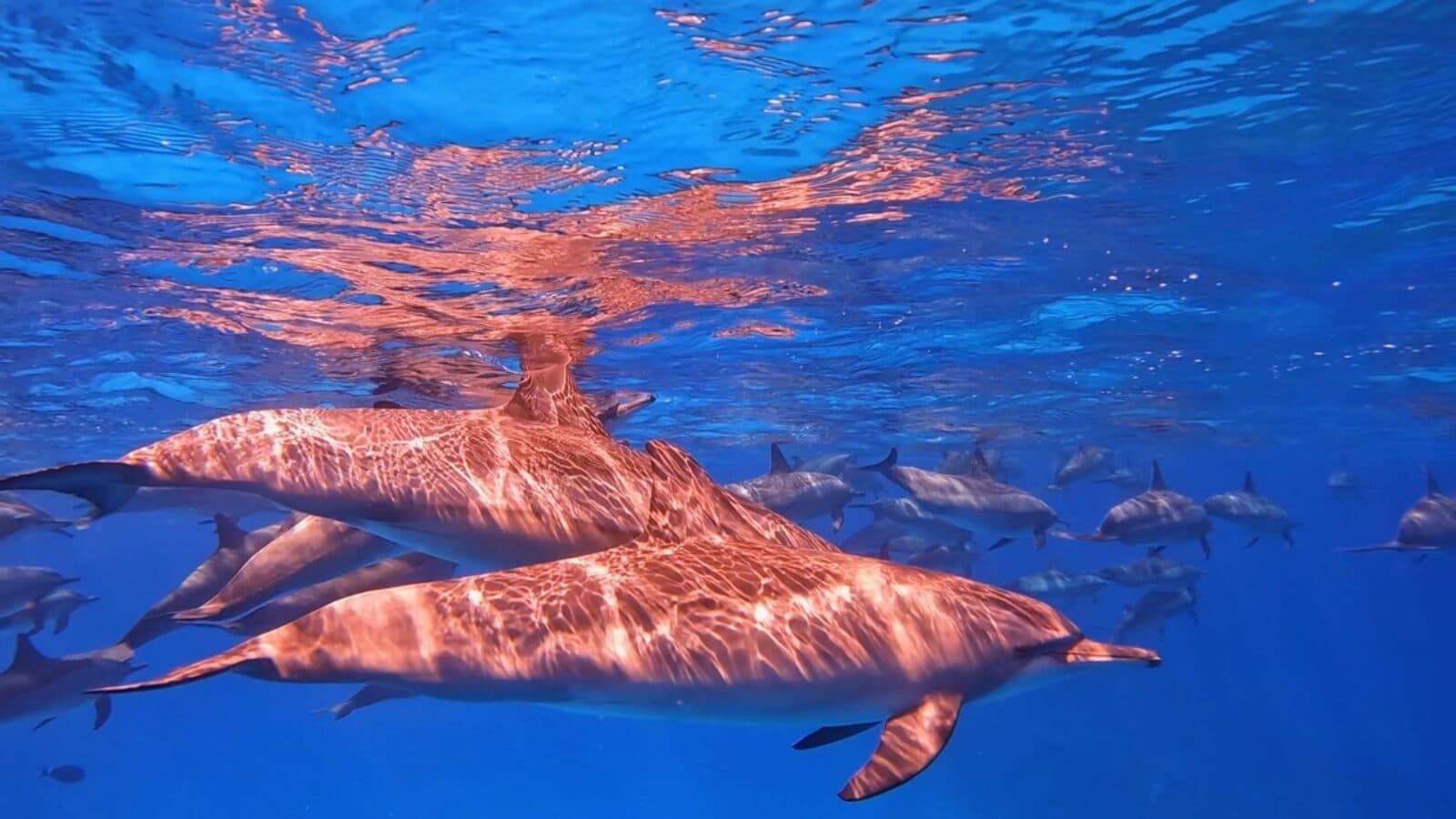
Dolphin House (Shaab Samadai) is most famous for its resident pods of spinner dolphins, which frequently rest and socialize in the protected lagoon. Beyond dolphins, the area is rich in diverse marine life:
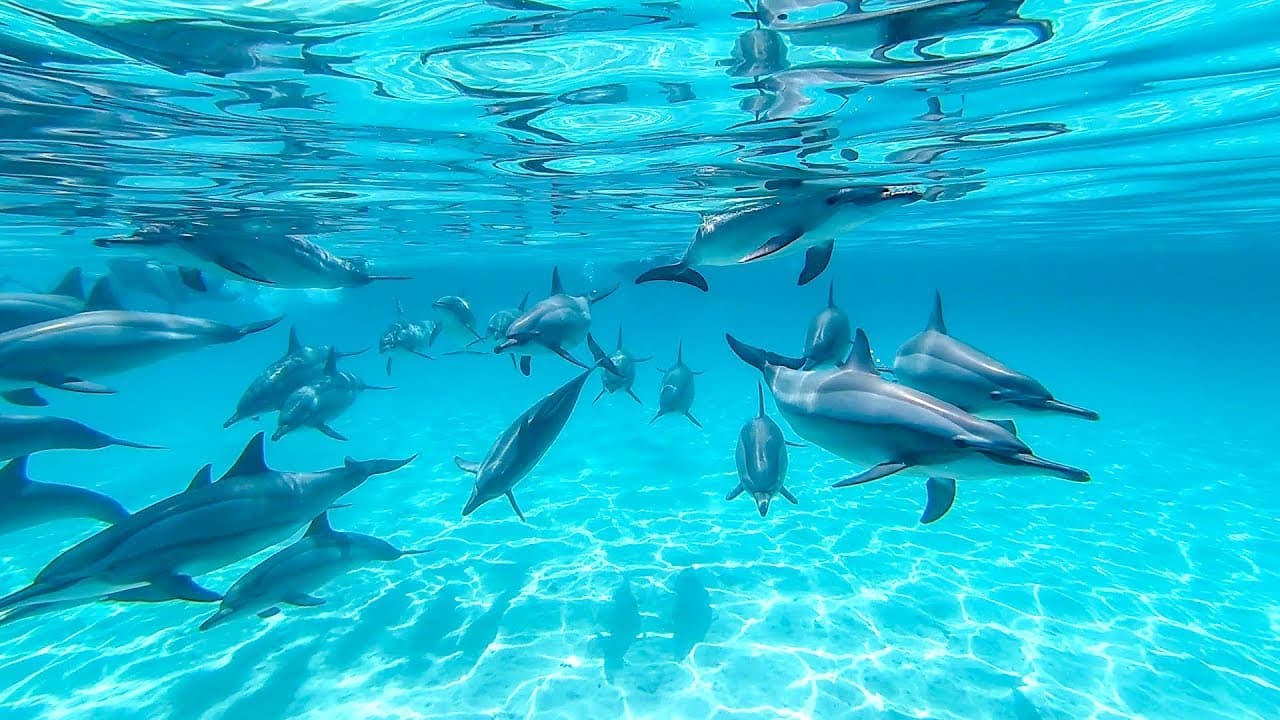
Spinner dolphins (Stenella longirostris) – often seen in groups near the surface
Green and hawksbill turtles grazing around the reef
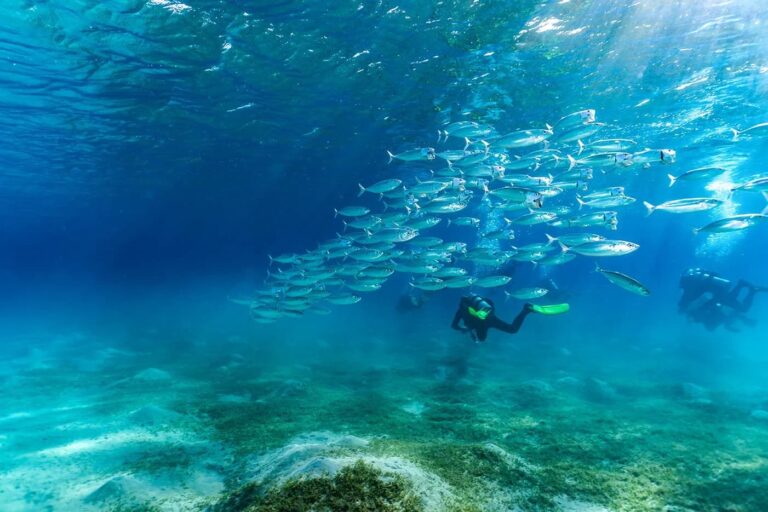
Parrotfish, butterflyfish, wrasse, and blue-spotted stingrays
Moray eels, lionfish, octopuses, and groupers
Healthy soft and hard coral formations supporting small reef critters
For underwater photographers and nature lovers, Shaab Samadai is a dream destination.
Diving Conditions & Best Practices at Shaab Samadai
Water Temperature: Between 22°C in winter to 30°C in summer
Visibility: Ranges from 20 to 30 meters, excellent year-round
Depth: From 5 meters in the lagoon to over 30 meters on the outer reef
Access: Only reachable by daily dive boats from Marsa Alam
Best Practices for Responsible Diving at Dolphin House
As a protected marine park, Dolphin House has strict regulations to ensure marine life protection:
No touching or chasing dolphins – observe from a respectful distance
Use reef-safe sunscreen and avoid standing on corals
Dive with certified guides familiar with the site’s protected zones
Adhere to time limits in the dolphin area to minimize stress on the animals
Carry a surface marker buoy (SMB) and always dive with a buddy
By following these guidelines, we help preserve this magical site for future generations.
🤿 Why Choose Deep South Divers for Your Dolphin House Dive Trip?
At Deep South Divers, we specialize in creating eco-conscious, personalized dive experiences in Marsa Alam and beyond. When you dive Dolphin House with us, you benefit from:
✔️ Certified local dive guides trained in marine conservation
✔️ High-quality dive equipment and comfortable boats
✔️ Small group sizes for a safer and more immersive dive
✔️ In-depth briefings about dolphin behavior and marine ecology
✔️ Combo trips including other top dive sites or snorkeling options
We are committed to delivering safe, sustainable, and unforgettable diving adventures across Egypt’s southern Red Sea.
📅 Book Your Dolphin House Dive with Deep South Divers Today
Experience the wonder of diving with dolphins and exploring untouched reefs at Shaab Samadai. Whether you’re seeking a close encounter with spinner dolphins or a day filled with coral and marine life, Deep South Divers is your trusted partner for responsible and exciting Red Sea diving.
👉 Contact us today to reserve your Dolphin House trip – limited spots available due to environmental protection quotas.
Dolphin House Marsa Alam: Samadai Reef vs. Sataya Reef — Which Should You Choose?
Dolphin House Marsa Alam is actually a name that refers to two distinct reef systems, each offering a different kind of dolphin encounter. Understanding the difference helps you choose the right trip for your group.
Shaab Samadai (Dolphin House) sits approximately 11 km southeast of Marsa Alam marina, making it the more accessible of the two. The boat journey takes around 60–80 minutes. The reef’s famous horseshoe shape creates a sheltered inner lagoon where a resident pod of roughly 60–80 spinner dolphins rest and nurse their young during daylight hours. The site is carefully regulated with designated zones, making it ideal for first-time visitors, families, and snorkelers of all abilities. Visitor access for snorkelers runs from 10:00 AM to 2:00 PM, and for divers from 9:00 AM to 3:00 PM.
Sataya Reef, located roughly 45 km south near Hamata, requires a longer boat journey of around 2–2.5 hours but rewards the effort with a larger, less crowded encounter. Sataya tends to host bigger pods — often 80 to 100+ dolphins — and because fewer boats make the journey, the experience feels wilder and more intimate. The reef itself has a more open C-shaped structure with multiple entry points. Sataya is the better choice for experienced snorkelers and divers seeking a more adventurous, off-the-beaten-track experience.
If your time in Marsa Alam allows for only one trip, Samadai is the natural first choice. If you want to go deeper into the “Deep South” and experience the reef the way most tourists never do, Sataya is exceptional.
The Three Zones of Dolphin House Marsa Alam
When you arrive at Shaab Samadai, the reef is divided into three clearly marked zones, each serving a distinct purpose in protecting the dolphins while allowing visitors to have a meaningful experience.
Zone A — Dolphins Only. The inner section of the lagoon is reserved exclusively for the dolphins. No swimmers or divers are permitted here. This is where the pod rests during the day, and buoys clearly mark the boundary. This zone exists because spinner dolphins are nocturnal hunters who need undisturbed sleep during daylight hours to maintain their health and natural behaviour.
Zone B — Snorkelers. Adjacent to the dolphins-only zone, this area allows snorkelers wearing life jackets to enter the water. The life jackets serve a dual purpose: safety in the open water, and preventing overzealous swimmers from diving under the surface to chase dolphins. Dolphins that are active will sometimes cross into Zone B voluntarily — this is the magic moment visitors hope for.
Zone C — Divers. The outer reef area is where scuba divers explore the reef walls, coral pinnacles, and the famous underwater canyon on the western edge of the lagoon. This five-to-ten-minute swim-through canyon is one of Samadai’s most memorable dive highlights, even on days when dolphins stay in Zone A.
At Deep South Divers, our guides brief every guest on zone boundaries before entering the water, ensuring both your safety and the wellbeing of the resident dolphin pod.
Why Are the Dolphins Called “Spinner” Dolphins?
The spinner dolphin (Stenella longirostris) gets its name from one of the most spectacular behaviours in the animal kingdom. When leaping from the water, spinners rotate their bodies along their longitudinal axis — completing as many as seven full rotations in a single jump before landing on their side with a splash. Marine biologists are still debating the exact purpose of this behaviour: it may serve as a form of communication, parasite removal, or simply play. Whatever the reason, watching a pod spin at Dolphin House Marsa Alam is one of those sights that stays with you long after you’ve returned home.
Spinner dolphins are also deeply social animals, living in tight-knit pods with complex communication. They hunt cooperatively at night in the open sea, using echolocation to locate fish, squid, and lanternfish in the dark water column. During the day, they return to the sheltered lagoon at Samadai to rest — which is why the reef earned its “Dolphin House” nickname in the first place.
It’s worth knowing that dolphins do not sleep in the same way humans do. They practice what marine biologists call unihemispheric sleep — resting one half of the brain at a time while the other remains alert, allowing them to continue swimming and surfacing to breathe. When you see dolphins moving slowly near the surface in the morning, they are quite literally half-asleep.
The Best Time of Day and Best Season to Visit Dolphin House Marsa Alam
Time of Day: Many visitors assume that the early morning — right after the boat arrives — is when dolphin encounters are most likely. In reality, research has shown that spinner dolphins become more active in the afternoon, and are more likely to move out of the dolphins-only zone into snorkeler areas as the day progresses. So if the lagoon seems quiet when you first arrive, don’t be discouraged. Dolphin activity typically increases between noon and 2:00 PM, which is also when snorkeler access ends — so use every minute of your water time in the afternoon.
Season: Dolphin populations at Samadai fluctuate throughout the year. Studies have found that numbers are at their lowest between February and April, and reach their seasonal peak between May and July — sometimes six to eight times greater than the winter minimum. This also corresponds to calving season, so visitors in June may spot mothers with calves. Summer months generally offer the warmest water (up to 30°C), crystal-clear visibility, and the highest dolphin activity. Autumn (September–November) is also excellent, with calm seas and fewer boats. Winter visits are entirely possible — the dolphins are present year-round — but sea conditions can be choppier and pod sizes smaller.
Water Temperature and Visibility: Water at Dolphin House Marsa Alam ranges from around 23°C in January to 29°C in August. Visibility is consistently excellent, often reaching 25–30 metres, making it outstanding for both photography and diving.
Conservation History: How Dolphin House Became a Protected Marine Area
The story of how Dolphin House Marsa Alam came to be so carefully managed is a cautionary tale with a positive ending.
In the early 2000s, Marsa Alam transformed rapidly from a quiet fishing village into one of the Red Sea’s fastest-growing dive destinations. Tourist numbers skyrocketed from around 6,000 in 2000 to over 225,000 by 2002. Samadai Reef, with its resident dolphins, became an unregulated attraction drawing up to 30 boats per day. Inexperienced snorkelers chased the resting dolphins, anchors damaged the coral, and the resident pod began to decline.
In 2004, Egyptian authorities introduced a formal zoning plan along with strict daily limits on boat numbers and visitor counts. HEPCA — the Hurghada Environmental Protection and Conservation Association — took over management of the site in 2013, tightening enforcement and ensuring the rules were consistently applied. Currently, a maximum of ten boats per day may enter the reef area, carrying no more than 175 snorkelers and 100 divers. A HEPCA representative is on site every day to monitor compliance and check entry tickets.
The results have been measurable. Shortly after the regulations were introduced, marine biologists observed a near-immediate increase in the resident dolphin population. Today, Dolphin House Marsa Alam is considered a model for sustainable dolphin tourism in the Red Sea — proof that protecting marine ecosystems and welcoming responsible visitors are not mutually exclusive goals.
When you book a trip with Deep South Divers, your entry ticket contributes directly to this ongoing conservation effort: 30% goes to HEPCA’s mooring and monitoring programme, 30% to Egypt’s National Parks conservation fund, and 40% to the local Marsa Alam municipality.
The Reef Beyond the Dolphins: Marine Life at Dolphin House Marsa Alam
Even on the rare days when the dolphin pod keeps to Zone A, Shaab Samadai is far from a disappointment. The reef supports an exceptionally diverse range of marine life that rewards both snorkelers and scuba divers.
In the shallower lagoon areas, look for vivid anemone gardens — home to clownfish that would make any Finding Nemo fan smile — alongside schools of butterflyfish, parrotfish, and blue-spotted stingrays gliding over the sandy bottom. Green sea turtles and hawksbill turtles are regularly seen grazing near the reef edge.
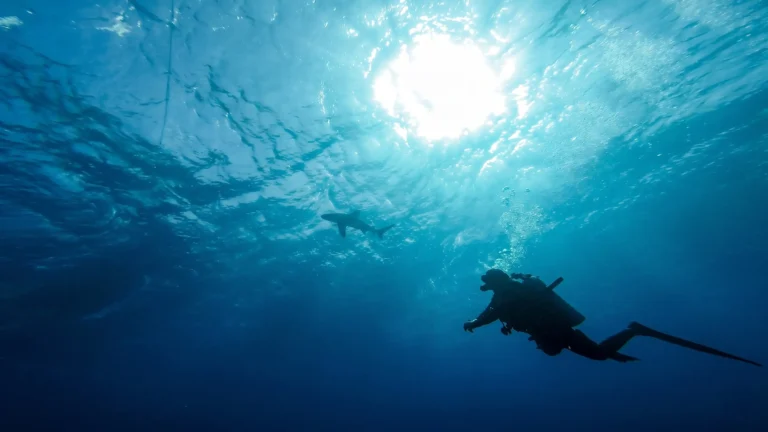
In deeper waters along the outer reef slope, the terrain changes dramatically. Hard and soft corals — including brain coral, table coral, and gorgonian sea fans — create a dense underwater landscape. Barracuda patrol the mid-water column, while eagle rays and occasional reef sharks are spotted in the deeper sections beyond the reef wall, which drops to 200 metres on the western side and 600 metres on the eastern side.
For certified divers, the highlight beyond the dolphins is the underwater canyon on Samadai’s western edge — a cave-like swim-through that takes roughly five to ten minutes to navigate and is among the most memorable dives in southern Egypt.
Practical Tips for Visiting Dolphin House Marsa Alam
What to bring: Swimwear, a towel, and either your passport or a photocopy (Egyptian marine police may check it upon return to Marsa Alam marina). Apply reef-safe, biodegradable sunscreen rather than standard products, which can damage coral. A wide-brim hat, sunglasses, and a dry change of clothes for the return journey are all useful. An underwater camera or GoPro will let you capture encounters that a phone simply can’t.
Photography tips: Morning light gives the clearest surface conditions, but afternoon offers better dolphin activity in the water. A wide-angle lens is ideal for capturing the reef and any close dolphin encounters. In deeper water, a red filter helps restore natural colours lost at depth.
Seasickness: The open sea passage to Samadai can be choppy, particularly in winter. If you are prone to motion sickness, take appropriate medication at least 30–60 minutes before departure. On the boat, position yourself mid-ship and keep your gaze on the horizon during transit.
Booking: Because daily entry to the reef is capped at strict limits, we strongly recommend booking your Dolphin House Marsa Alam trip at least 48 hours in advance to secure your permit. During peak months (June–August), booking 3–5 days ahead is advisable.
Respectful behaviour in the water: Never touch, feed, or chase the dolphins. Maintain a calm, passive presence — let them decide whether to approach. Avoid loud splashing or noise near the dolphin zone. Never separate a calf from its mother. These rules exist not only for the dolphins’ protection, but also for yours: spinner dolphins are large, powerful animals that can inadvertently injure a swimmer.