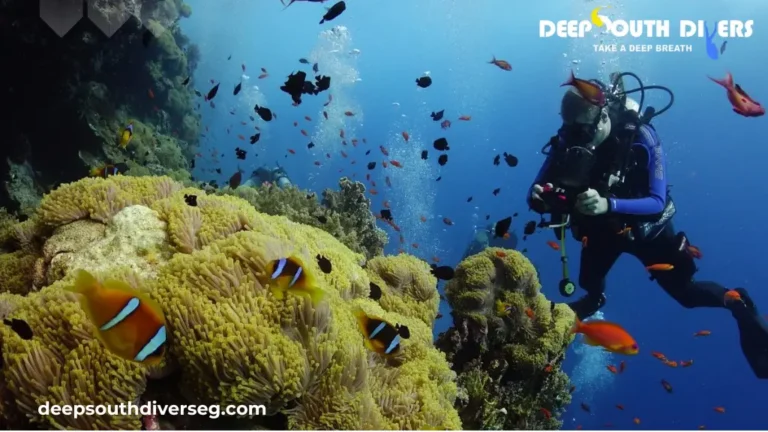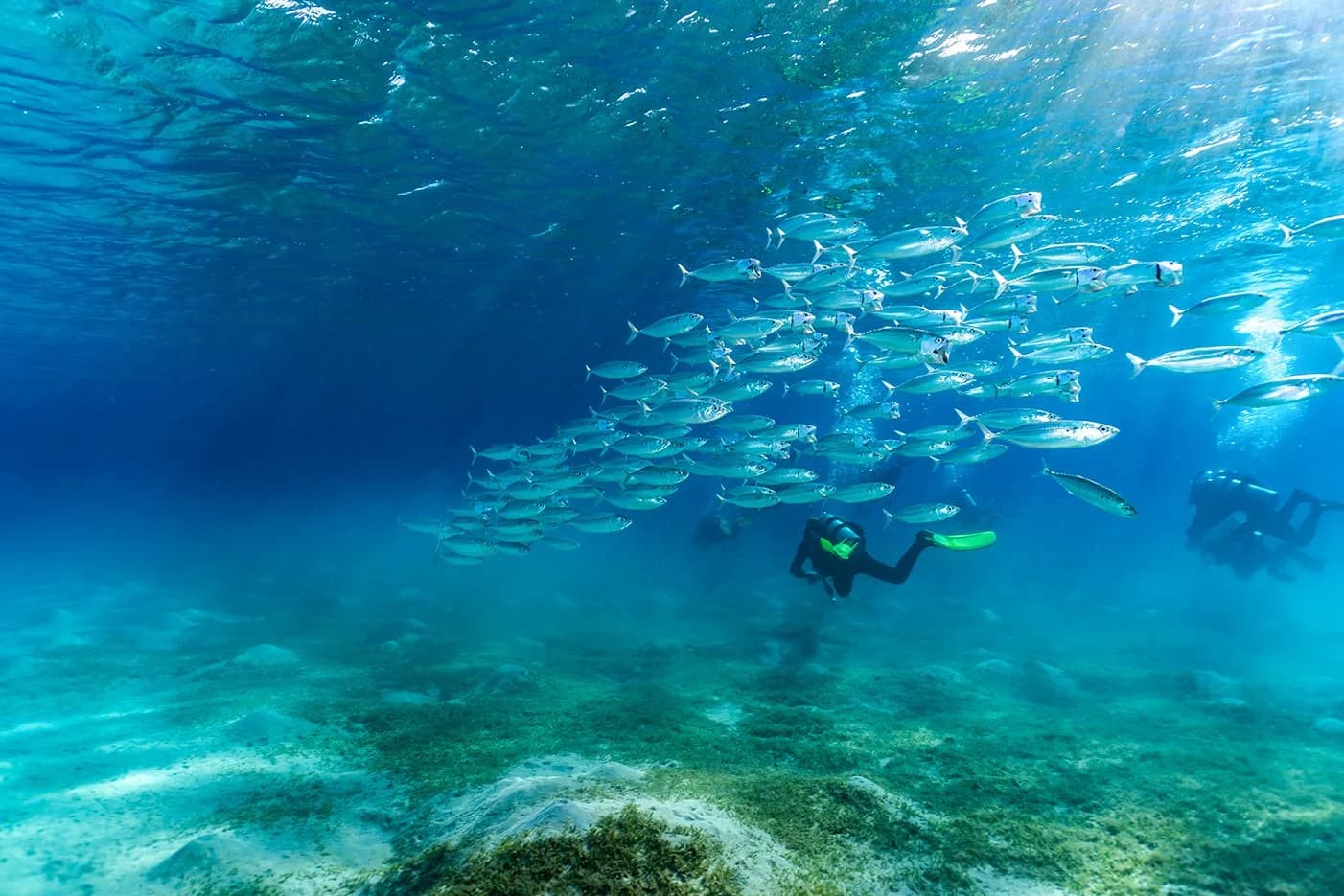
Marsa Assalaya, also known as Sharm Assalaya, is a shallow, protected bay located just south of Marsa Alam city. It’s one of the best shore diving and training sites in the area, perfect for beginner divers, snorkelers, and underwater photographers seeking calm waters and rich marine biodiversity.
| Feature | Details |
|---|---|
| 📍 Location | 11 km north of Marsa Alam |
| 🤿 Access Type | Shore entry |
| 🌊 Depth Range | 2 to 18 meters |
| 🐢 Famous For | Turtles, seagrass meadows, reef walls |
| 🪸 Coral Type | Hard corals, patches of soft corals |
| 🧭 Dive Level | Beginner to Intermediate |
| 📸 Ideal For | Training, snorkeling, macro photography |
| 🕒 Best Time to Dive | Year-round |
Features & Topography of Marsa Assalaya
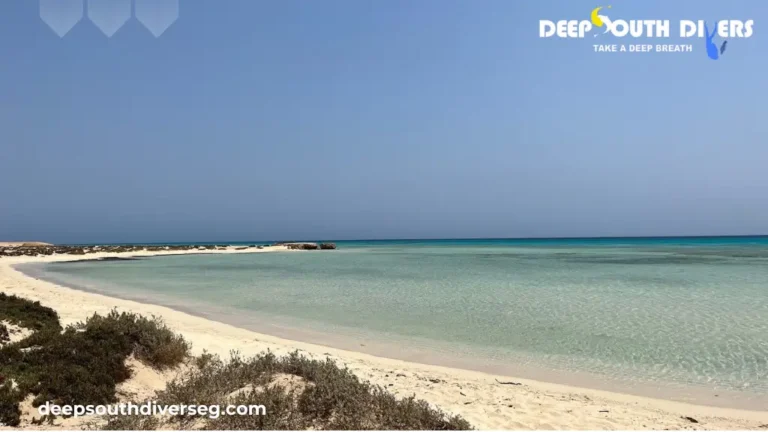
Marsa Assalaya is a crescent-shaped bay with gentle sandy slopes and seagrass beds in the central lagoon. On either side of the bay, fringing reefs offer vibrant coral gardens and small caverns for exploration.
The eastern reef is ideal for spotting turtles and small rays
The western reef features pinnacles, coral bommies, and macro life
Easy shore entry and calm conditions make it a top pick for night dives and PADI courses
Its protected structure makes it a safe and relaxed dive, even when wind or waves affect offshore sites.
Marine Life at Marsa Assalaya
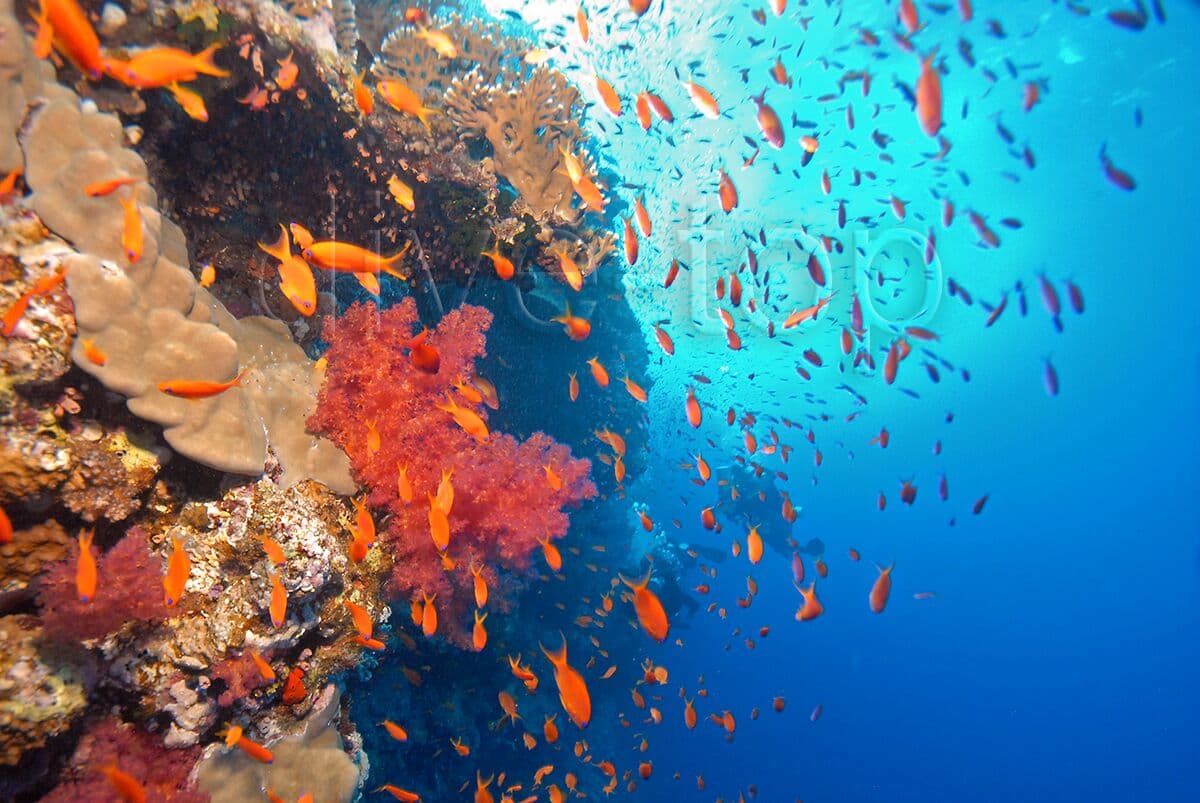
Marsa Assalaya is famous for its gentle, close-up marine encounters. Expect to find:
🐢 Green turtles grazing in the seagrass
🦀 Ghost pipefish, seahorses, and nudibranchs
🐟 Goatfish, lionfish, clownfish, and parrotfish
🐙 Octopus, cuttlefish, and moray eels hiding in reef crevices
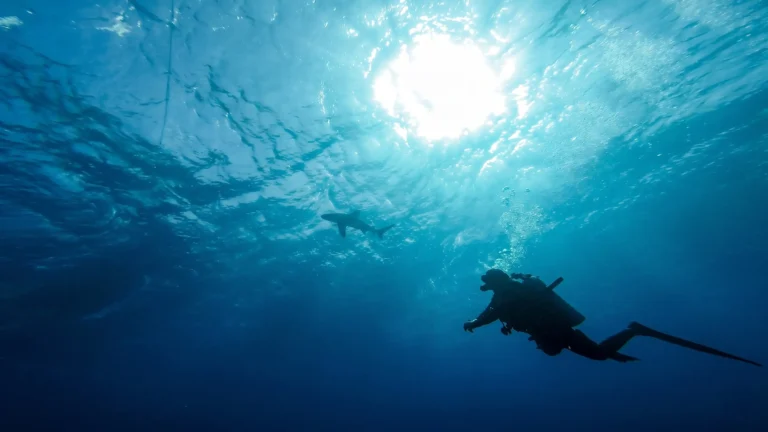
Occasionally, eagle rays and blacktip reef sharks pass by
It’s a paradise for macro enthusiasts and those who enjoy slow-paced, observational diving.
Diving Conditions & Best Practices
📅 Best Time to Dive
Marsa Assalaya is a year-round site, with excellent conditions in spring and autumn.
🌊 Water Conditions
Temperature: 22°C (Jan) to 30°C (Aug)
Visibility: 10 to 20 meters
Currents: Mild to none – very safe for beginners
✅ Best Practices
Ideal for try dives, refresher courses, and night dives
Use neutral buoyancy to protect seagrass beds and coral patches
Bring a macro lens for photography – the critter life is incredible
Great for combining snorkeling and scuba in one trip
Why Dive Marsa Assalaya with Deep South Divers?
At Deep South Divers, we specialize in providing comfortable and personalized dive experiences for every skill level. Here’s why divers love exploring Marsa Assalaya with us:
🧑🏫 Professional instructors for beginner courses and try dives
🐢 Local knowledge of the best spots to find turtles and macro life
🌙 Night dive packages available
🚐 Easy transport to site from Marsa Alam center
📷 Photography-friendly dive plans
Whether you’re taking your first breaths underwater, looking for hidden critters, or just want a relaxing reef experience, Marsa Assalaya is an ideal dive—and Deep South Divers is your expert guide.
How to Get to Marsa Assalaya: Location, Coordinates & Beach Access
One of the quiet advantages of Marsa Assalaya is how little effort it takes to reach. The bay sits roughly 7 kilometres north of Marsa Alam town along the main coastal highway, which is exactly why locals still call it Kilo Saba’a — Arabic for “kilometre seven.” That single nickname tells you almost everything about the logistics: it is close enough to be a relaxed morning or half-day plan, yet far enough from the marina to feel like a genuine stretch of open Red Sea coastline rather than a town beach.
From the centre of Marsa Alam the drive is usually only ten to fifteen minutes, and from the Port Ghalib resort strip it is a comfortable twenty-minute transfer. Divers staying further north around El Quseir can still reach the site inside a normal day-trip window. Because the entry is from shore, there is no boat schedule to chase and no rolling departure time to miss — your guide simply plans the tide and the light, loads the tanks, and drives you to the beach. This is part of what makes Marsa Assalaya such a forgiving choice for the first day of a trip, when jet lag and a long flight have left you wanting an easy reintroduction to the water.
Entry itself is a straightforward walk-in from a wide, gently shelving sandy beach. There is no jetty, no long surface swim and no current to fight on the way out, so you can kit up calmly on the sand, run your buddy checks, and wade in at your own pace. For nervous divers, returning divers and anyone shaking off a long break, that unhurried shore entry removes most of the stress that boat sites can introduce.
GPS Coordinates & Landmarks
Marsa Assalaya lies at approximately 25.14–25.16°N, 34.86–34.88°E, on the seaward side of the coastal road. If you are self-navigating, drop a pin near the “kilometre seven” marker north of town and look for the obvious crescent-shaped bay; the dive itself uses the sandy centre of the bay for entry, with the reef arms framing it on either side. Because public coordinates from different sources vary by a few hundred metres, it is always worth confirming the exact entry point with your dive centre before setting off — the team will know precisely where the easiest shore access and the best reef routes are on the day.
On-Site Facilities & Accessibility
It is important to set expectations: Marsa Assalaya is a natural bay, not a developed resort beach. Shade is limited, and there are no permanent showers, lockers or towel services on site, so bring sun protection, water and anything you need for the surface interval. Many divers actually prefer this — the lack of infrastructure is exactly why the bay stays clean, calm and uncrowded, especially first thing in the morning. When you dive the site as a guided trip, your centre handles transport, tanks and logistics, so the only thing you need to carry is your personal kit and a sense of how relaxed a Red Sea shore dive can be. If you are still building confidence in the water, this combination of easy access and a forgiving sandy bottom makes the bay an ideal place to log your first open-water dives after a course such as the
Open Water Diver course in Marsa Alam
Dugongs, Turtles & the Seagrass Meadows of Marsa Assalaya
The single biggest reason experienced divers keep returning to Marsa Assalaya is not the coral — it is the seagrass. The broad meadow that carpets the centre of the bay is a living larder, and in the Red Sea, seagrass meadows are the natural feeding grounds of two of the region’s most sought-after animals: green turtles and the elusive dugong. Where the article above mentions turtles, this section goes deeper into the seagrass ecosystem that makes Marsa Assalaya genuinely special among Marsa Alam’s shore sites.
Meeting the Red Sea’s Sea Cow
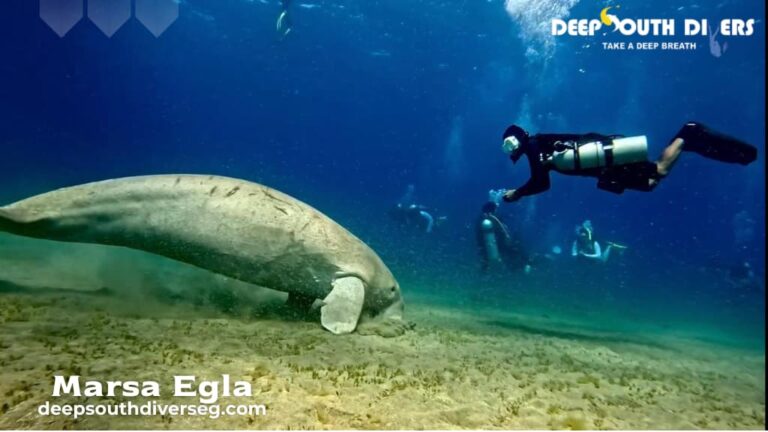
The dugong — affectionately known as the “sea cow” — is one of the rarest and most charismatic encounters in Egyptian waters, and the seagrass beds at Marsa Assalaya are precisely the kind of habitat it favours. Dugongs graze slowly across the meadow, often trailing clouds of disturbed sediment and accompanied by remora and juvenile fish. Sightings are never guaranteed; these are wild, wide-ranging animals and a respectful diver treats any encounter as a privilege rather than an expectation. If you do meet one, the rule is simple: hang back, stay still, keep low and never block its path to the surface, because dugongs are air-breathing mammals that must rise to breathe. Crowding or chasing a feeding dugong will only drive it out of the bay for everyone. For the full story of these animals and the best way to behave around them, see our guide to
Green & Hawksbill Turtles
Turtles are a far more reliable highlight. Green turtles are the headline species here, drawn by the same seagrass that attracts the dugongs, and you will often find them grazing head-down with cleaner fish in attendance. Hawksbill turtles also pass along the reef edges, distinguishable by their narrower, pointed beak and overlapping shell scutes; they tend to forage on the coral rather than the grass. Both species are easygoing if approached calmly from the side and below, giving photographers superb opportunities for natural behaviour shots without harassment. Resist the urge to touch, ride or feed any turtle — beyond being illegal and harmful, it changes their behaviour and ruins the encounter for the next group.
Rarer Encounters Beyond the Usual Reef Fish
Slow, observant divers at Marsa Assalaya are regularly rewarded with species that casual visitors miss entirely. Along the reef arms and over the sand, keep an eye out for the curious Napoleon wrasse cruising the drop-offs, well-camouflaged crocodilefish lying motionless on the sand, scorpionfish wedged into coral crevices, and slow-moving porcupinefish hovering in the shallows. Schools of batfish, sweetlips and snapper often drift along the deeper edges, while barracuda occasionally patrol the blue beyond the reef. This is exactly why a macro lens and a patient, low-impact diving style pay off here far more than fast, ground-covering dives. The bay rewards stillness — the longer you look, the more it shows you.
Taken together, the seagrass meadow, the resident turtles, the dugong potential and the rich macro life make Marsa Assalaya a site that suits naturalists, underwater photographers and anyone who would rather spend sixty minutes observing one octopus than racing past a hundred fish. It is a textbook example of why “easy” and “boring” are not the same thing underwater.
A Typical Day Diving Marsa Assalaya: Dive Plan & Underwater Routes
Understanding how a day at Marsa Assalaya actually unfolds helps you get the most from it. Because this is a shore-based, two-dive site with two distinct reef arms, the structure is flexible, relaxed and easy to adapt to the group’s experience level and the visibility on the day.
The North & South Reef Routes
The bay is framed by two reef arms — referred to locally as the north and south reefs — that run out from the sandy centre. A typical guided day uses one arm for each dive, giving you two genuinely different profiles from the same beach. One side tends to stay shallower and gentler, ideal for skill practice, refreshers and the early part of a trip; the other offers slightly richer coral gardens and small bommies that hold the site’s macro life and reef fish. Your guide will choose the order based on the light, the conditions and what the group most wants to see.
A standard plan looks like this:
- Dive 1 usually begins with a slow descent over the sandy bay to settle buoyancy and weighting, then follows one reef arm out along the hard-coral edge and back, keeping plenty in reserve for a relaxed safety stop.
- Surface interval is spent on the beach with water and a snack — a genuine advantage of a shore site, since you are never confined to a rolling boat.
- Dive 2 explores the opposite reef arm, or repeats the stronger side if visibility favours it, often at a slightly slower pace now that everyone is settled and warm.
Depth Profile, Bottom Times & Buoyancy
Marsa Assalaya is shallow and forgiving by design. The seagrass centre and inner reef sit in just a few metres of water, while the outer edges of the reef arms slope down into the high-teens and low-twenties of metres — comfortably within recreational limits and shallow enough for long, gas-friendly bottom times. That shallow profile is a gift for new divers and photographers alike: it means extended dives, easy safety stops and forgiving no-decompression margins.
The one skill that matters most here is buoyancy. The seagrass meadow and the sandy bottom are easily damaged by fins and trailing gauges, and a careless diver can flatten in seconds what took years to grow. Stay neutral, keep your fins up and away from the grass, secure your octopus and console, and you will protect both the habitat and your own visibility. Good buoyancy is also what unlocks the macro life — you simply cannot hover patiently over a ghost pipefish if you are bouncing off the bottom. If you want to sharpen this before your trip, the buoyancy work in an Advanced Open Water course turns a site like this from “nice” into “unforgettable.”
Snorkeling & Freediving at Marsa Assalaya
You do not need a scuba tank to enjoy Marsa Assalaya. The same features that make it a great training dive — a shallow, sheltered lagoon, easy beach entry and reef on both sides — also make it one of the more rewarding snorkeling and freediving bays north of Marsa Alam.
Snorkeling the Lagoon & Reef Edges
For snorkelers, the appeal is immediate and low-commitment. You can wade in from the sand, float over the seagrass and watch for turtles grazing just a couple of metres below, then follow the reef edges where the colour and fish life concentrate. Because the water is calm and the bay is protected, it is a genuinely family-friendly option — comfortable for cautious swimmers and children with appropriate supervision, and a lovely way for non-diving partners to share the day while the divers are below. Mornings are best: the light is soft, the water is glassy and the bay is at its quietest. Bring your own mask and fins if you can, and reef-safe sun protection for the time you spend face-down at the surface. If you would like to plan a dedicated half-day, see our overview of snorkeling in Marsa Alam
Freediving the Bay
Marsa Assalaya is also well suited to relaxed freediving in calm conditions. The shallow, current-free bay and forgiving sandy bottom make it a comfortable place to work on equalisation, relaxation and easy reef dives, and the seagrass meadow gives freedivers the same turtle-and-dugong potential the scuba divers enjoy, often with less noise and bubbles to spook the wildlife. The golden rules still apply: never freedive alone, always use a trained buddy with proper one-up-one-down supervision, and give the seagrass and any marine life the same wide, respectful berth you would on scuba. Treated with care, the bay offers freedivers a peaceful, intimate way to experience the Red Sea on a single breath.
Marsa Assalaya Diving Prices & Packages
Because Marsa Assalaya is a shore site close to town, it is also one of the more affordable ways to get two quality Red Sea dives into your day. Pricing is typically built around a guided two-dive shore package, with a separate, lower rate for snorkelers who want to join the same trip.
| Experience | Typical Price (per person) | What It Covers |
|---|---|---|
| 2-dive guided shore day | from €70 | Two guided shore dives, tanks, weights, dive guide, hotel transfer & bottled water |
| Snorkeling trip | from €25 | Guided snorkeling in the bay, transfer & water (mask/fins often rentable) |
| Try-dive / first-timer | On request | Intro dive with an instructor — ideal as a Try Scuba experience |
Prices vary a little with season, group size and exactly which extras you choose, so the figures above are a planning guide rather than a fixed quote. Multi-day divers and those combining Marsa Assalaya with boat sites usually get better value through a Marsa Alam dive package than booking single days.
What’s Included in a Marsa Assalaya Dive Trip
A standard guided two-dive package at Marsa Assalaya generally includes return hotel transfer from Marsa Alam or Port Ghalib, two guided shore dives, tanks, weights, an experienced dive guide and bottled water through the day. Many centres also include trip photos and videos so you leave with a record of your dives. The main item that is usually not bundled into the headline price is full rental equipment (BCD, regulator, wetsuit, computer), which is offered as a clearly priced add-on — so a certified diver bringing their own kit pays less than one renting a complete set.
Equipment Rental & What to Bring
If you are travelling light, full rental gear is available and well worth confirming in advance so the right sizes are ready on the day. As a baseline, bring your own mask and a 3 mm wetsuit if you have them, plus reef-safe sunscreen, a hat, drinking water and a dry layer for the surface interval, since on-site shade and facilities are limited. Certified divers should carry their certification card and logbook; if it has been more than six to twelve months since your last dive, plan for a short refresher on the sandy bottom before the main dive — Marsa Assalaya is the perfect place for it. To lock in availability, dates and the best package for your group, contact our Marsa Alam dive center before you arrive.
Responsible Diving & Conservation at Marsa Assalaya
Marsa Assalaya’s greatest assets — the seagrass meadow, the grazing turtles and the chance of a dugong — are also its most fragile. The bay functions as a protected local day site, and the diving community’s long-term access to it depends entirely on how lightly each visitor treads. Diving here responsibly is not an optional extra; it is the reason the site is still worth visiting.
Follow this simple code of conduct every time you enter the water at Marsa Assalaya:
- Master your buoyancy before you reach the grass. Settle weighting over open sand, then keep fins, gauges and your body well clear of the seagrass and coral.
- Keep your distance from dugongs and turtles. Observe from the side and below, never block their route to the surface, and never chase, corner or crowd a feeding animal.
- Touch nothing and take nothing. No handling marine life, no collecting shells or coral, and no resting hands or knees on the reef.
- Use reef-safe sunscreen and avoid heavy lotions that wash off into a shallow, enclosed bay.
- Leave the bay cleaner than you found it. Carry out your own rubbish and pick up any stray debris you can safely retrieve.
- Respect entry points and any local restrictions, keeping boat traffic to the outer approaches and the inner bay calm for snorkelers and wildlife.
These habits cost nothing and protect everything. A bay full of healthy seagrass keeps drawing turtles and dugongs; a damaged one quietly empties out. Diving with a centre that briefs and enforces this etiquette is the surest way to keep Marsa Assalaya thriving for the divers who come after you.
Combine Your Trip: Dive Sites Near Marsa Assalaya
Because it is an easy half-day, Marsa Assalaya pairs beautifully with the wider spread of dive sites north and south of Marsa Alam. Many divers use it as a gentle first day, then build up toward the bigger boat and offshore sites as their confidence and surface intervals allow. Here are the most natural companions to a day in the bay:
| Dive Site | Access | What It Adds |
|---|---|---|
| Marsa Egla | Shore | Another protected bay nearby — more seagrass, turtles and easy diving — see Marsa Egla |
| Abu Dabbab | Shore / boat | Famous for green turtles and dugong potential on a larger seagrass bay |
| Marsa Mubarak | Shore | Mangrove-fringed bay with turtles, dugong chances and pipefish |
| Elphinstone Reef | Boat (offshore) | The region’s iconic wall and shark dive — the natural “step up” — see Elphinstone Reef |
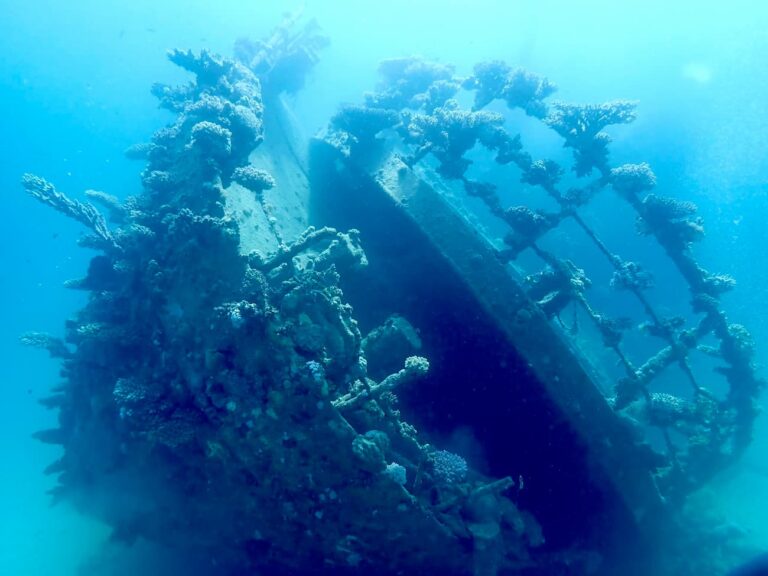
| Abu Ghusun (Hamada Wreck) | Shore | A shallow, photogenic shore wreck for an easy wreck experience — see Abu Ghusun Hamada Wreck |
Sequencing your week this way — easy seagrass bays first, offshore reefs and walls later — is exactly how experienced guides structure a Marsa Alam trip. It lets you re-acclimatise gently, dial in your buoyancy and air consumption at a forgiving site like Marsa Assalaya, and arrive at the big-ticket dives relaxed and ready. If you are not sure how to order your dives, our team is happy to map a full itinerary around your certification level and interests.