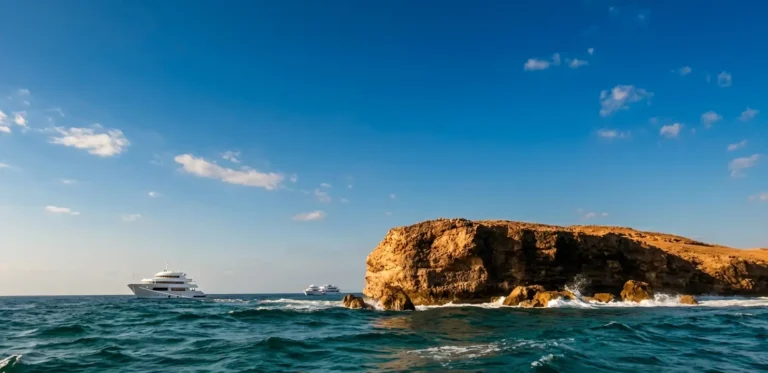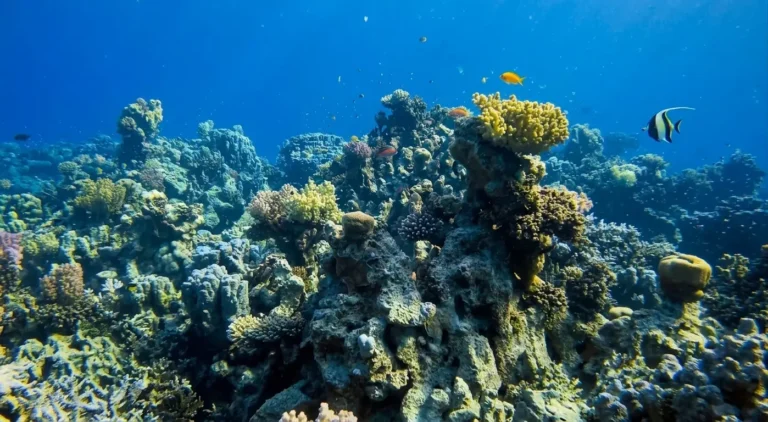
Ask any liveaboard veteran which reef in the far south of Egypt gets the adrenaline flowing, and Shaab Maksour will be near the top of the list. Standing alone on the northeastern edge of the Fury Shoal, this narrow, 1.5-kilometre finger of reef is ringed by sheer walls that plunge into the deep blue, drawing in patrolling sharks, schooling pelagics and some of the healthiest soft-coral gardens in the Red Sea. It is frequently described as the southern Red Sea’s answer to the world-famous Elphinstone — and for good reason.
Located roughly 17 kilometres offshore and only reachable by boat, Shaab Maksour (also spelled Sha’ab Maksur or Shaab Maksur) rewards divers who are comfortable in current and open water with an experience that feels genuinely wild. Twin plateaus at the reef’s north and south tips act as natural gathering points for grey reef sharks, giant trevally and tuna, while the exposed walls fall away vertically to around 100 metres, giving the site that thrilling “diving on the edge of the abyss” atmosphere.
This guide is built on first-hand knowledge of the Fury Shoal and the collective experience of the southern Red Sea’s most respected dive operators. Over the next few sections you will learn exactly where Shaab Maksour sits, how its topography works, the marine life you can realistically hope to see, the currents and conditions to plan for, the best time to visit, and how it compares to nearby reefs. By the end, you will understand precisely why this reef deserves a place on your bucket list — and how to dive it safely.
Where Is Shaab Maksour? Location and Access
Shaab Maksour lies alone on the northeastern border of the Fury Shoal reef system in Egypt’s southern Red Sea, approximately 17 kilometres off the mainland. Its GPS position is around N 24°14.3′, E 35°39.2′, placing it in remote, current-swept water far from the coast. In Arabic, shaab means “reef,” and the name is widely understood among local captains to evoke a “broken” or fractured reef — a nod to its steep, sharply defined structure.
How to Get There
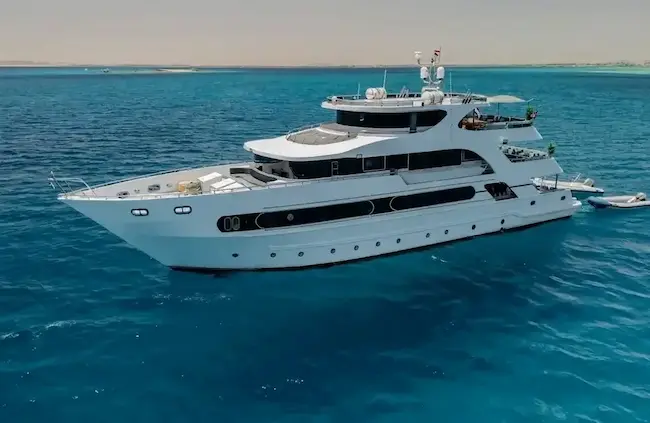
Because of its distance from shore and exposed position, Shaab Maksour is almost exclusively a liveaboard site. Boats typically depart from one of three points:
- Hamata port — the closest departure point to the Fury Shoal.
- Port Ghalib / Marsa Ghalib — a common hub for southern safaris.
- Marsa Alam — with a road transfer to the port, then a sail south.
Day boats occasionally reach the reef in ideal conditions, but the vast majority of divers experience it as part of a multi-day Fury Shoal or Deep South itinerary.
Why Only the Southern Tip Can Be Moored
One quirk of Shaab Maksour is that mooring is only possible at the sheltered southern tip, where there is space for just a handful of boats. This is worth knowing when planning: the reef is far too large to explore in a single dive, and the limited moorings mean the popular southern plateau can host several groups of divers at once. Early risers are rewarded with calmer, quieter water.
The Topography of Shaab Maksour: An Elphinstone of the South
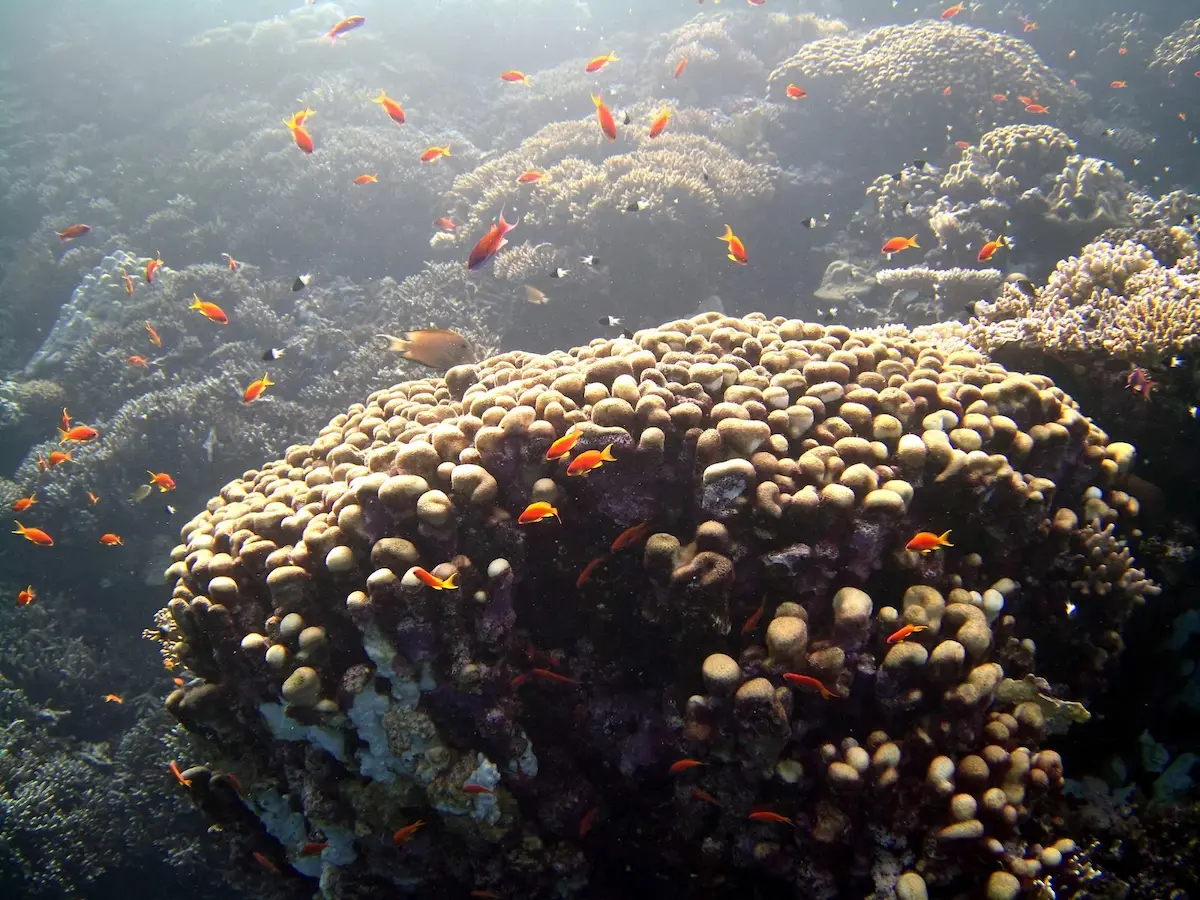
The comparison to Elphinstone is no marketing gimmick. Like its northern counterpart, Shaab Maksour is a long, narrow reef running roughly north to south, entirely surrounded by steep walls that meet the seafloor at around 100 metres. At each tip, the reef gives way to a submerged plateau, and it is these plateaus — plus the sheer walls between them — that define the diving.
The Southern Plateau
The most popular and accessible section sits directly below the moorings at the southern tip. Here the walls drop to about 18 metres before opening onto a richly overgrown plateau that stretches south at depths of up to 40 metres, before plunging almost vertically into the abyss. This is prime shark-watching territory:
- The plateau’s outer edge is a natural cruising lane for grey reef sharks.
- Schooling fish congregate over the coral, drawing in predators.
- The drop-off gives that exhilarating sense of diving on the rim of the deep.
The Northern Plateau and Ergs
The northern end is deeper and more demanding, and generally reserved for experienced divers when conditions allow. It features a series of coral pinnacles — known locally as ergs — rising from roughly 22 metres toward the surface. These towers act as magnets for marine life and offer dramatic scenery, but the exposed position means current can be strong and unpredictable here.
The East and West Walls
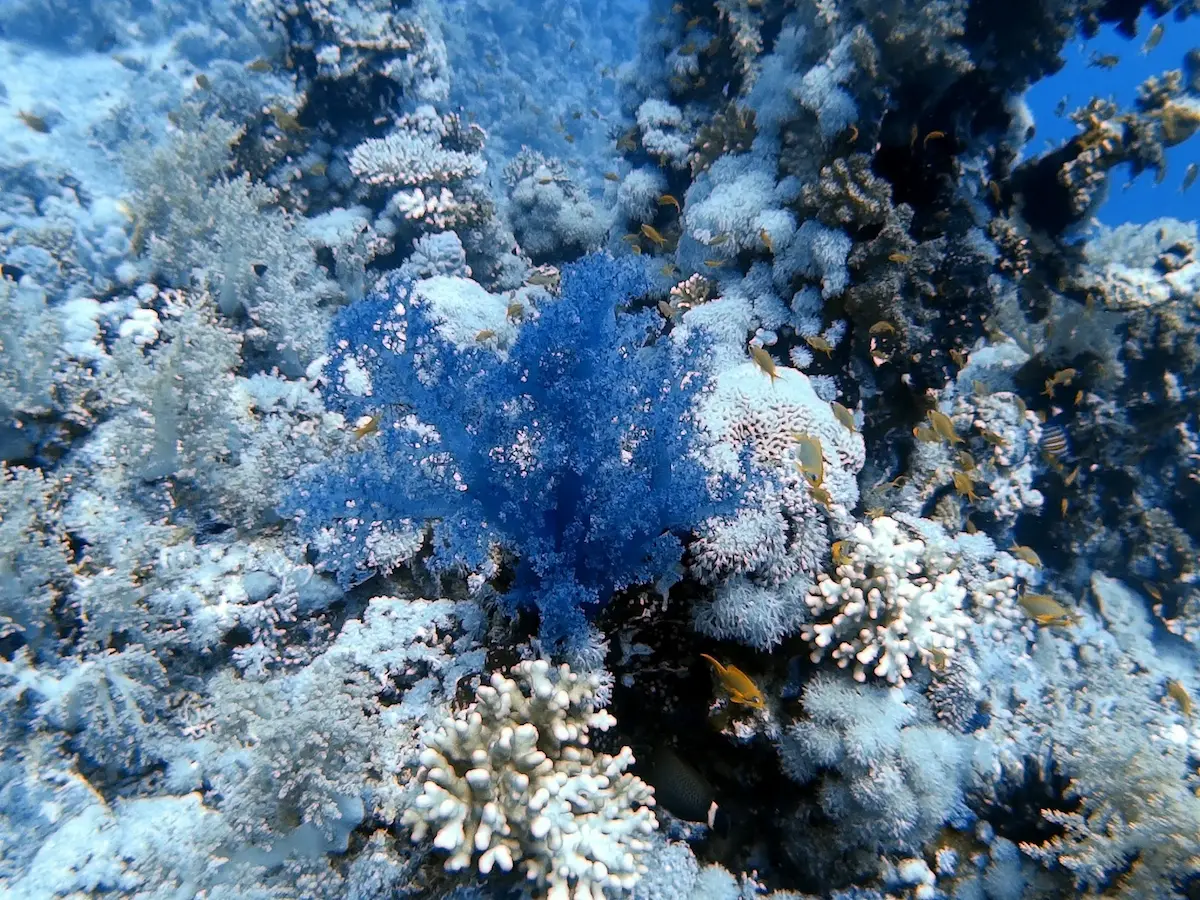
Connecting the two plateaus are the reef’s long flanks. Both the eastern and western sides fall away as dramatic drop-offs, cloaked in soft corals, sea fans and gorgonians. Drift diving along these walls, with the reef on one shoulder and open blue on the other, is one of the signature experiences of Shaab Maksour.
The Western Coral Garden and Lagoon
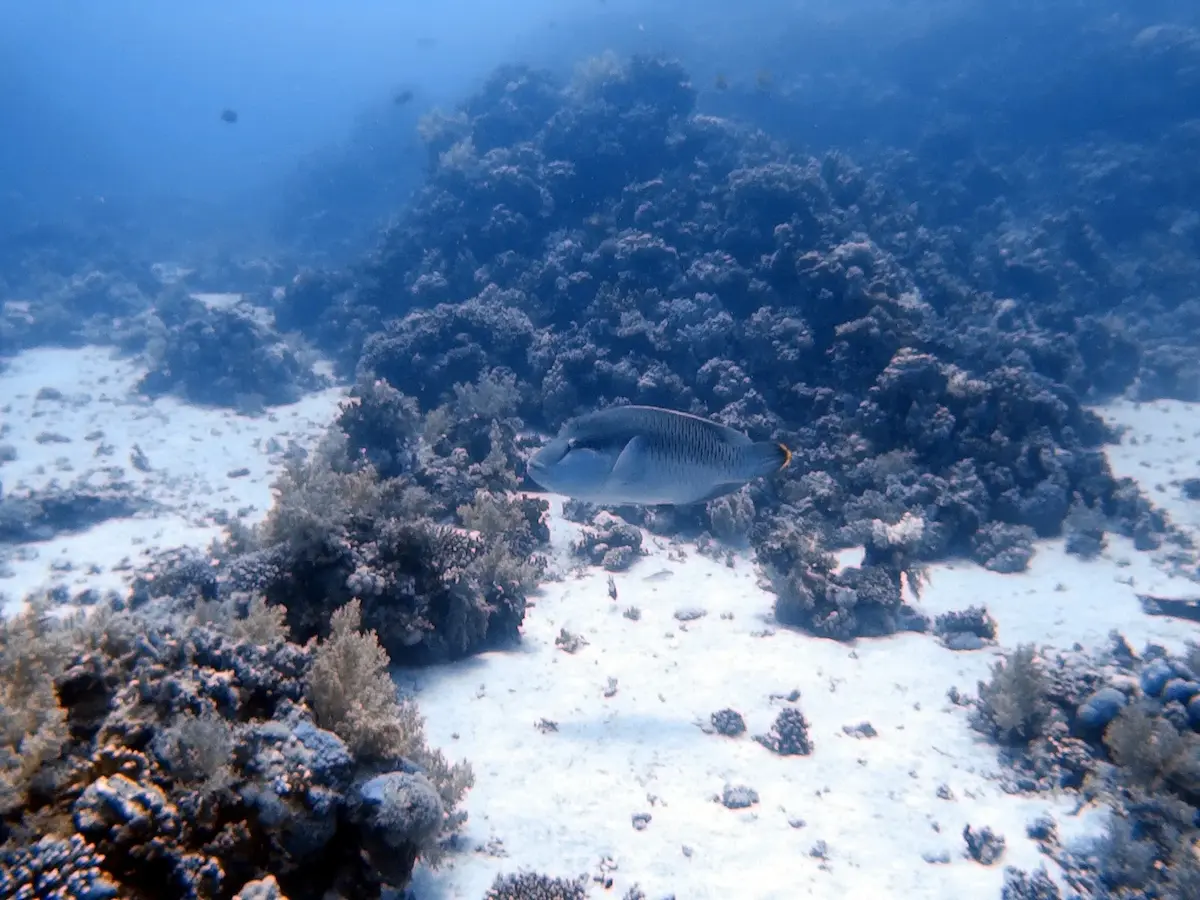
The western side holds a spectacular coral garden populated by Napoleon wrasse, batfish and giant triton clams. Many of the hard corals here display unusual light blue, cream and green hues, sometimes within a single colony. Toward the middle of the reef’s west side lies a small lagoon that offers a calmer counterpoint to the exposed walls.
Swim-Throughs, Tunnels and Caves
Shaab Maksour is not only about big blue and sheer walls — it also hides some rewarding overhead features for those trained to enjoy them:
- A wide tunnel entrance on the southern side at around 8 metres leads through to an exit near the southwest corner, with smaller passageways branching off.
- A small cave system entrance sits at just 5 metres on the northern part of the western side.
- Huge coral towers rise near the north, dotted with anemone patches and sheltering large groupers in their crevices and overhangs.
Marine Life at Shaab Maksour
The exposed, current-fed nature of Shaab Maksour is exactly what makes its marine life so rich. Nutrient-laden water sweeping across the plateaus and walls feeds everything from tiny anthias to apex predators.
Sharks and Pelagics
The reef is best known for its shark encounters, particularly on the plateaus and along the drop-offs. Divers regularly report:
- Grey reef sharks patrolling the plateau edges.
- Whitetip reef sharks resting on the coral.
- Occasional oceanic whitetip and hammerhead sightings out in the blue, especially in the warmer months.
- Hunting giant trevally, barracuda and tuna in fast-moving schools.
Reef Fish and Signature Species
Away from the pelagics, the coral gardens and walls teem with color and character:
- Napoleon (humphead) wrasse and batfish cruising the western garden.
- Large groupers tucked beneath the coral towers.
- Clouds of anthias, fusiliers, surgeonfish, yellow goatfish and bannerfish.
- Butterflyfish, angelfish and parrotfish darting through the corals.
Turtles, Rays and Macro Life
Green and hawksbill turtles are a common sight along the reef, and rays glide over the sand at the plateau edges. Sharp-eyed divers exploring the coral towers and walls will also find nudibranchs, triton clams and other macro subjects — a reminder that Shaab Maksour rewards divers who look closely as well as those who scan the blue.
Diving Conditions at Shaab Maksour: Currents, Depth and Difficulty
Understanding conditions is essential here, because Shaab Maksour is not a gentle house reef. Its isolation and steep walls generate strong, sometimes unpredictable currents, and much of the best action lies at depth. Honest preparation is the key to a safe, enjoyable dive.
Currents and Difficulty Level
The exposed location often produces demanding conditions. While the sheltered southern plateau can be enjoyed by competent intermediate divers on calm days, the northern plateau, ergs and wall drifts are best suited to experienced divers who are comfortable with current, drift diving and blue-water orientation. Under Egyptian marine-park regulations, divers are frequently required to show proof of logged dives before diving the southern sites, so bring your logbook.
Quick-Reference Conditions Table
| Attribute | Details |
|---|---|
| Region | Northeastern Fury Shoal, southern Red Sea |
| Distance offshore | ~17 km (liveaboard access) |
| Reef length | ~1,500 m, long and narrow |
| Depth range | Plateaus 18–40 m; walls drop to ~100 m |
| Current | Moderate to strong, often unpredictable |
| Difficulty | Intermediate to advanced |
| Mooring | Southern tip only, limited space |
| Highlights | Sharks, walls, plateaus, swim-throughs, coral gardens |
Best Time to Dive Shaab Maksour
The Red Sea is divable year-round, but seasons shape the experience:
- Spring (April–June): Warm, settled weather and calm seas — an excellent all-round window.
- Summer (July–September): Warmest water and best visibility, with the highest chance of oceanic whitetips and hammerheads in the blue.
- Autumn (October–November): Pleasant temperatures and good conditions before winter winds pick up.
- Winter (December–February): Divable with a thicker wetsuit, though stronger winds can limit access to this exposed reef.
Tips for Diving Shaab Maksour Like a Pro
To get the most from a dive at Shaab Maksour, keep these field-tested pointers in mind:
- Listen to the briefing: Current direction dictates the entire dive plan here, so follow your guide’s plan on where to drop and drift.
- Carry an SMB and reef hook awareness: On the exposed plateaus, a surface marker buoy is essential for safe pickups in current.
- Watch the blue, not just the reef: Sharks and pelagics appear off the drop-off, so split your attention between the coral and the open water.
- Manage your air and depth: The wall tempts you deeper than planned — set a firm turnaround depth and stick to it.
- Dive early: With limited moorings, the first group of the day gets the calmest water and the best chance of undisturbed shark encounters.
Shaab Maksour vs Neighbouring Fury Shoal Reefs
Shaab Maksour rarely stands alone on an itinerary. Understanding how it compares to nearby reefs helps you plan a balanced trip that mixes adrenaline with relaxation:
| Dive Site | Character | Best For |
|---|---|---|
| Shaab Maksour | Long wall reef, twin plateaus, strong current | Sharks, drift diving, experienced divers |
| Sha’ab Claudia | Swim-throughs, caves, huge porite corals | Easy, scenic diving |
| Sataya (Dolphin Reef) | Horseshoe lagoon with spinner dolphins | Snorkelling and dolphin encounters |
| Abu Galawa Kebir | Coral-clad Tien Hsing wreck | Wreck and reef combined |
| Malahi | Pinnacles, canyons and small caves | Playful reef exploration |
A classic Fury Shoal day might pair the high-energy walls of Shaab Maksour with a relaxed afternoon at Abu Galawa Soraya or Sha’ab Claudia.
Frequently Asked Questions
What is Shaab Maksour known for?
Shaab Maksour is known for being a long, narrow wall reef in the northeastern Fury Shoal, often compared to Elphinstone. Its twin plateaus and steep drop-offs attract grey reef sharks, giant trevally and tuna, while its coral gardens, swim-throughs and towers add variety for those who explore beyond the blue.
Is Shaab Maksour suitable for beginners?
Not really. The reef’s exposed position produces moderate to strong, sometimes unpredictable currents, and much of the best diving lies at depth along the walls. Competent intermediate divers may enjoy the sheltered southern plateau on calm days, but the site is best suited to experienced, current-comfortable divers.
How deep is diving at Shaab Maksour?
The plateaus sit between roughly 18 and 40 metres, while the surrounding walls plunge vertically to around 100 metres. Most dives are planned along the upper plateau and wall, with a firm maximum depth set during the briefing to manage the temptation of the drop-off.
Can you see sharks at Shaab Maksour?
Yes — shark sightings are a major draw. Grey reef and whitetip reef sharks are common along the plateaus and drop-offs, and in the warmer months there are occasional encounters with oceanic whitetips and hammerheads out in the blue.
How do you get to Shaab Maksour?
Because it sits about 17 kilometres offshore, Shaab Maksour is almost exclusively reached by liveaboard, with boats departing from Hamata, Port Ghalib or Marsa Alam. Mooring is only possible at the sheltered southern tip, which has space for just a few vessels.
What is the best time to dive Shaab Maksour?
Spring and autumn offer settled weather and calm seas, making them excellent all-round windows. Summer brings the warmest water, best visibility and the highest chance of pelagic sharks, while winter remains divable but can be affected by wind on this exposed reef.
Why is Shaab Maksour compared to Elphinstone?
Both are long, narrow reefs running north to south, surrounded by steep walls and capped at each end by a submerged plateau that attracts sharks and pelagics. The topography, current-driven action and big-blue atmosphere make the two sites feel strikingly similar.
Do you need a certain number of logged dives for Shaab Maksour?
Egyptian marine-park rules often require proof of logged dives to dive the southern Red Sea sites, and operators may set their own experience minimums for a current-swept reef like this. Bring your logbook and be honest about your comfort with drift and deep diving.
Final Thoughts: Why Shaab Maksour Belongs on Your Dive List
For divers who crave adventure over calm-water sightseeing, Shaab Maksour is one of the most rewarding reefs in the entire southern Red Sea. The combination of Elphinstone-style walls, twin shark-patrolled plateaus, vivid soft-coral gardens and hidden swim-throughs delivers a dive that feels both wild and genuinely varied. It is the kind of site that stays with you long after you surface — the silhouette of a grey reef shark cruising the drop-off, the wall dissolving into blue beneath your fins, the coral towers alive with anthias.
Approach it with respect: watch the current, dive within your limits, and let an experienced guide shape the plan around the day’s conditions. Pair it with a gentler Fury Shoal reef for balance, and you will come away with a complete picture of just how spectacular the deep south of Egypt can be. Whether it is your first liveaboard or your fiftieth, Shaab Maksour is a reef that reminds you exactly why you started diving.