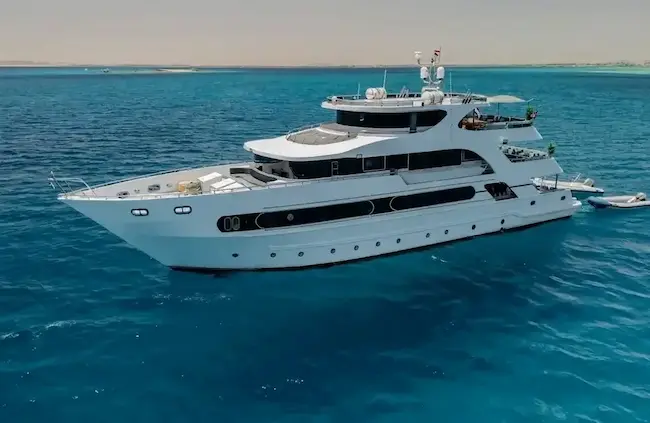
If you are planning a southern Red Sea liveaboard, Claudia Reef — known locally as Sha’ab Claudia — deserves a permanent spot on your dive itinerary. Tucked into the heart of the Fury Shoals roughly 13 kilometres off Egypt’s southern coast, this shallow, sun-drenched reef delivers exactly what most divers dream about: a labyrinth of easy, light-filled swim-throughs, a sprawling coral garden, and marine life that ranges from clouds of anthias to the occasional passing shark. It is one of those rare sites that rewards absolute beginners and seasoned photographers in equal measure.
What makes Claudia Reef so special is the combination of forgiving conditions and genuine adventure. The seabed rarely drops below 18 metres, the currents are gentle and infrequent, and the cavern system is open, wide, and impossible to get lost in — yet swimming through those coral-framed tunnels feels like true exploration. Add average visibility of 30 metres and a water temperature that stays diver-friendly for most of the year, and you have a dive site that punches far above its modest depth.
In this comprehensive guide, we draw on first-hand knowledge of the Fury Shoals to cover everything you need to know before you drop in: the reef’s exact location and access points, its topography and famous caverns, the marine life you can realistically expect, a step-by-step dive plan, liveaboard logistics, and honest tips for handling the one thing everyone warns you about — the crowds. Let’s dive in.
What Is Claudia Reef? An Overview of Sha’ab Claudia
Claudia Reef is a cluster of coral banks and pinnacles sitting in the southern reaches of the Egyptian Red Sea, within the celebrated Fury Shoals reef complex. Technically the site is made up of two bank reefs, but recreational diving takes place almost exclusively on the southern reef and only during daylight hours. Its shallow profile, branching caverns, and vivid hard-coral cover have earned it a reputation as one of the most beautiful and most visited dive sites in the entire region.
The Many Names of Claudia Reef
One quirk that confuses first-time visitors is the site’s spelling. Depending on the operator, dive map, or logbook, you may see it written as:
- Sha’ab Claudia — the most common English transliteration (“sha’ab” simply means “reef” in Arabic)
- Shaab Claudio — a widely used alternate spelling
- Shaab Claude — an occasional variant
- Claudia Reef — the plain-English name many divers search for
All of these refer to the same reef. Throughout this guide we use “Claudia Reef” and “Sha’ab Claudia” interchangeably.
Why Claudia Reef Is a Fury Shoals Highlight
The Fury Shoals stretch across a wide swathe of the southern Red Sea and contain dozens of reefs, but Claudia Reef consistently ranks among divers’ favourites. The reason is balance. Many southern sites demand strong currents, deep descents, or advanced certifications. Claudia asks for none of that. It offers cavern diving without the risk, macro subjects alongside the chance of pelagics, and photogenic coral gardens all within a single, relaxed dive — making it a natural centrepiece for any Fury Shoals dive sites guide.
Where Is Claudia Reef Located?
Understanding the geography of Claudia Reef helps you plan both the journey and the dive itself.
GPS Coordinates and Geography
Claudia Reef lies at approximately N 24° 13.183′, E 35° 36.717′, near the south-eastern edge of the Fury Shoal reef system and about 13 kilometres offshore from the coastline near Hamata. Because it sits well out to sea, the reef is reached almost exclusively by boat — there is no shore-diving option here.
Getting to Claudia Reef (Access Points)
Access is entirely boat-based, whether by day boat or, more commonly, by liveaboard on a southern safari route. The main departure points are:
From Marsa Alam and Port Ghalib
Most southern Red Sea liveaboards begin their journeys from Port Ghalib near Marsa Alam. From there the vessel cruises south, often diving several Fury Shoals reefs before mooring at Claudia. Marsa Alam International Airport is the closest air gateway, making this the most popular route for international divers.
From Hamata
Hamata, the small coastal resort town directly inshore from the reef, is the nearest land base. Some day-dive operations and liveaboards launch from the Hamata marina, cutting the surface crossing to well under an hour. Transfers typically take around 30 minutes from the charter mooring to the dive site itself.
Nearby Dive Sites
One advantage of Claudia Reef’s position is the density of world-class diving around it. Sites within easy cruising distance include:
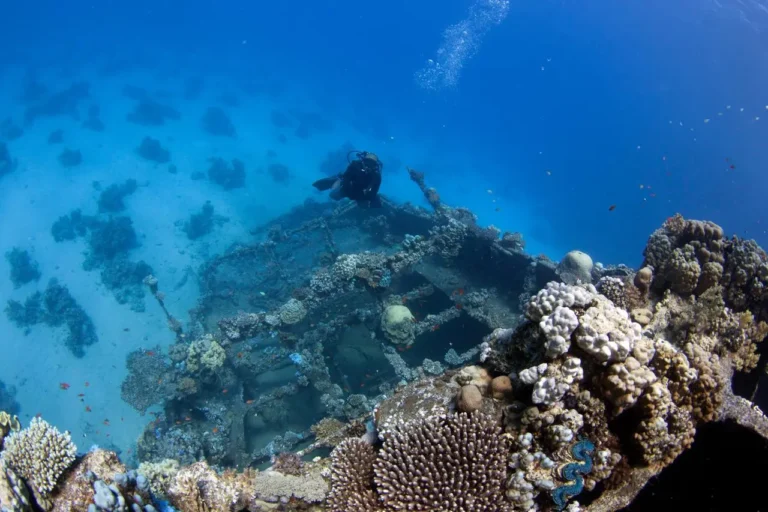
- Abu Galawa Kebir and Abu Galawa Soraya — famous for their small wreck and hard-coral pinnacles
- Sha’ab Maksur — a dramatic drift and wall dive
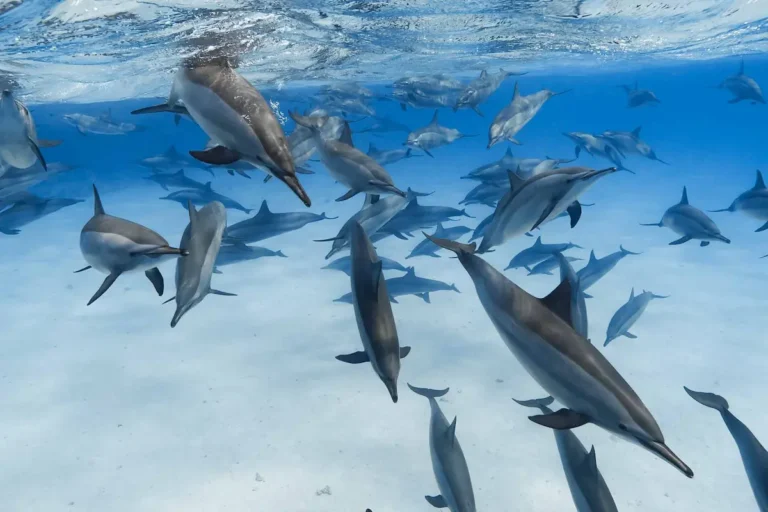
- Sataya (Dolphin Reef) — renowned for resident spinner dolphins
- Sha’ab Malahi — a playful “amusement park” of swim-throughs
- Camilla and Farewell Reefs — quieter alternatives with excellent coral
This clustering means a single liveaboard week can pair Claudia Reef with half a dozen equally memorable sites — see our southern Red Sea liveaboard routes for sample itineraries.
Diving Claudia Reef: Conditions and Difficulty
Few dive sites in Egypt are as accommodating as Claudia Reef, which is precisely why it appears on so many mixed-ability itineraries.
Depth, Visibility, and Currents
The sandy seabed encircling the reef sits at around 18 metres, and there is genuinely no reason to descend beyond 15 metres, because every one of Claudia’s attractions — the caverns, the coral garden, the anemone colony — is found in the shallows. Visibility is excellent, typically ranging from 20 to 30 metres and often reaching a full 30 metres on calm days. Currents are the biggest bonus: they are rare and, when present, usually weak, making Claudia a low-stress dive even for those still building confidence.
Who Can Dive Claudia Reef? (Skill Levels)
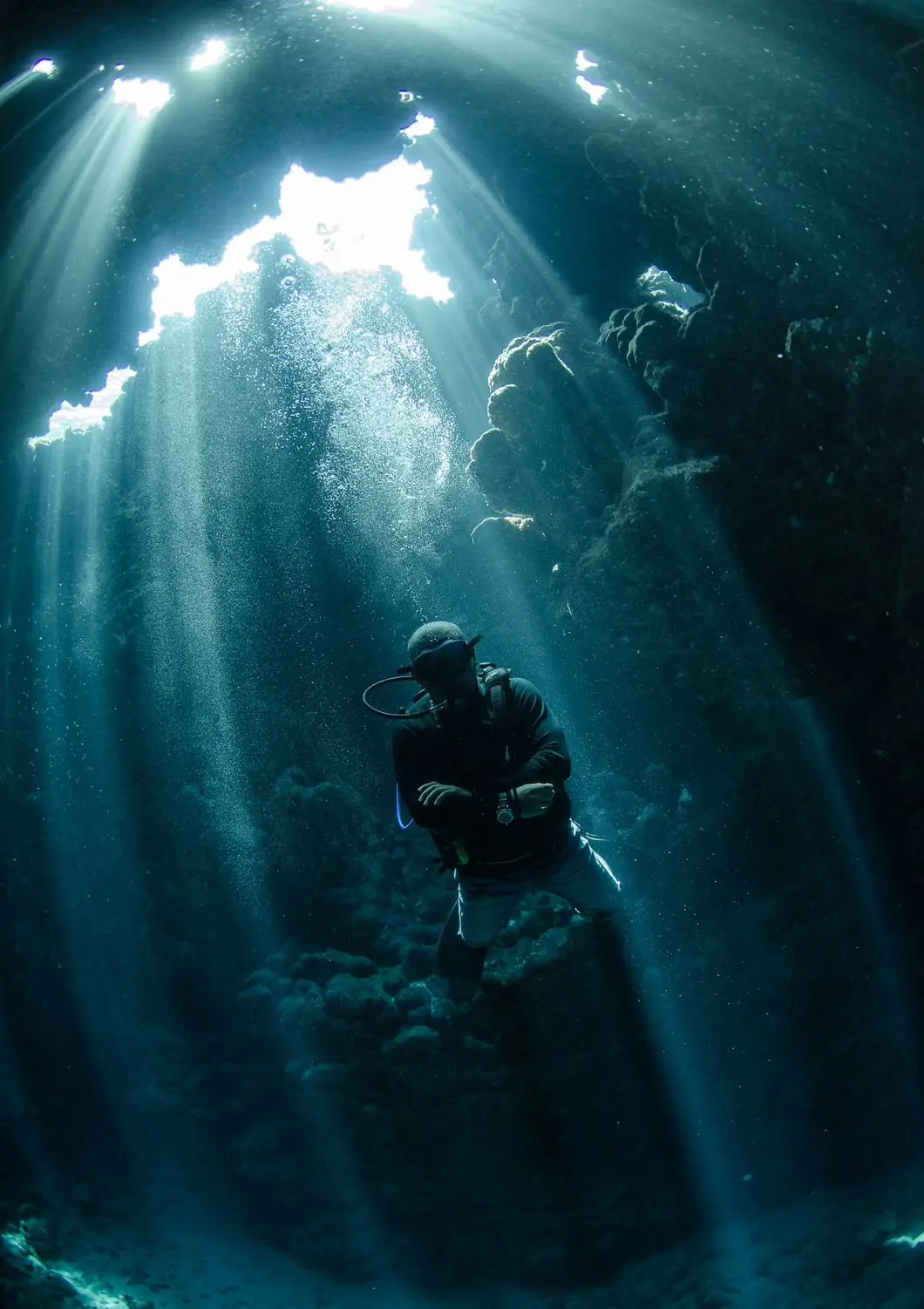
Claudia Reef is suitable for divers of all certification levels for the main reef circuit. The open-water sections are calm and shallow enough for newly certified Open Water divers. The cavern system, however, is best treated as an advanced experience and should always be entered with a dive guide who knows the layout. Because the caverns are wide and short, they fall under “cavern” rather than “cave” diving — daylight is always visible — but respect and proper guidance remain essential.
Water Temperature and Best Time to Dive
Water temperatures at Claudia Reef generally sit between 26°C and 30°C through the warmer months, cooling somewhat in winter. The southern Red Sea liveaboard season runs strongest from spring through autumn. Summer delivers the warmest water and calmest seas, while spring and autumn offer a sweet spot of comfortable temperatures and a better chance of pelagic encounters.
Claudia Reef Quick-Reference Table
| Feature | Details |
|---|---|
| Location | Fury Shoals, ~13 km off Hamata, Southern Red Sea, Egypt |
| GPS Coordinates | N 24° 13.183′, E 35° 36.717′ |
| Dive Type | Boat / liveaboard dive; cavern and reef |
| Maximum Depth | ~18 m (rarely exceed 15 m) |
| Visibility | 20–30 m (average ~30 m) |
| Current | Rare and typically weak |
| Water Temperature | ~26–30°C seasonally |
| Skill Level | All levels (caverns: advanced, with guide) |
| Access | By boat from Marsa Alam / Port Ghalib / Hamata |
| Highlights | Caverns, coral garden, groupers, anemone colony |
The Cavern and Cave System at Claudia Reef
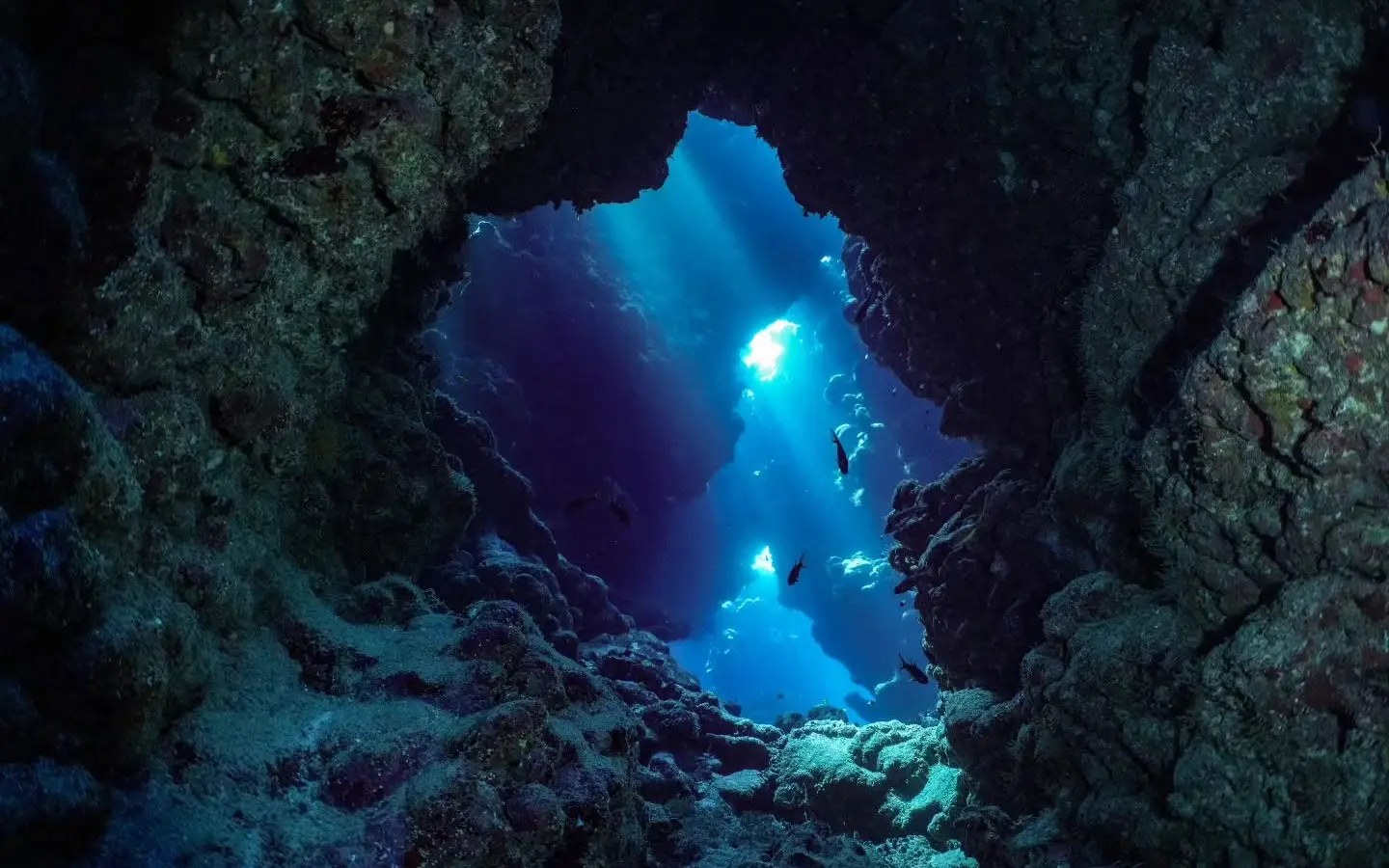
The signature attraction of Claudia Reef is its network of light-filled swim-throughs, and understanding the layout before you descend transforms the experience.
The Main Southern Cavern (Entrances A, B, and Exit C)
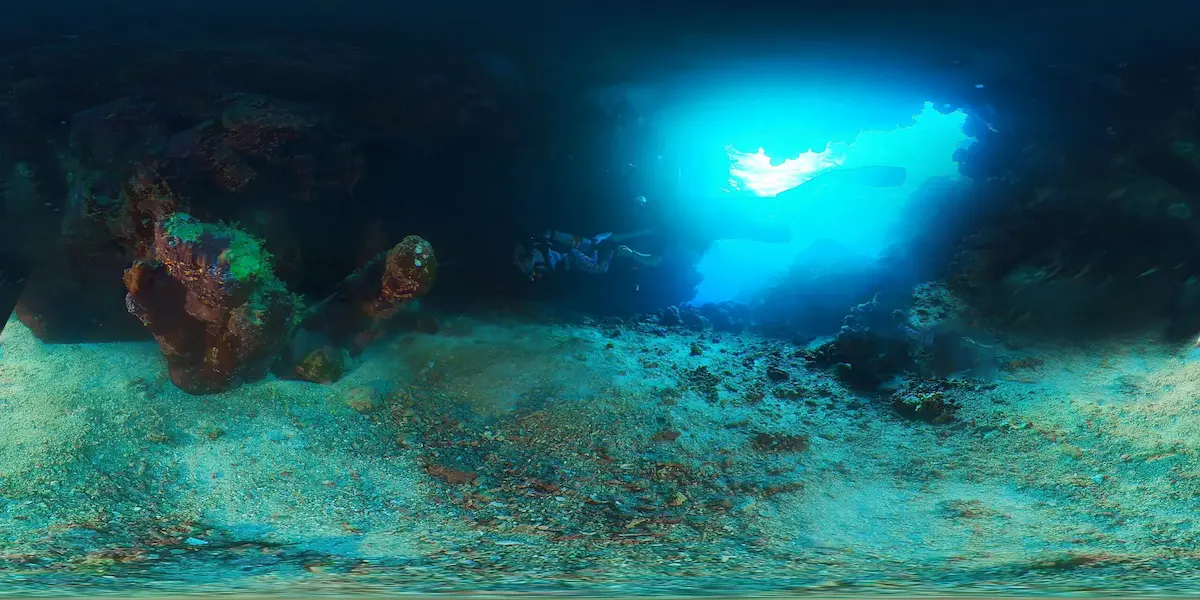
The primary cavern system lies in the southern part of the reef. Its two entrances sit in the reef wall at depths of roughly 7 and 8 metres, tucked just below a noticeable indentation in the reef flat that is visible from the boat. The tunnels are wide and only lightly branched, so orientation is straightforward and getting lost is effectively impossible. The system’s exit emerges to the west at around 4 metres, cleverly concealed behind coral growth.
The Second Smaller Cave
Head north from the western exit, around a group of large boulder corals, and you reach a second, smaller cavern with an entrance at about 4 metres — also hidden behind corals and easy to swim past if you don’t know it’s there. Following this cavern clockwise brings you on a short loop back to where you entered, adding a satisfying second chapter to the dive.
The Hidden Passage
Threading through the reef is an additional hidden passage that runs almost the entire length of Claudia. It narrows in places and is rarely marked on site maps, so it is one for experienced divers travelling with a guide who knows the reef intimately.
Cavern Safety Tips
Buoyancy Control
Because the caverns are shallow and coral-lined, precise buoyancy is non-negotiable. A careless fin kick can damage decades of coral growth or stir up silt that ruins visibility for divers behind you. Keep the following in mind:
- Perfect your buoyancy before attempting the swim-throughs
- Keep fins clear of the cavern floor and walls
- Move slowly and follow your guide’s line
- Never touch the coral to steady yourself
- Enter and exit in single file to avoid congestion
Topography and Underwater Features of Claudia Reef
Beyond the caverns, Claudia Reef offers a genuinely varied underwater landscape.
The Western Coral Garden
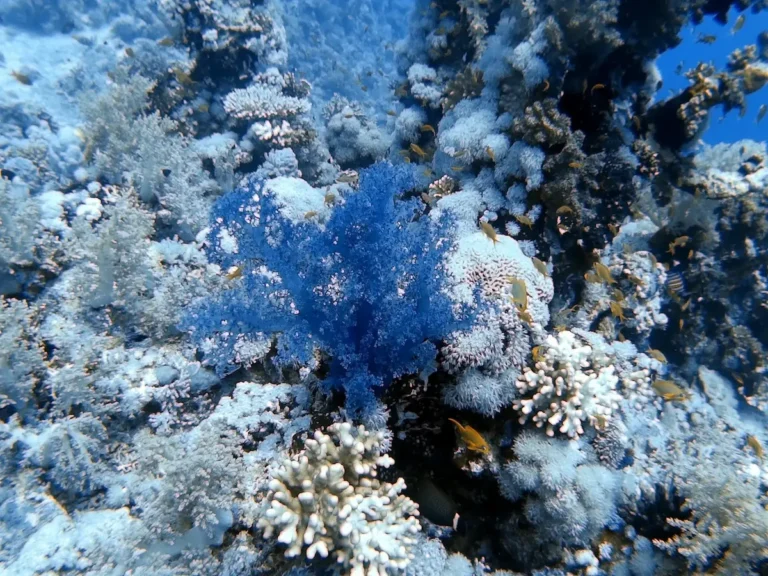
The western flank is home to a magnificent coral garden that stretches across the whole side of the reef. Dense, healthy hard corals create a shallow tapestry that glows under the Red Sea sun — a paradise for wide-angle photographers and one of the most photographed features of Sha’ab Claudia.
The Channel Between the Reefs
The coral garden opens into the channel that runs between the two bank reefs. Here the reef walls partly overhang, draped in coral, and the crevices become hiding places for some of the reef’s largest residents — including several impressive groupers.
The Arouks and Anemone Colony
Near the eastern exit of the channel stand two beautifully overgrown coral pinnacles (locally called “arouks”). Just before them, at around 10 metres on the reef wall, you’ll find a thriving colony of anemones — and, naturally, the clownfish that call them home.
The Eastern Side
The eastern face of Claudia Reef lacks a full coral garden but still rewards divers with interesting, textured coral growth. It is quieter than the west, making it a good option for a second-half loop when the popular sections are busy.
Marine Life at Claudia Reef
For a shallow reef, the biodiversity at Claudia Reef is remarkable, spanning tiny macro subjects to the occasional big-animal surprise.
Reef Fish and Coral Dwellers
The coral gardens and channel teem with everyday Red Sea life: groupers, snappers, surgeonfish, sweetlips, bannerfish, lionfish, and dense schools of anthias. Napoleon (humphead) wrasse are regular visitors, with divers occasionally logging several on a single dive.
Sharks, Rays, and Pelagics
While Claudia isn’t primarily a big-animal site, encounters do happen. Juvenile whitetip reef sharks are sometimes spotted resting in the caverns, and eagle rays and blue-spotted stingrays patrol the sand. On lucky days, divers have reported hammerhead sharks or a passing manta ray, along with tuna, barracuda, and amberjack in the blue.
Turtles, Morays, and Macro Life
Hawksbill turtles graze the coral, Mediterranean (Roman) moray eels peer from crevices, and octopus are a common find. Macro enthusiasts prize Claudia Reef for its nudibranchs and the occasional harlequin shrimp — small treasures that reward a slow, attentive dive.
Underwater Photography at Claudia Reef
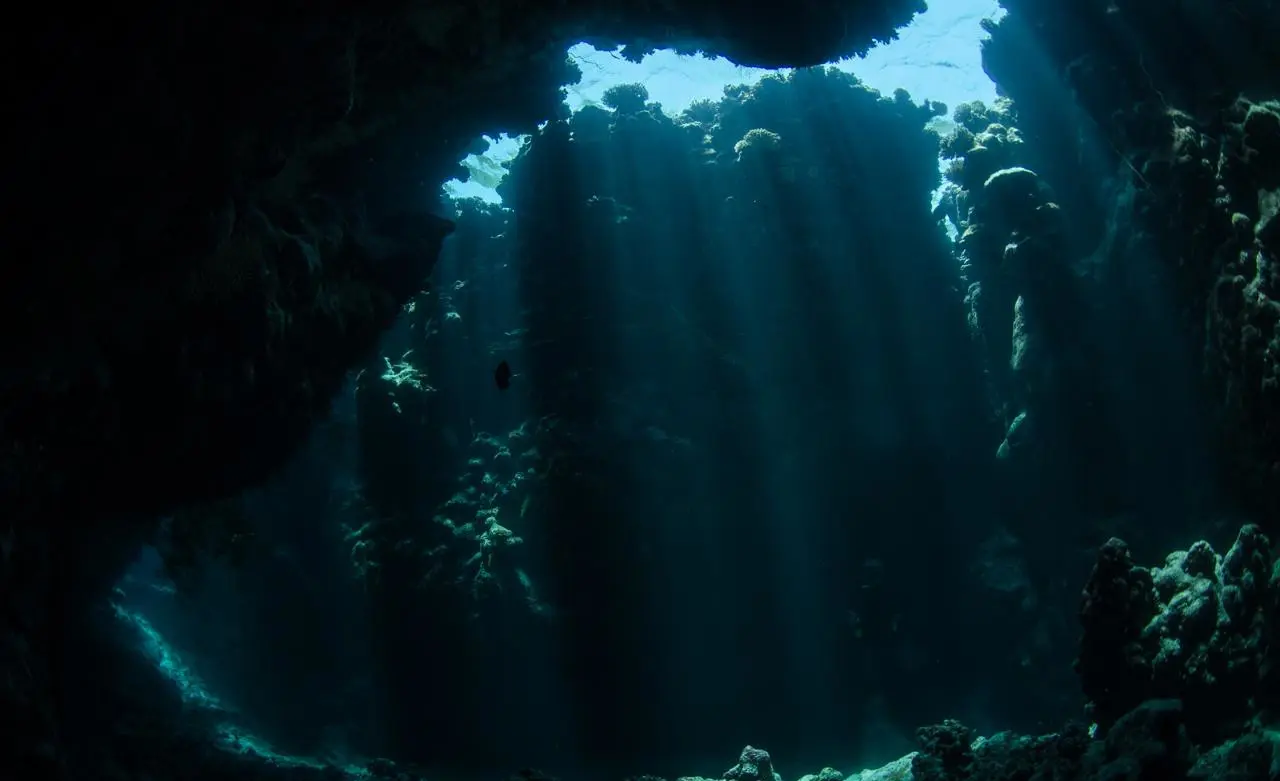
The mix of sunlit caverns, colourful coral gardens, and cooperative subjects makes Claudia Reef a favourite for photographers. Wide-angle lenses shine in the swim-throughs and coral garden, while macro setups excel among the anemones and reef nooks. For the best light in the caverns, dive in the mid-morning when the sun angles beams through the entrances — a tip worth remembering for your Red Sea underwater photography guide.
A Step-by-Step Dive Plan for Claudia Reef
Here is a proven route many guides use to make the most of Sha’ab Claudia in a single dive:
- Descend directly beneath the liveaboard, but do not drop straight to the 18-metre sand — stay shallow, as the cavern entrances are at 7–8 metres.
- Locate cavern entrance A below the prominent indentation in the reef flat and follow the tunnels through the system.
- Exit through the western opening (Exit C) at around 4 metres.
- Swim north around the large boulder corals to the second cavern entrance at 4 metres and loop it clockwise.
- Cross the western coral garden, keeping the reef on your right shoulder.
- Follow the reef into the channel, where you’ll meet the anemone colony at 10 metres and the two arouks.
- Either turn back the way you came or continue along the eastern side, reef on your right, all the way back to the boat.
- Keep your maximum depth around 15 metres throughout — every highlight is shallow, which also extends your bottom time and safety margin.
Liveaboard Trips to Claudia Reef
For most divers, the best way to experience Claudia Reef is aboard a southern Red Sea liveaboard.
Which Routes Include Claudia Reef
Claudia Reef is a staple stop on several classic itineraries, including:
- South / Fury Shoals routes departing Marsa Alam or Port Ghalib
- Deep South safaris combining Fury Shoals with St. John’s and Rocky Island
- Daedalus and Fury Shoals combination trips
- Dolphin-focused safaris that pair Claudia with nearby Sataya
What to Expect Onboard
Southern liveaboards typically run 7 nights with three to four dives per day, moving between Fury Shoals sites and diving Claudia at a quieter time of day when possible. Boats moor directly above the reef, so entries and exits are effortless — one more reason Claudia is beginner-friendly. Browse verified vessels and pricing on our Red Sea liveaboard .
Tips for Diving Claudia Reef Like a Pro
The single most common complaint about Claudia Reef is its popularity. Because the reef is so charming, many boats converge here, and the narrow caverns can get congested — divers half-joke that the site needs traffic lights and one-way signs. Here’s how to keep your dive enjoyable:
- Dive early or late. Ask your guide to schedule Claudia when fewer boats are moored.
- Let the crowd clear the caverns before you enter, then take them at your own pace.
- Explore the eastern side when the western coral garden is packed — it’s quieter and still rewarding.
- Stay shallow and slow to maximise bottom time and coral encounters.
- Prioritise buoyancy to protect both the reef and the visibility for everyone behind you.
Frequently Asked Questions
Where exactly is Claudia Reef?
Claudia Reef (Sha’ab Claudia) sits in the Fury Shoals of the southern Egyptian Red Sea, about 13 km offshore from Hamata at roughly N 24° 13.183′, E 35° 36.717′. It is reached by boat, most often on a liveaboard departing from Marsa Alam or Port Ghalib.
Is Claudia Reef suitable for beginner divers?
Yes. The main reef is shallow (under 18 metres), with rare, weak currents and great visibility, making it ideal for newly certified divers. The caverns are best explored by more experienced divers accompanied by a guide, but the open reef sections suit all levels.
Are the caverns at Claudia Reef dangerous?
The caverns are wide, short, and open to daylight, so they are classed as cavern rather than cave dives and are considered low-risk with a guide. The main hazards are congestion and buoyancy control, so good fin technique and following your guide’s line are essential.
What marine life can I see at Claudia Reef?
Expect groupers, napoleon wrasse, snappers, lionfish, moray eels, turtles, octopus, and nudibranchs, plus clownfish in the anemone colony. Lucky divers may also spot whitetip reef sharks, eagle rays, or even a passing hammerhead or manta ray.
How deep is the dive at Claudia Reef?
The surrounding seabed lies at about 18 metres, but there is no need to go below 15 metres. All the reef’s highlights — caverns, coral garden, and anemone colony — are found in the shallows between 4 and 12 metres.
Why do people spell it Shaab Claudio instead of Claudia Reef?
They’re the same site. “Sha’ab” means “reef” in Arabic, and the second word appears in several transliterations — Claudia, Claudio, and Claude. English-speaking divers often simply call it Claudia Reef.
What is the best time of year to dive Claudia Reef?
The southern Red Sea liveaboard season runs strongest from spring through autumn. Summer offers the warmest water and calmest seas, while spring and autumn balance comfortable temperatures with a better chance of pelagic sightings.
Can you snorkel at Claudia Reef?
Because the reef is so shallow and clear, snorkellers can enjoy the coral gardens and reef top from the surface. The caverns, however, are strictly for trained divers, and access is by boat only.
Final Thoughts: Why Claudia Reef Belongs on Your Dive List
Claudia Reef earns its reputation as one of the Fury Shoals’ finest dives by offering something for everyone. Beginners get calm, shallow water and gentle currents; adventurers get sunlit caverns and hidden passages; photographers get a coral garden and cooperative subjects; and naturalists get everything from nudibranchs to napoleons. The only real challenge is the crowds — and with smart timing and solid buoyancy, even that is easily managed. Whether you’re booking your first southern Red Sea liveaboard or returning for another lap of the Fury Shoals, Claudia Reef is a dive site that rewards you every single time you descend.