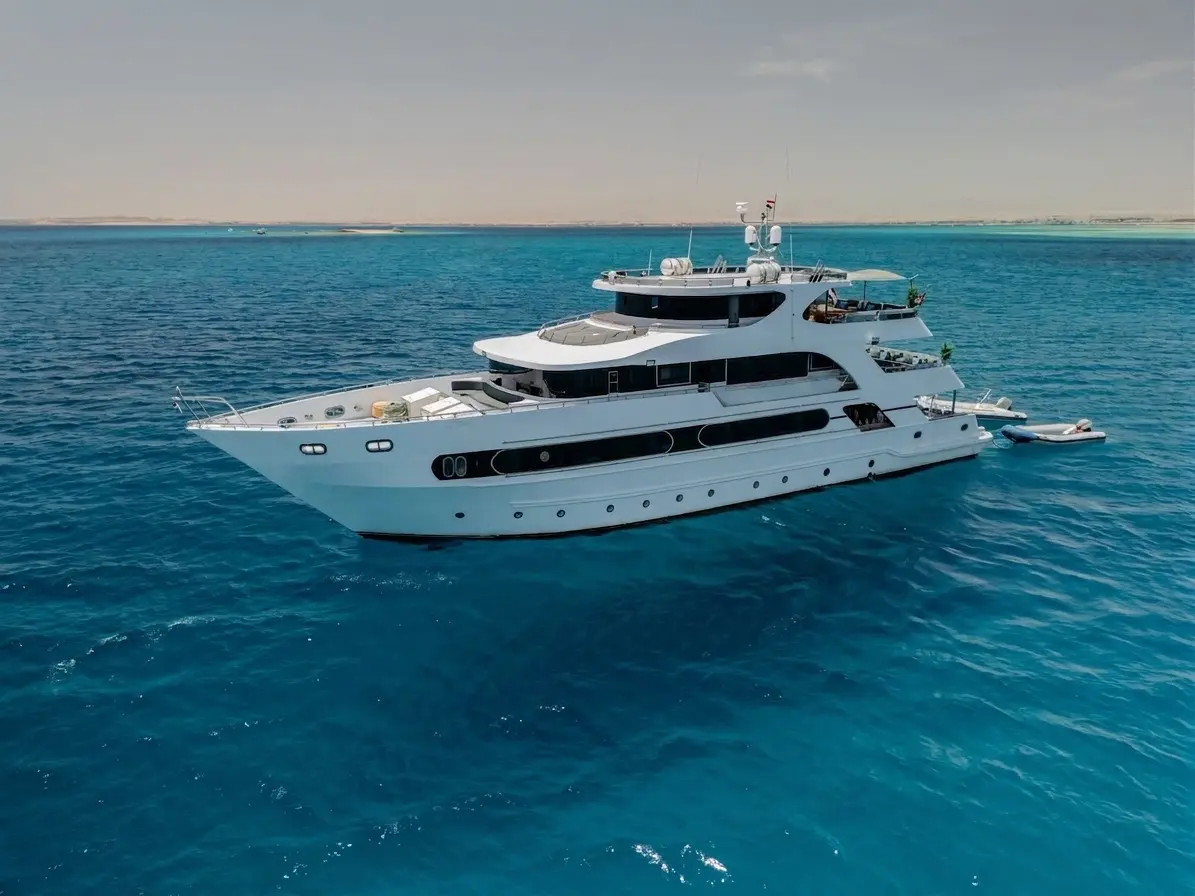
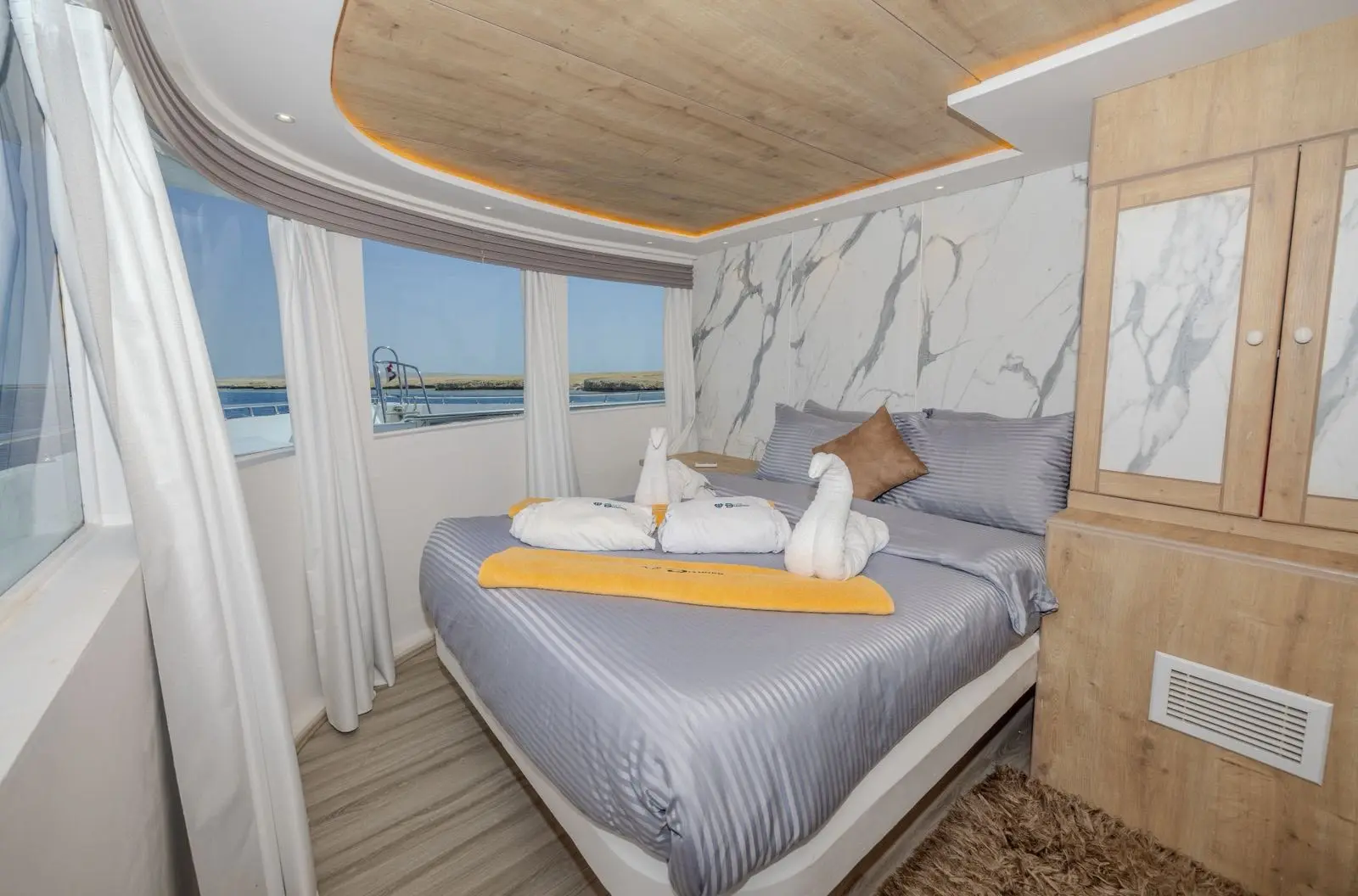
A Red Sea liveaboard is the single best way to experience the world’s most celebrated warm-water diving — a floating dive base that carries you to remote reefs, offshore shark plateaus and legendary wrecks that day boats from the shore can never reach. Instead of one or two dives a day squeezed around long boat transfers, you wake up already moored above the reef, roll in before breakfast, and log three to four dives daily for a week straight. Below you’ll find our six core Red Sea liveaboard routes — explore the interactive cards under each one to discover its individual dive sites.
St Johns and Fury Shoals Liveaboard
The St Johns and Fury Shoals liveaboard route explores the far southern Egyptian Red Sea, close to the Sudanese border, where reef systems remain some of the most pristine and least-crowded in the country. This is a route defined by intricate coral gardens, labyrinthine caves and swim-throughs, dramatic pinnacles rising from the blue, and frequent encounters with dolphins, turtles and reef sharks. Because the region sits far south, sun angles light up the cavern systems beautifully and the soft coral cover is exceptional. It suits divers of intermediate level and above who want colour, topography and a genuine sense of remoteness. Nitrox and good buoyancy control are strongly recommended for the overhead environments.

Habili Ali is the wild, current-swept jewel at the far eastern edge of Egypt’s St John’s...
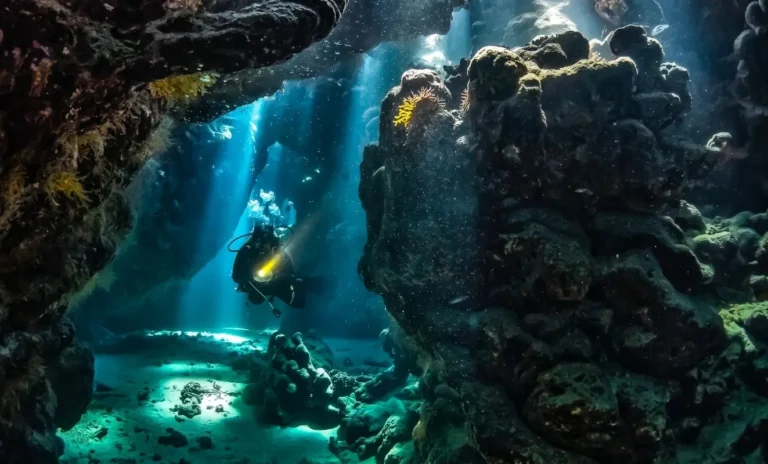
Tucked into the southernmost tip of the Egyptian Red Sea, just a fin-kick from the...
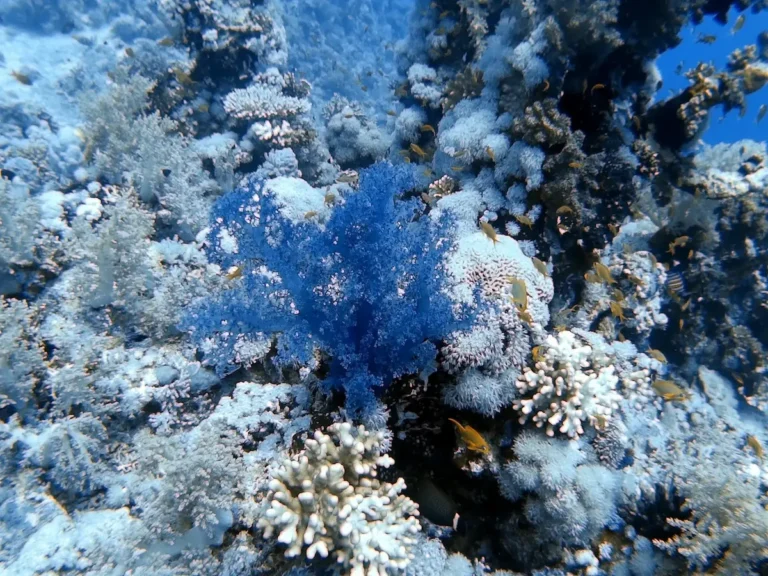
Ask any liveaboard veteran which reef in the far south of Egypt gets the adrenaline...
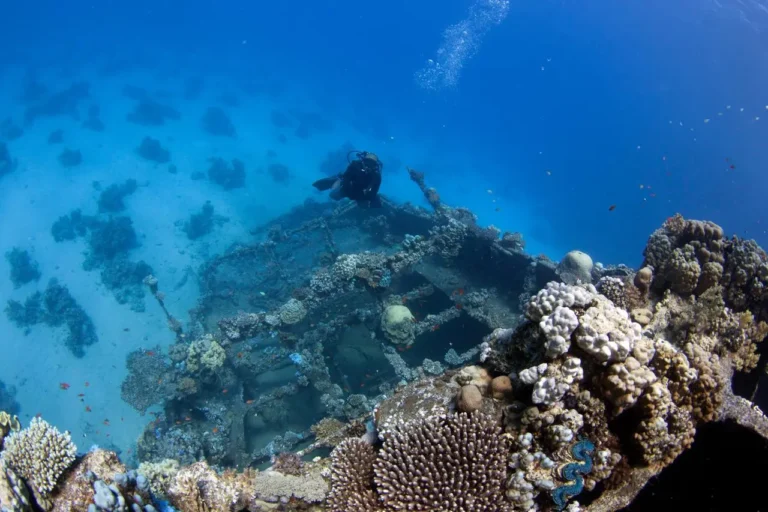
If there is one dive site in Egypt’s far south that rewards you the instant...
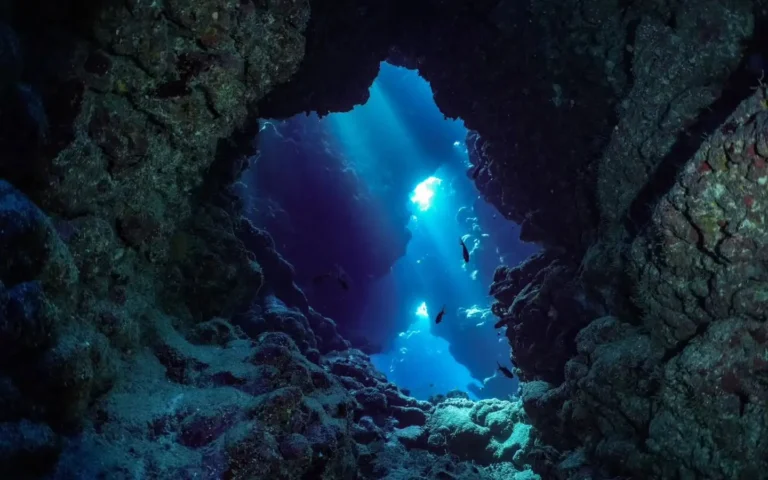
If you are planning a southern Red Sea liveaboard, Claudia Reef — known locally as Sha’ab Claudia...
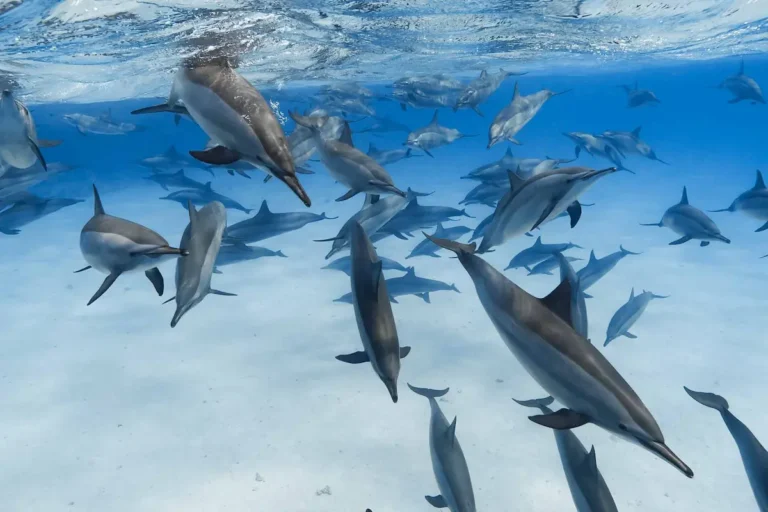
Picture yourself floating on the surface of a warm, glassy turquoise lagoon when suddenly dozens...
Daedalus Rocky Zabargad Liveaboard
The Daedalus, Rocky and Zabargad liveaboard combines an offshore shark reef with two of the most dramatic islands in the southern Red Sea. Expect big-water diving on exposed plateaus, sheer walls plunging into deep blue, striking underwater topography and the real possibility of hammerhead schools, thresher sharks and passing mantas. This is more advanced diving: crossings can be long, currents can be strong, and dives are often conducted in blue water away from the reef. It rewards experienced divers who are comfortable with drift entries, negative descents and depth discipline. The scenery both above and below the surface on this itinerary is among the most spectacular Egypt offers.
BDE Red Sea Liveaboard
The BDE Red Sea liveaboard — Brothers, Daedalus and Elphinstone — is the classic shark and wall itinerary that put Egypt on the map for pelagic diving. This route strings together the country’s most famous offshore reefs, where steep drop-offs, historic wrecks and current-swept plateaus attract oceanic whitetips, grey reef sharks, hammerheads and thresher sharks. It is unapologetically advanced: strong currents, deep walls and blue-water encounters are the norm, and most operators require a minimum of Advanced Open Water certification and a solid logged-dive count. For experienced divers chasing adrenaline and big animals, few Red Sea liveaboard routes deliver more.
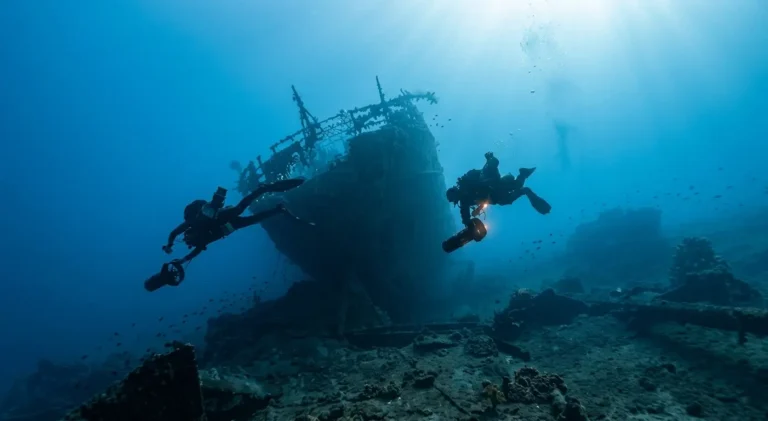
Almost everyone who dives Big Brother Island comes for the Numidia. They leave talking about...
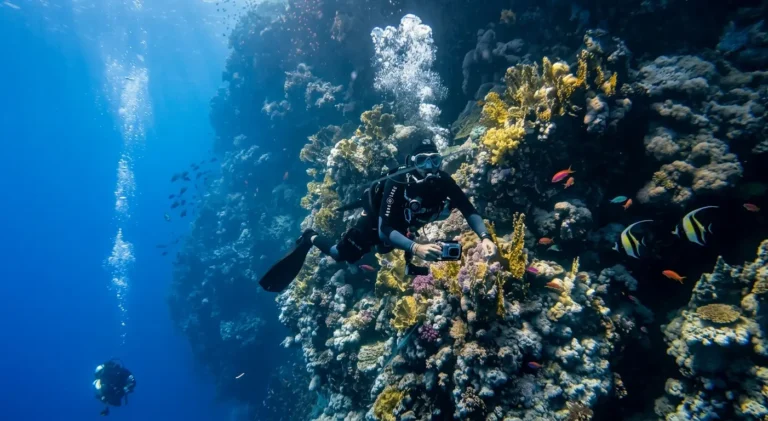
Drop into the water off the northern tip of Big Brother Island and you will...
Deep South Red Sea Liveaboard
The Deep South Red Sea liveaboard ventures beyond the reach of standard southern trips, exploring remote reef systems well south of Marsa Alam and Hamata where boat traffic thins to almost nothing. This route is about untouched coral, big open-water crossings and the feeling of diving reefs that see only a handful of visitors each season. Expect a mix of gentle coral gardens, adrenaline-charged plateaus and rich pelagic potential, from sharks to dolphins to schooling fish. Longer navigation legs mean more time cruising, so it suits divers who value wilderness and pristine reef health over convenience. Intermediate-to-advanced experience is ideal.
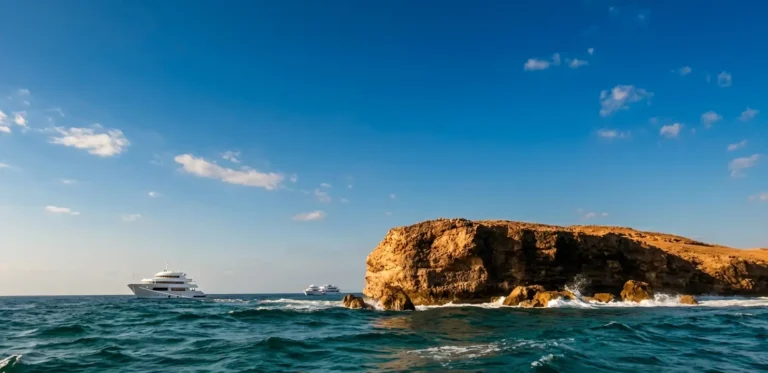
Ask any seasoned Red Sea diver to name the single most thrilling reef in the...
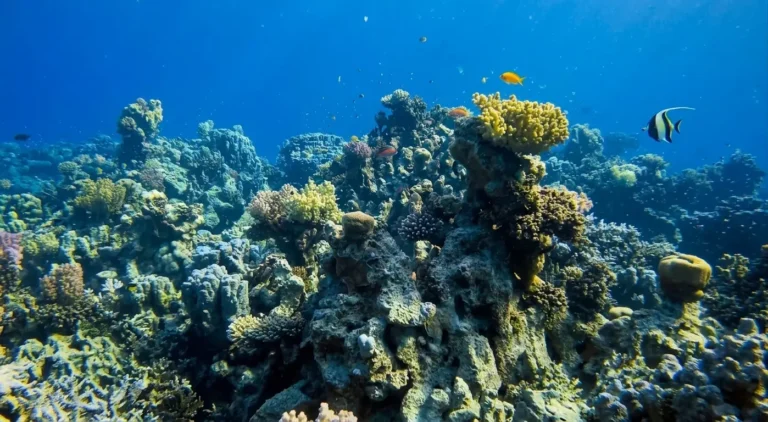
If you have ticked off the reefs of Hurghada and drifted the walls of the...
Ask any liveaboard veteran which reef in the far south of Egypt gets the adrenaline...
Liveaboard Marsa Alam
A liveaboard from Marsa Alam is the most accessible gateway to the southern Red Sea, departing from a hub served by direct international flights and just minutes from the harbour. From here, boats can reach a superb spread of southern reefs, offshore pinnacles and shark sites without long transfer times. This route is versatile — operators can tailor it toward relaxed reef diving, dolphin encounters or more advanced offshore action depending on the group and the season. It’s an excellent choice for divers who want the richness of the deep south with easy logistics, and it works well for mixed-ability groups travelling together.
Ask any liveaboard veteran which reef in the far south of Egypt gets the adrenaline...
If there is one dive site in Egypt’s far south that rewards you the instant...
If you are planning a southern Red Sea liveaboard, Claudia Reef — known locally as Sha’ab Claudia...
Picture yourself floating on the surface of a warm, glassy turquoise lagoon when suddenly dozens...
Red Sea North Route Liveaboard
The Red Sea north route liveaboard is the celebrated wrecks-and-reefs itinerary, blending world-famous shipwrecks with the dramatic reefs of the far north. This is the route for divers who want variety in a single week: haunting WWII cargo wrecks, colourful reef walls, and the sheltered marine park waters where reef sharks, barracuda and turtles gather. Because much of the north can be dived in more protected conditions, it’s the most beginner-friendly of the major routes, while still offering deep wreck penetration for the experienced. It runs superbly year-round and is a perfect first Red Sea liveaboard.
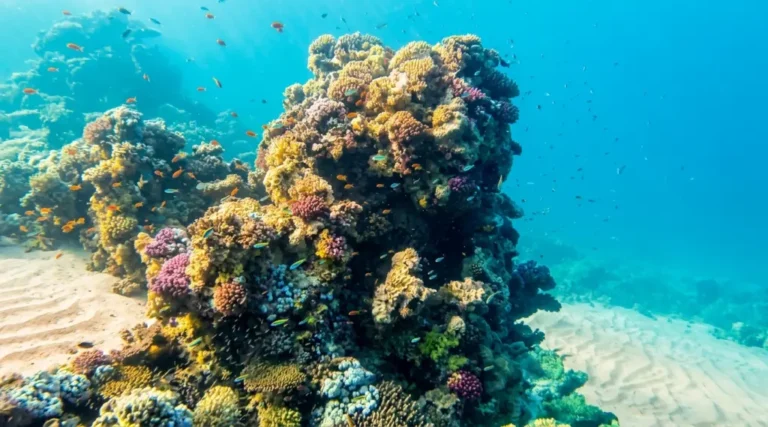
If you want to feel the raw power of the Red Sea, Woodhouse Reef Egypt diving is...
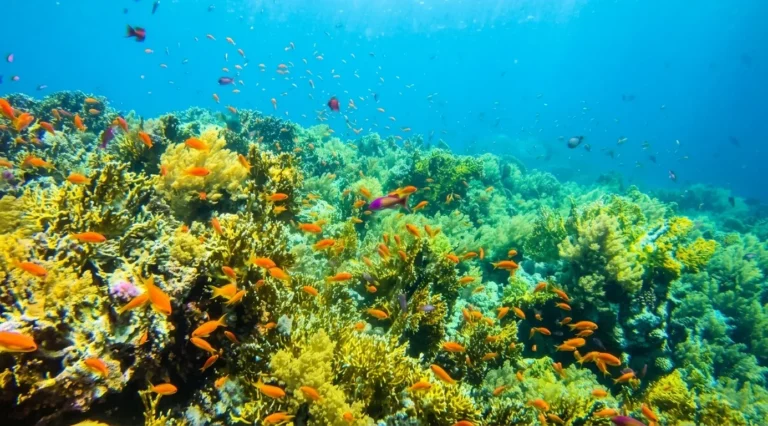
If you are searching for the single most iconic dive in the Straits of Tiran,...
What Is a Red Sea Liveaboard?
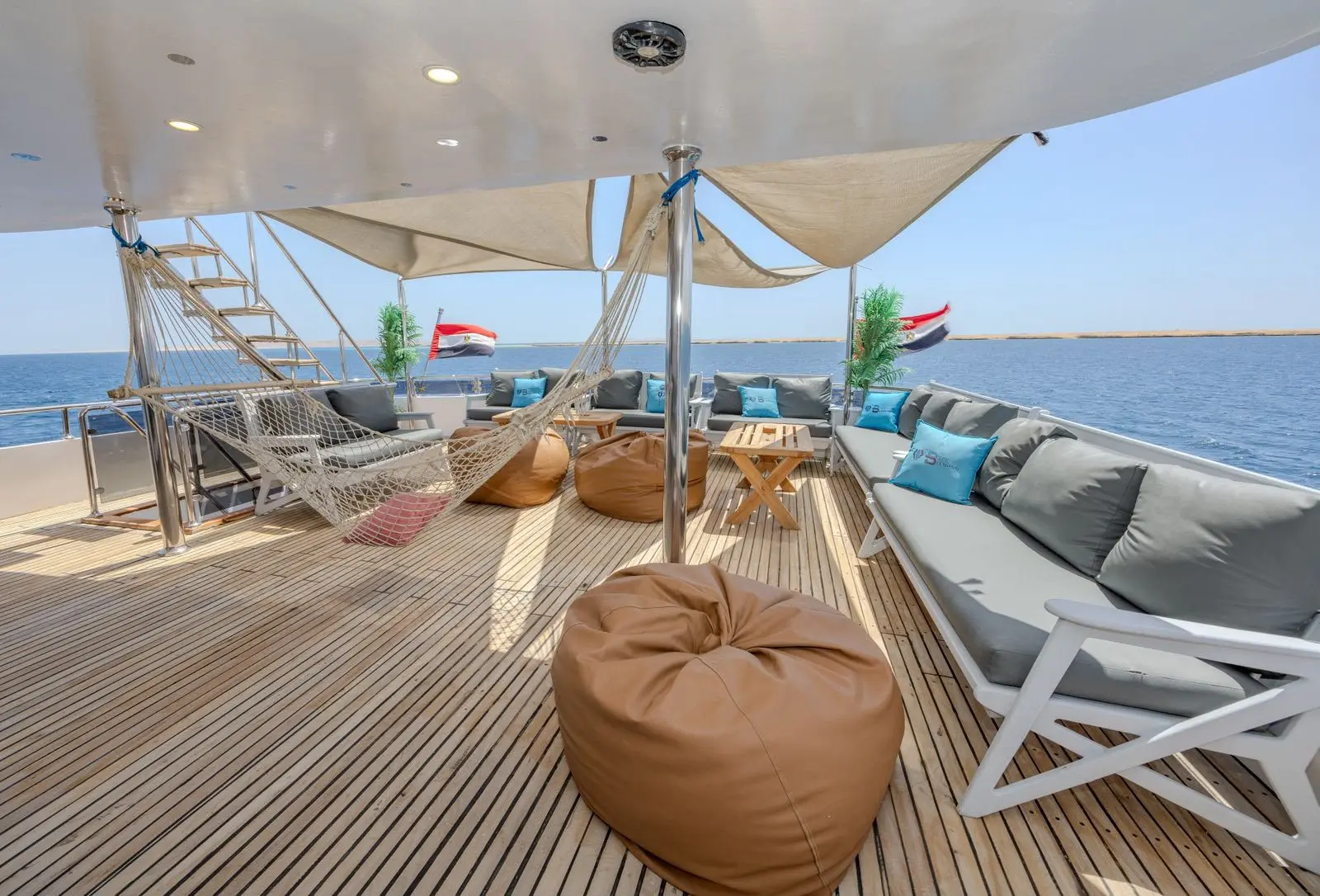
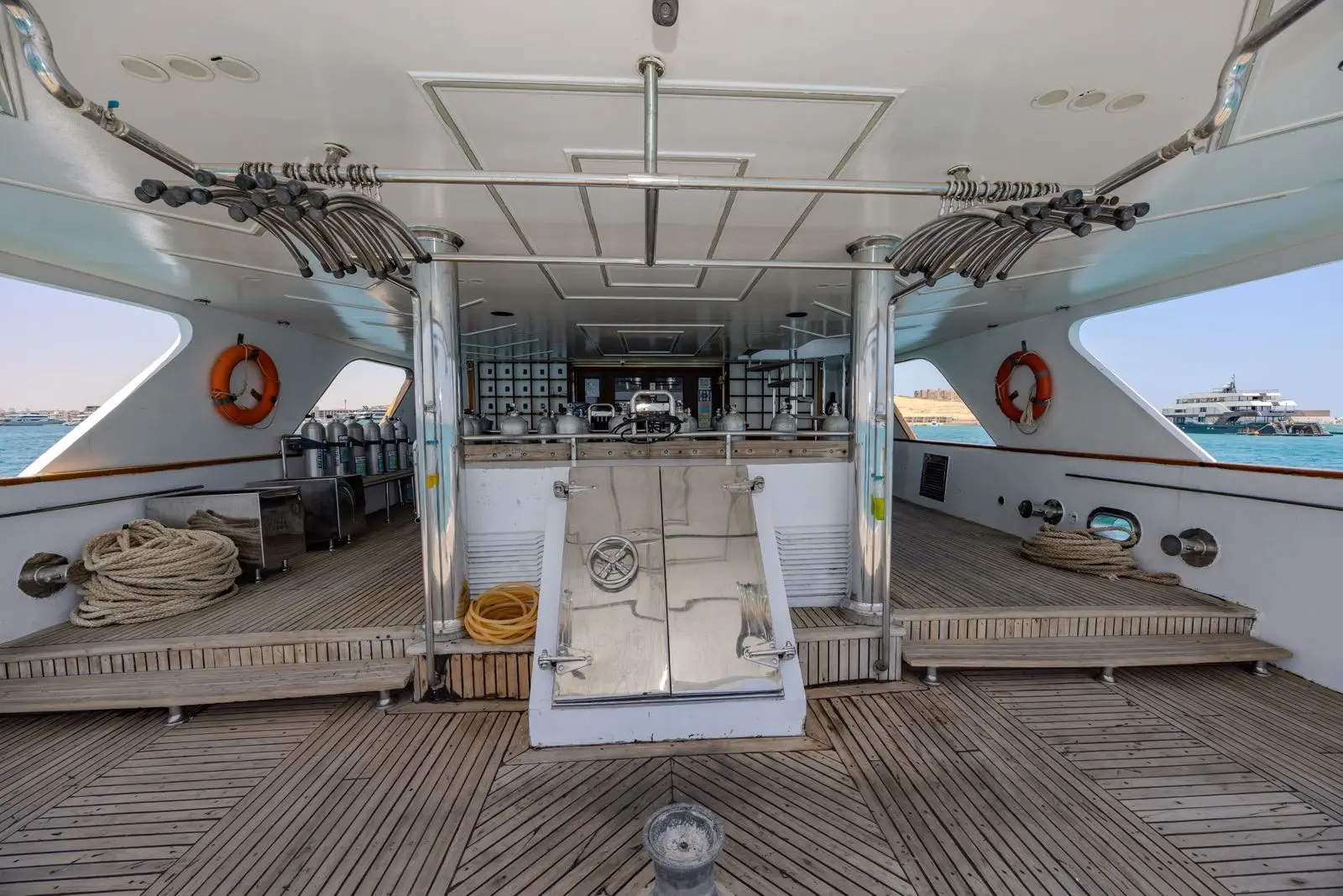
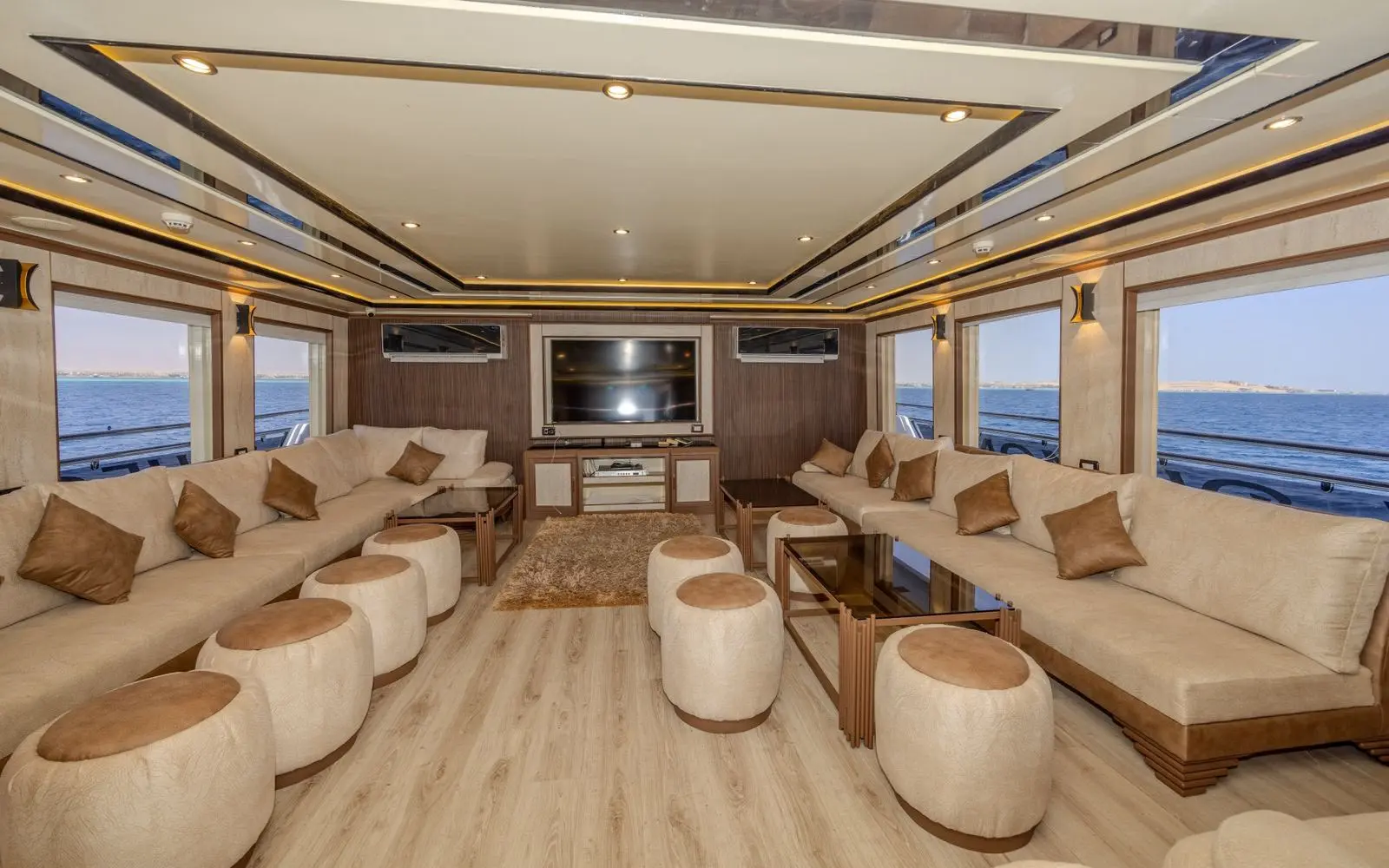
A liveaboard is a boat you live and sleep on for the duration of a diving safari — typically a week — with cabins, a dining saloon, a sun deck and a dedicated dive deck. Meals, tanks, weights, air fills and guided dives are included, so your only job is to eat, dive, sleep and repeat. The Red Sea’s calm, protected geography and short surface intervals make it one of the most comfortable liveaboard destinations on the planet.
Liveaboard vs. Day Diving from a Resort
Resort-based day diving is convenient and cheaper per day, but it limits you to reefs within an hour or two of shore. A liveaboard trades that convenience for range and quality.
- Access: Offshore reefs like the Brothers or Daedalus are only reachable overnight by boat.
- Dive volume: Up to 3–4 dives per day, including night and dawn dives, versus 1–2 from shore.
- Timing: You dive marquee sites early, before crowds.
- Community: A week with the same guides and 15–26 divers builds a genuinely social trip.
What Life Aboard Actually Looks Like
A typical day starts with a dawn dive briefing at 06:00, followed by breakfast, a mid-morning dive, lunch, an afternoon dive and often a night dive. Between dives you relax on the sun deck, refill on snacks, and let the crew handle tanks and transport. Nitrox is available on most boats, and the pace is relaxed but structured.
Why Choose the Red Sea for Your Liveaboard Adventure
Few destinations combine biodiversity, visibility, accessibility and price the way Egypt’s Red Sea does. It’s the reason this stretch of water remains the most booked liveaboard region in the world.
World-Class Reefs and Marine Biodiversity
The Red Sea hosts over 1,200 fish species and around 200 species of hard and soft coral, with a high rate of endemism. Expect walls carpeted in orange and purple soft corals, healthy fringing reefs, and pelagic action ranging from reef sharks to giant morays, Napoleon wrasse, turtles and pods of spinner dolphins.
Warm Water and Year-Round Visibility
Water temperatures range from about 21°C in winter to 30°C in late summer, and visibility frequently exceeds 30 metres. This is warm, clear, forgiving diving — ideal for long trips.
Exceptional Value for Money
Compared with equivalent liveaboard experiences in the Maldives, Indonesia or the Galápagos, a Red Sea liveaboard delivers comparable marine life at a fraction of the cost, with short, cheap flights from most of Europe.
Best Time for a Red Sea Liveaboard
The Red Sea dives year-round, but the ideal window depends on what you want to see. Shark itineraries have a defined season, while northern wreck-and-reef routes are excellent almost any month.
| Season | Water Temp | Best For | Notes |
|---|---|---|---|
| Spring (Mar–May) | 22–25°C | Thresher & hammerhead sharks, mantas | Excellent all-round conditions |
| Summer (Jun–Aug) | 27–30°C | Warm water, calm seas, north routes | Hot on deck; oceanic whitetips build |
| Autumn (Sep–Nov) | 26–28°C | Oceanic whitetips, sharks, wrecks | Peak shark season; book early |
| Winter (Dec–Feb) | 21–23°C | North wrecks, quieter reefs | Cooler; a 5–7mm wetsuit recommended |
How to Choose the Right Red Sea Liveaboard Boat
The boat you pick shapes your entire week. Egyptian liveaboards range from comfortable standard vessels to five-star luxury yachts, and the right choice depends on your budget, experience and expectations.
Boat Categories: Standard, Deluxe and Luxury
- Standard: Solid, comfortable boats with shared or private bathrooms and reliable dive operations at the best price.
- Deluxe: Larger cabins, en-suite bathrooms, better dining and more deck space.
- Luxury: Spacious suites, air-conditioned throughout, jacuzzis, camera stations, premium food and personal service.
Safety Features to Check Before Booking
- Twin engines, backup generators and a desalination watermaker
- Oxygen kits, first-aid stations and a defibrillator on board
- Life rafts and jackets rated for full passenger capacity
- Marine radio, satellite phone and GPS tracking
- Nitrox membrane or banks and well-maintained compressors
Ask About the Crew-to-Guest Ratio
A strong boat carries enough dive guides to keep group sizes small — ideally no more than six to eight divers per guide. Ask how many guides are aboard and whether a private guide is available.
Cabin Types and What to Expect
Cabins range from lower-deck twins to upper-deck master suites with sea-view windows. Lower decks are cheaper and more stable in swell; upper decks offer more light and space. Solo travellers should check whether a single supplement or a guaranteed share is offered.
Red Sea Liveaboard Costs & What’s Included
A week-long Red Sea liveaboard typically ranges from budget to luxury depending on the boat and route. Understanding what’s bundled — and what isn’t — prevents surprises.
- Usually included: Cabin, all meals, snacks, drinking water, tea/coffee, tanks, weights, air fills and guided dives.
- Often extra: Nitrox, marine park and port fees, equipment rental, alcohol/soft drinks, crew tips and airport transfers.
- Always separate: International flights, dive insurance, visa and gratuities.
Budget an additional amount for park fees, fuel surcharges and a customary end-of-week tip for the crew (typically €50–€100 per guest).
Diving Levels & Certifications Required
Is a Red Sea Liveaboard Suitable for Beginners?
Yes — for the right route. North and Marsa Alam itineraries welcome newly certified Open Water divers, offering sheltered reefs and shallow wrecks. Most operators recommend a minimum of around 20–30 logged dives to get the most from any liveaboard, since you’ll be diving intensively for a week.
Advanced and Technical Diving
Offshore shark routes like BDE and Daedalus generally require Advanced Open Water certification, a minimum logged-dive count, and comfort with strong currents, negative-entry descents and deep-blue navigation. Many boats also cater to technical divers with twinsets, stages, sofnolime and trimix fills on request.
Recommended Certifications to Add Before You Go
- Advanced Open Water and Deep Diver
- Enriched Air Nitrox — hugely valuable for repetitive diving
- Wreck Diver for the north route
- A recent refresher if you haven’t dived in 6–12 months
Marine Life You Can Encounter on a Red Sea Liveaboard
The Red Sea’s biodiversity is the star of every trip. Depending on the route and season, look out for:
- Oceanic whitetip, grey reef, silky and whitetip reef sharks
- Scalloped hammerhead schools and thresher sharks
- Manta rays and eagle rays
- Spinner and bottlenose dolphins
- Green and hawksbill turtles
- Napoleon wrasse, giant morays and schooling barracuda
- Vast soft-coral gardens and healthy hard-coral reefs
What to Pack for a Red Sea Liveaboard
Packing smart makes a week aboard effortless. Bring your own well-serviced gear where possible, and don’t overpack for deck life.
- 3mm to 5mm wetsuit (5–7mm in winter) plus a hood for cooler months
- Dive computer, SMB and reel — mandatory on most boats
- Reef-safe sunscreen, sun hat and sunglasses
- Certification cards, logbook and dive insurance proof
- Seasickness remedies for offshore crossings
- A refillable water bottle and warm layer for night dives
- Power adapters and camera charging/backup storage
Health, Safety & Insurance
Dive Insurance Is Non-Negotiable
Every reputable operator requires proof of dive-specific insurance covering hyperbaric treatment and evacuation. DAN (Divers Alert Network) policies are the standard, and offshore routes make coverage essential given the distance to shore.
Hyperbaric Chambers and Emergency Protocols
Recompression chambers are located in Hurghada, Sharm El Sheikh and Marsa Alam. Conservative dive profiles, mandatory safety stops, nitrox use and staying well-hydrated dramatically reduce risk on a high-volume week. Always follow crew briefings on currents and depth limits.
Sustainable & Responsible Diving in the Red Sea
The reefs that make a Red Sea liveaboard so special are under pressure from climate change and tourism. Diving responsibly keeps them thriving for the next generation.
- Maintain perfect buoyancy and never touch or stand on coral
- Keep a respectful distance from sharks, dolphins and turtles
- Use reef-safe sunscreen and refuse single-use plastics
- Support boats that follow marine-park mooring rules and no-anchor policies
- Never collect shells, coral or marine souvenirs
How to Book Your Red Sea Liveaboard
Booking a great trip is straightforward when you follow a clear sequence.
- Choose your route based on experience and target marine life.
- Pick your season — shark routes in spring/autumn, wrecks year-round.
- Select a boat matching your comfort and budget.
- Confirm inclusions — nitrox, fees, transfers and equipment.
- Secure travel and dive insurance before departure.
- Book flights and transfers to your departure port.
Frequently Asked Questions
How many dives will I do on a Red Sea liveaboard?
Most week-long trips offer three to four dives per day, totalling roughly 17–22 dives over a standard six- or seven-night itinerary. This includes dawn and night dives on many routes. The exact number depends on crossings, weather and marine-park regulations.
Do I need to be an experienced diver?
Not necessarily. North and Marsa Alam routes suit newly certified Open Water divers, while offshore shark routes like BDE and Daedalus require Advanced certification and a solid logged-dive count. Around 20–30 logged dives is a good baseline for any liveaboard.
What is the best month for a Red Sea liveaboard?
Spring and autumn are ideal all-rounders. Thresher and hammerhead sharks peak in spring, oceanic whitetips gather in autumn, and northern wreck routes dive well throughout the year. Summer offers the warmest water and calmest seas.
Is the Red Sea safe for liveaboard diving?
Yes. Reputable operators run well-equipped, regularly inspected boats with strict safety protocols, oxygen kits and emergency equipment. Carrying dive insurance and following crew briefings on currents and depth keeps a high-volume week very safe.
Will I get seasick on a liveaboard?
Most of the Red Sea is sheltered and calm, so seasickness is uncommon on northern and reef-based routes. Offshore crossings to sites like the Brothers or Daedalus can be rougher, so pack remedies if you’re sensitive to motion.
Can I dive on Nitrox during the trip?
Most Red Sea liveaboards offer Nitrox, and it’s highly recommended for repetitive daily diving as it extends bottom time and shortens surface intervals. You’ll need Enriched Air certification, and there’s usually a small supplementary fee.
What should I tip the crew?
Tipping is customary and appreciated. A typical gratuity is around €50–€100 per guest for the week, collected on the final evening and shared among the crew. It’s separate from the trip price, so budget for it in advance.
How far in advance should I book?
Popular shark itineraries and peak-season dates sell out months ahead, so booking six to twelve months in advance is wise. Off-peak northern routes can sometimes be booked closer to departure, but early booking secures the best cabins and prices.
Final Thoughts: Your Red Sea Liveaboard Awaits
A Red Sea liveaboard is more than a diving holiday — it’s an immersion into one of the planet’s richest marine ecosystems, from shark-patrolled offshore plateaus to soft-coral gardens and haunting WWII wrecks. With six distinct routes to choose from, warm water year-round, unbeatable value and world-class marine life, Egypt remains the definitive liveaboard destination for divers of every level.
Pick the route that matches your ambitions, choose the right boat and season, sort your insurance, and let the crew take care of the rest. Your next Red Sea liveaboard could be the diving week that redefines what you thought was possible beneath the surface — so start planning today, and prepare to log the dives of a lifetime.