


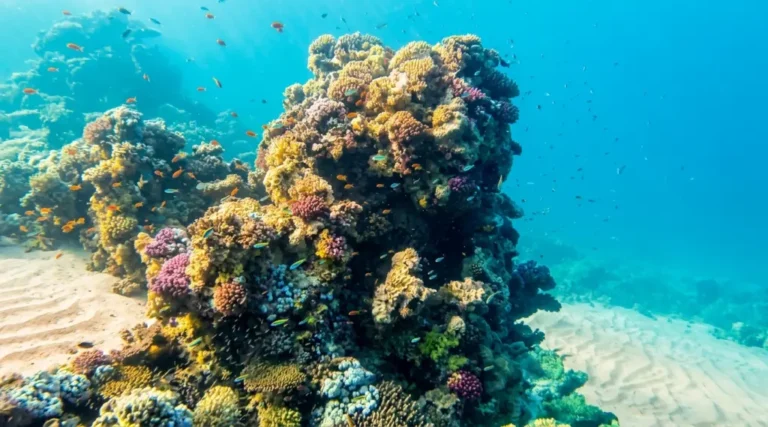
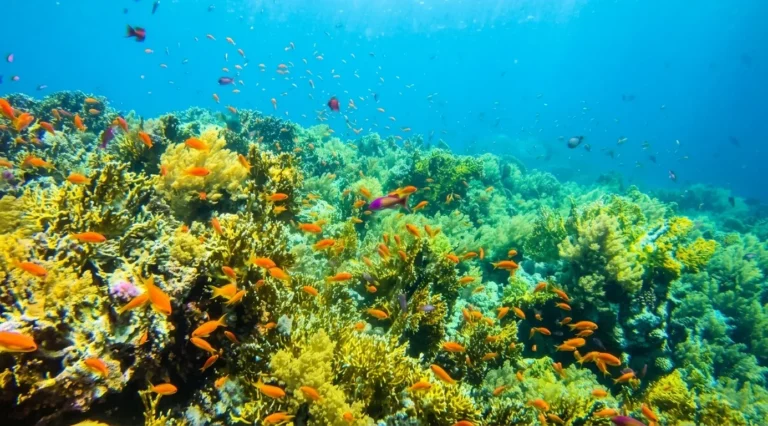
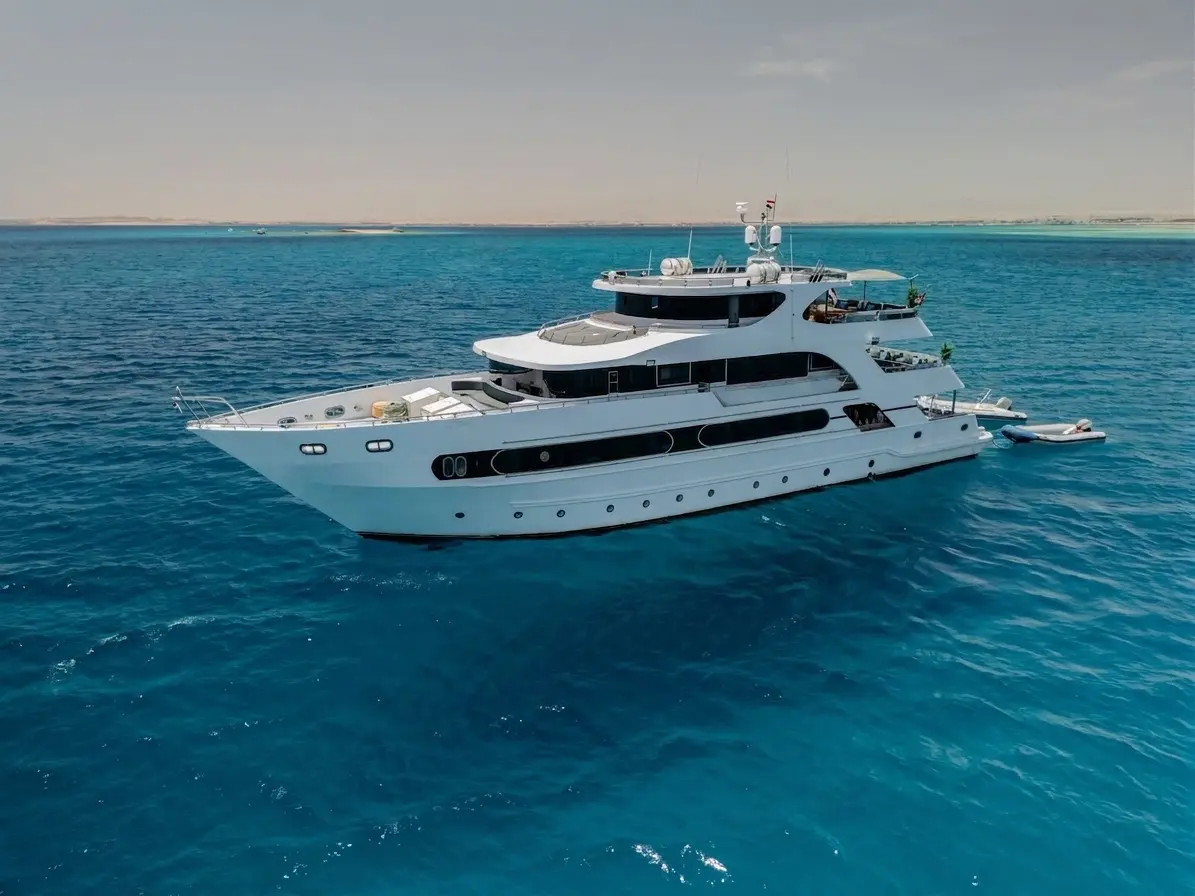
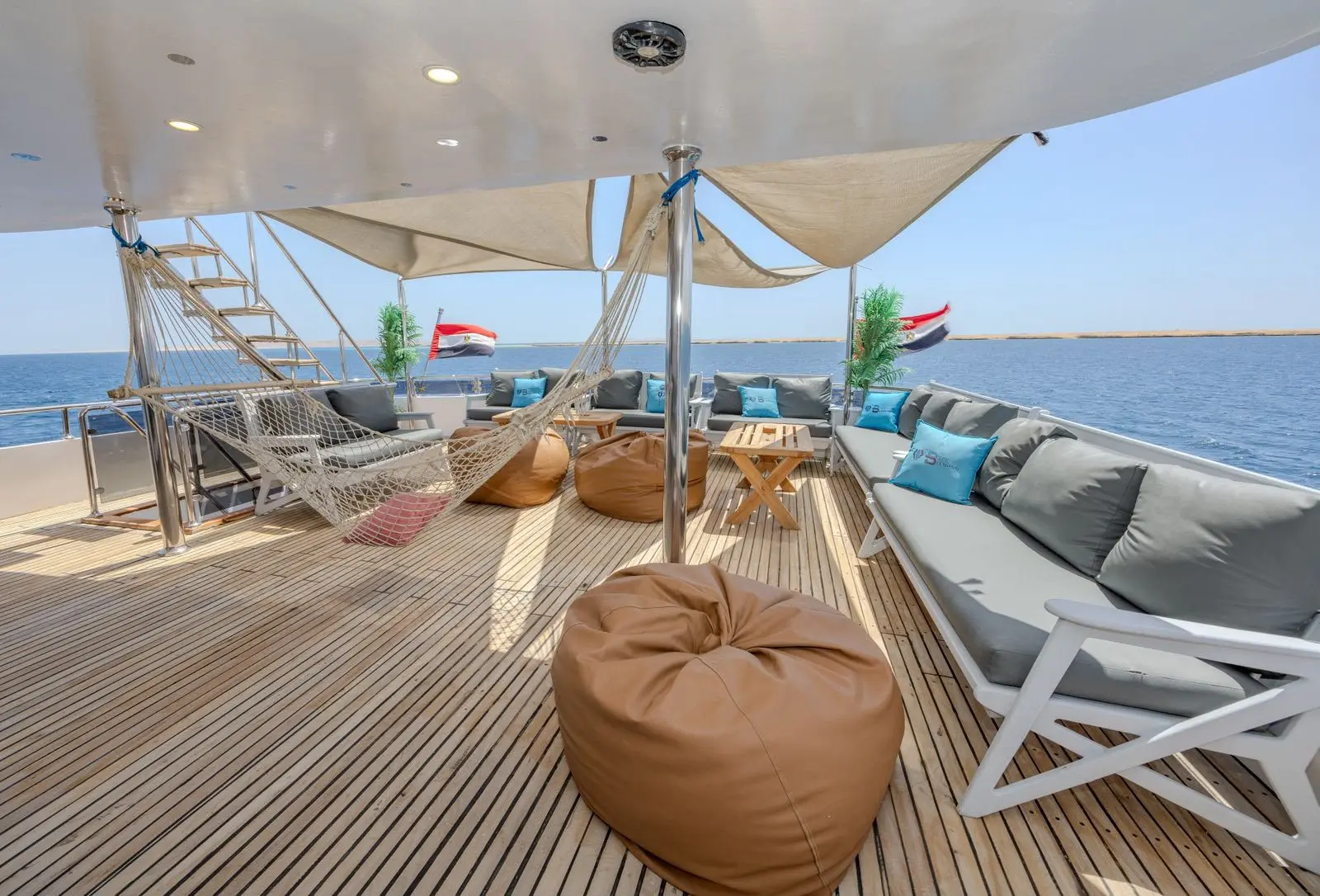
The North Route is the Red Sea itinerary almost everyone dives first — and plenty of people keep coming back to. It links the world's most famous wreck, a reef graveyard holding four more, the drift-swept reefs of the Straits of Tiran, and the coral drop-offs of Ras Mohammed National Park, all within short, comfortable crossings from Hurghada or Sharm el-Sheikh.
Compared to the offshore southern routes, the sailing is gentler, the currents are more forgiving, and the diving is far more varied: cargo holds full of 1940s motorcycles one dive, spinner dolphins over a sandy lagoon the next. This category collects our full guides to every site on the route.
Ras Mohammed National Park
Egypt's first national park, sitting on the tip of the Sinai peninsula where the Gulfs of Suez and Aqaba meet. Ras Mohammed National Park covers the legendary Shark & Yolanda Reef drift, Anemone City, Jackfish Alley and the scattered cargo of the Yolanda — plus the summer schooling season, when huge aggregations of snapper and barracuda gather on the plateau.
The Wrecks
- SS Thistlegorm — a British armed merchant ship bombed in 1941 and resting at around 30 m, holds still packed with Bedford trucks, BSA and Norton motorcycles, rifles and two locomotives blown clear onto the seabed. The most famous wreck dive on earth, and the reason many people book this route.
- SS Dunraven — an 1876 steamer lying upside down near Beacon Rock at 18–30 m, broken in two, glassfish swirling through the shattered hull. Easier and more relaxed than the Thistlegorm.
Abu Nuhas — The Ship Graveyard
A shallow reef sitting right on the Gulf of Suez shipping lane, with four wrecks lined up along its northern slope:
- Giannis D — a Greek freighter lost in 1983, its stern section canted at a disorienting angle. Arguably the most photogenic wreck in the north.
- Carnatic — the "wine wreck," a P&O steamer sunk in 1869. Its exposed wooden ribs and gorgeous coral growth make it feel more like a shipwreck should than anything else in the Red Sea.
- Chrisoula K — the "tile wreck," sitting from 4 m to 27 m with holds full of Italian floor tiles. (Wreck historians still argue over whether this hull is actually the Chrisoula K or the Marcus.)
- Kimon M — the "lentil wreck," lost in 1978 on the reef's eastern end, more exposed and less frequently dived than its neighbours.
The Straits of Tiran
Four reefs named after 19th-century British cartographers, strung across the narrow channel into the Gulf of Aqaba. Strong tidal current runs through them, which is exactly why the fish life is so good.
- Jackson Reef — the northernmost, with the rusting remains of the Lara on top and hammerhead sightings on the deeper north side in summer.
- Woodhouse Reef — long, narrow and dived almost exclusively as a drift, with the famous "Woodhouse Canyon" cut at its southern end.
- Thomas Reef — the smallest and the richest, with a spectacular deep canyon and dense soft coral. Currents here demand respect.
- Gordon Reef — marked by the grounded hull of the Loullia, with a sandy plateau, eels, turtles and reliable easy diving.
Sha'ab El Erg (Dolphin House)
A large horseshoe reef north of Hurghada with a shallow, sandy lagoon where a resident pod of spinner dolphins regularly rests. Also home to turtles, rays and easy coral gardens — usually the gentle bookend to a wreck-heavy week. See the Sha'ab El Erg (Dolphin House) guide.
Who Is the North Route For?
This is the most accessible liveaboard itinerary in Egypt. Most operators accept Open Water certification with around 20 logged dives, though Advanced makes more sense given the Thistlegorm sits at 30 m and Tiran can run fast. Nitrox is highly recommended for repetitive deep wreck days, and a wreck or deep speciality unlocks the interior of the Thistlegorm. Marine Park fees apply.
Best Time to Dive the North Route
Boats run year-round. May–September brings the warmest water, the calmest crossings and the summer schooling season at Ras Mohammed; March–May and October–November offer the best balance of comfort and marine life. Winter is entirely divable — the sites are close to shelter — but expect cooler water, wind, and a 5–7 mm suit.
FAQ About Red Sea North Route Liveaboard
Where do North Route liveaboards depart from?
Almost all leave from Hurghada, with some itineraries starting in Sharm el-Sheikh or Safaga.
Do I need to be an experienced diver for the North Route?
No — it's the most beginner-friendly Red Sea itinerary. Open Water with a modest number of logged dives is usually enough, though Advanced is better suited to the Thistlegorm's depth and Tiran's currents.
How many wrecks are on the North Route?
Typically six: the SS Thistlegorm, SS Dunraven, and the four Abu Nuhas wrecks — Giannis D, Carnatic, Chrisoula K and Kimon M.
Can you penetrate the SS Thistlegorm?
Yes, the holds are large and well-lit, and most guides lead swim-throughs. Proper wreck training and a torch are strongly recommended.
How is the North Route different from BDE or the Deep South?
The North Route is wreck-driven, close to shore and suitable for less experienced divers. BDE and the Deep South trade wrecks for offshore walls, strong currents and shark encounters, and require 50+ dives.