


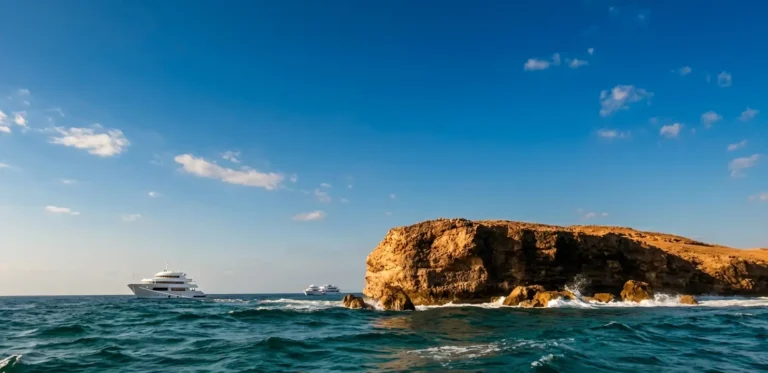
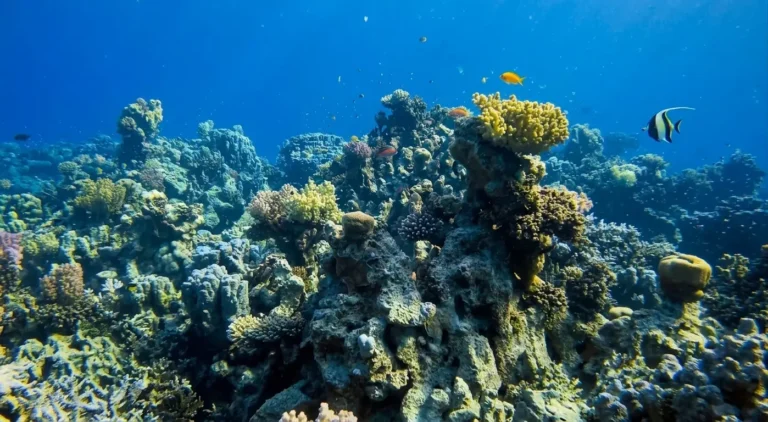
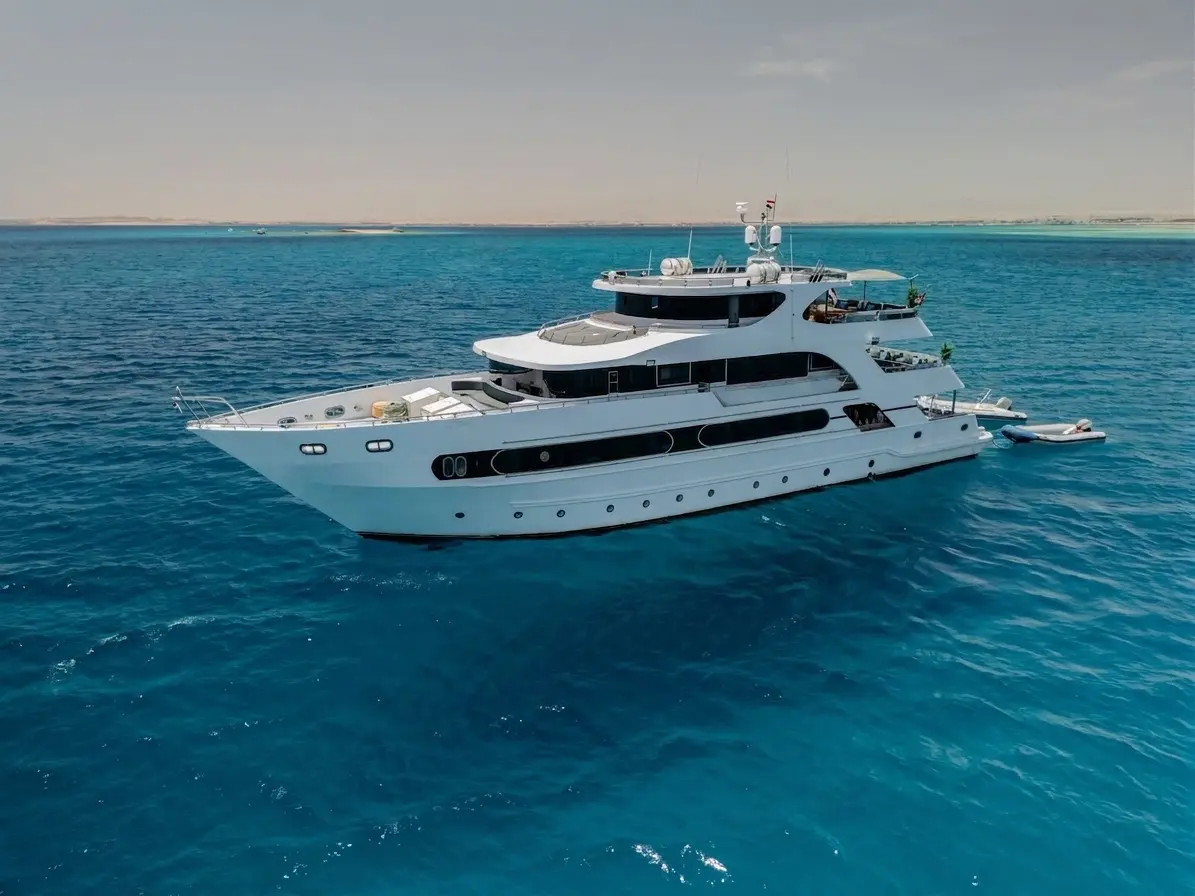
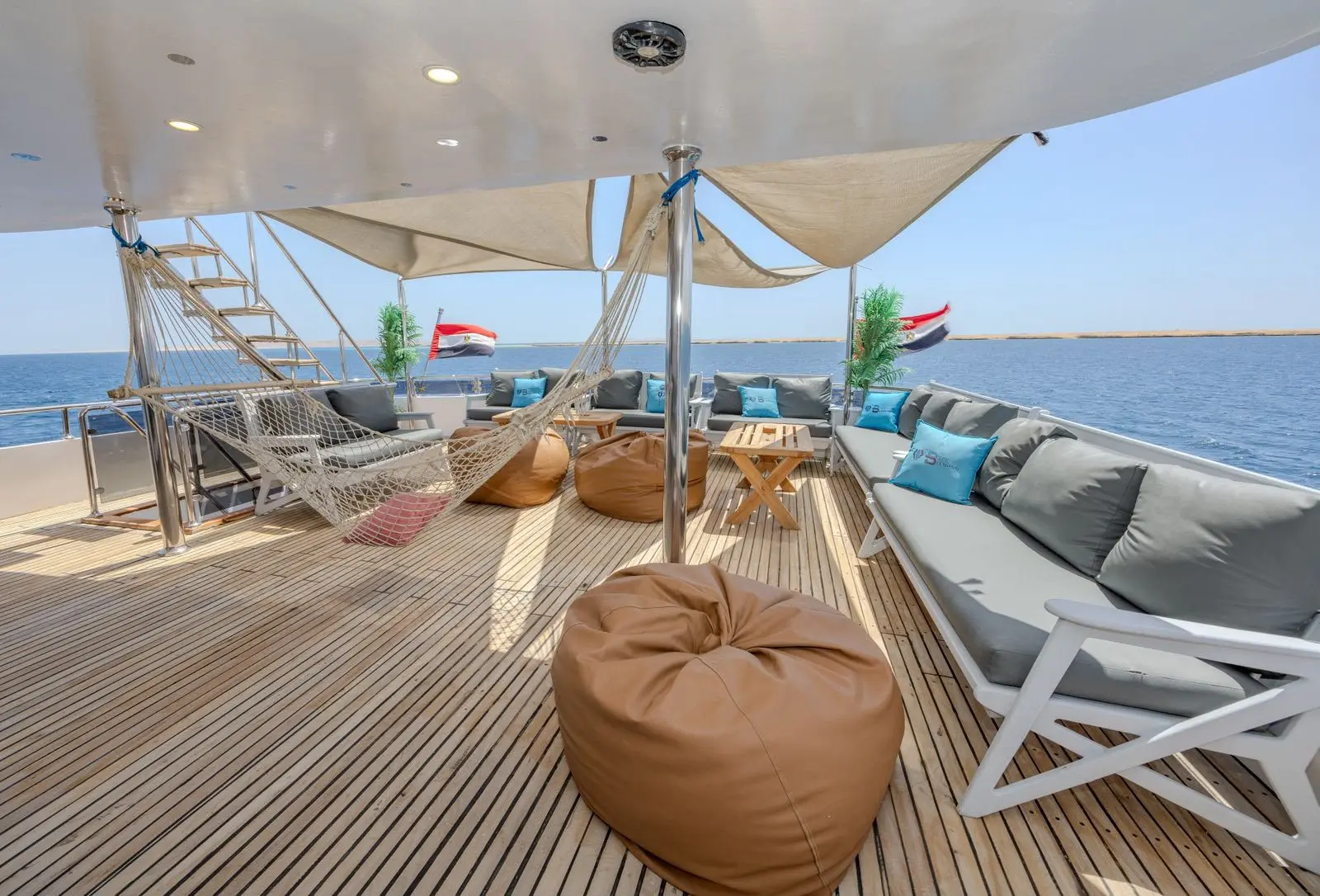
This is where Egypt runs out of coastline. Daedalus Reef, Rocky Island and Zabargad sit far south of Marsa Alam in open water, reachable only by liveaboard after long overnight crossings — and that isolation is the whole point. Fewer boats, harder access, and reefs that still look the way the Red Sea looked decades ago.
The route trades the wreck-heavy north for big blue encounters, vertical walls in absurd visibility, and one genuinely strange island made of gem-quality olivine. This category collects our full guides to every site on the itinerary.
Daedalus Reef (Abu Kizan)
A lone circular reef and lighthouse standing roughly 90 km offshore, with sheer walls on every side. The northern plateau is the Red Sea's most reliable spot for schooling scalloped hammerheads in summer, while the south and east offer anemone city, grey reef sharks and enormous hard coral gardens. Currents are strong and unforgiving — this is a blue-water, negative-entry dive. Full details in the Daedalus Reef guide.
Rocky Island
The southernmost dive site in Egyptian waters — a small, bare rock with no shelter and nothing around it but open ocean. What it lacks above water it makes up for below: some of the healthiest soft coral in the Red Sea, dense schooling fish, and regular encounters with hammerheads, threshers, grey reefs and oceanic whitetips. Conditions can be genuinely challenging, and itineraries only visit when the weather allows. See the Rocky Island guide.
Zabargad Island
Zabargad is the odd one out and the reason many divers book this route. A 4.5 km island of reddish peridot-bearing rock — mined for gemstones since antiquity — surrounded by a sheltered lagoon, seagrass beds with turtles, hard coral gardens and two wrecks: the Neptunia on the northern side and the Russian vessel often known as the Khanka. It's the calm counterweight to Daedalus and Rocky. Read the Zabargad Island guide.
Who Is This Route For?
Long crossings, deep blue entries, strong currents and no shore in sight. Most operators require an Advanced certification and 50+ logged dives, with drift and deep experience strongly recommended. Nitrox and a surface marker buoy are effectively mandatory, and Marine Park permits apply. Itineraries are weather-dependent — Rocky and Zabargad are the first stops dropped when the wind picks up.
Best Time to Dive Daedalus, Rocky & Zabargad
Boats generally run the Deep South from March to December. June–September is the strongest window for hammerheads at Daedalus and offers the calmest crossings; October–November brings oceanic whitetip season and excellent all-round conditions. Winter is possible but the southern transits get rough enough that schedules change often.
FAQ About Daedalus Rocky Zabargad Liveaboard
Where do Daedalus, Rocky and Zabargad liveaboards depart from?
Most start in Port Ghalib or Marsa Alam; some longer itineraries leave from Hurghada or Safaga and add extra sailing time.
How long is the trip?
Typically 7 nights, since the southern crossings eat a full day of sailing in each direction.
Do I need to be an experienced diver?
Yes. Expect Advanced Open Water plus 50+ dives, and be comfortable with negative entries, blue-water descents and strong current.
Is Rocky Island always included?
No. It's exposed and weather-dependent, so captains substitute alternative sites when conditions don't cooperate.
What's the difference between this route and BDE?
BDE includes the Brothers Islands and their wrecks; the Deep South route swaps those for Rocky Island and Zabargad, trading wreck diving for remoteness and coral quality.