Ask any seasoned Red Sea diver to name the single most thrilling reef in the country, and the answer often comes back the same: Rocky Island, Egypt. This tiny, uninhabited outcrop in the deep south of the Egyptian Red Sea is barely 500 metres long, yet it punches so far above its weight that liveaboards cross the better part of a day of open water just to reach it. What waits below the surface is not gentle, and it is not for everyone — but for divers chasing sharks, walls of soft coral, and the raw, unfiltered energy of the open ocean, nowhere else in Egypt compares.
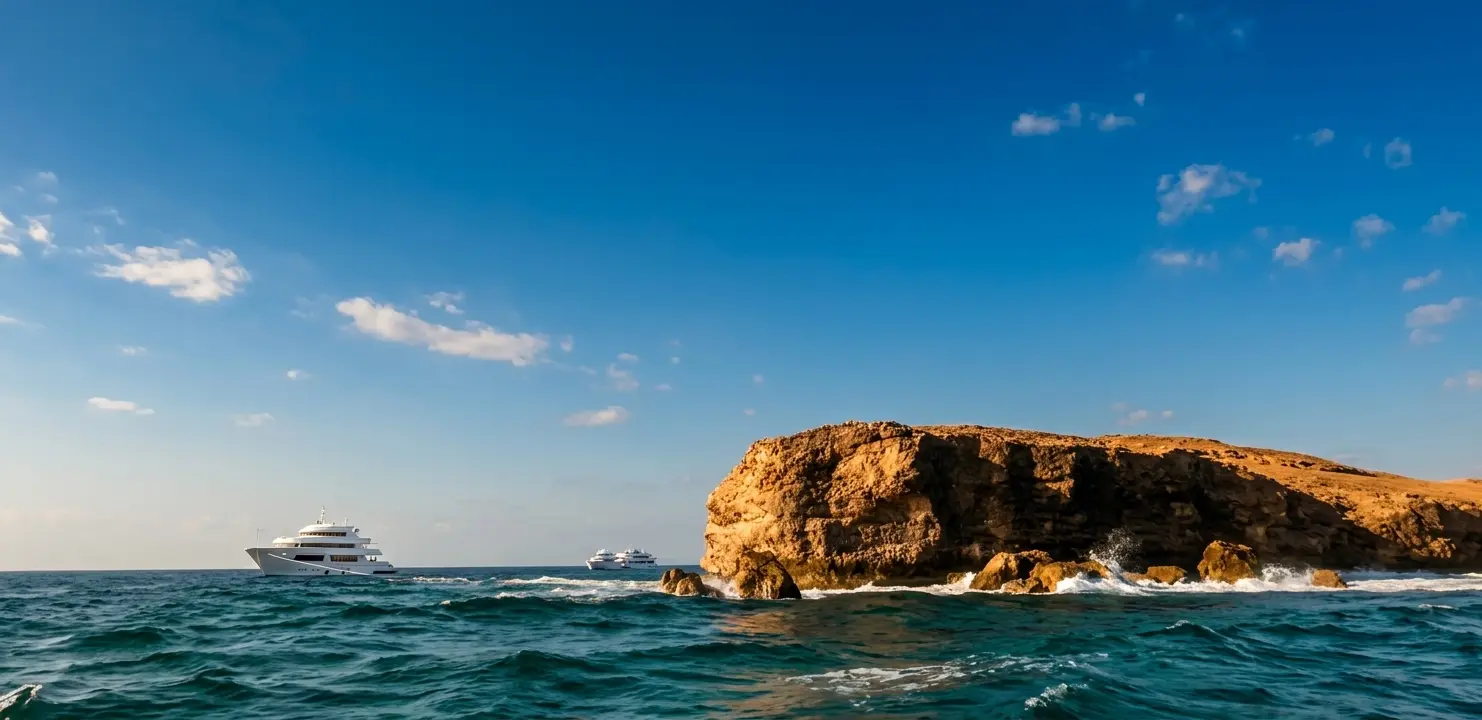
Rocky Island sits at the very edge of Egyptian waters, close to the maritime border with Sudan, sharing its patch of sea with the equally legendary Zabargad Island. Together they form the crown jewels of the “Deep South” itineraries. The island’s exposed position means it is battered by current and swell, and that same exposure is exactly why the marine life here is so spectacular. Nutrient-rich water sweeping past steep drop-offs draws in pelagic predators that rarely visit the sheltered northern reefs.
This guide distils years of firsthand experience diving the southern Red Sea into one exhaustive resource. You’ll learn where Rocky Island is, how to get there, what you’ll see, when to go, what level of experience you truly need, and how to dive it safely and responsibly. Whether you’re building a bucket list or booking next season’s liveaboard, this is everything you need to know before you drop into these waters.
Where Is Rocky Island, Egypt?
Rocky Island lies in the far south of Egypt’s Red Sea, roughly 170 kilometres southeast of Marsa Alam and only a short hop — about 6 kilometres — southeast of Zabargad (St. John’s) Island. It is the southernmost offshore island reachable on a standard Egyptian liveaboard, sitting close to the Sudanese frontier. Its isolation is the whole point: there is no coastline nearby, no dive centre, and no quick route to shore-based help, which shapes everything about how the site is dived.
The Geography of the Island
Rocky Island is triangular in shape, measuring just over 500 metres long and around 300 metres wide. Its northeastern and southeastern faces run relatively straight, while the western side curves in a gentle arc. A shallow plateau rings the island, extending roughly 35 metres out from the shore before the seabed falls away into deep blue water. This combination of a shallow coral shelf meeting a sudden abyssal drop-off is what creates the dramatic wall diving the site is famous for.
Why the Location Matters for Diving
Because Rocky Island stands alone in open water, it acts like a magnet in the current. The northern and eastern shores take the brunt of the prevailing wind, waves, and current — and those are precisely the sides where the underwater action concentrates. Pelagic species patrol the exposed edges, while the walls are cloaked in some of the healthiest coral growth in the entire Red Sea, protected from mass tourism by sheer distance.
Diving Rocky Island, Egypt: What to Expect Underwater
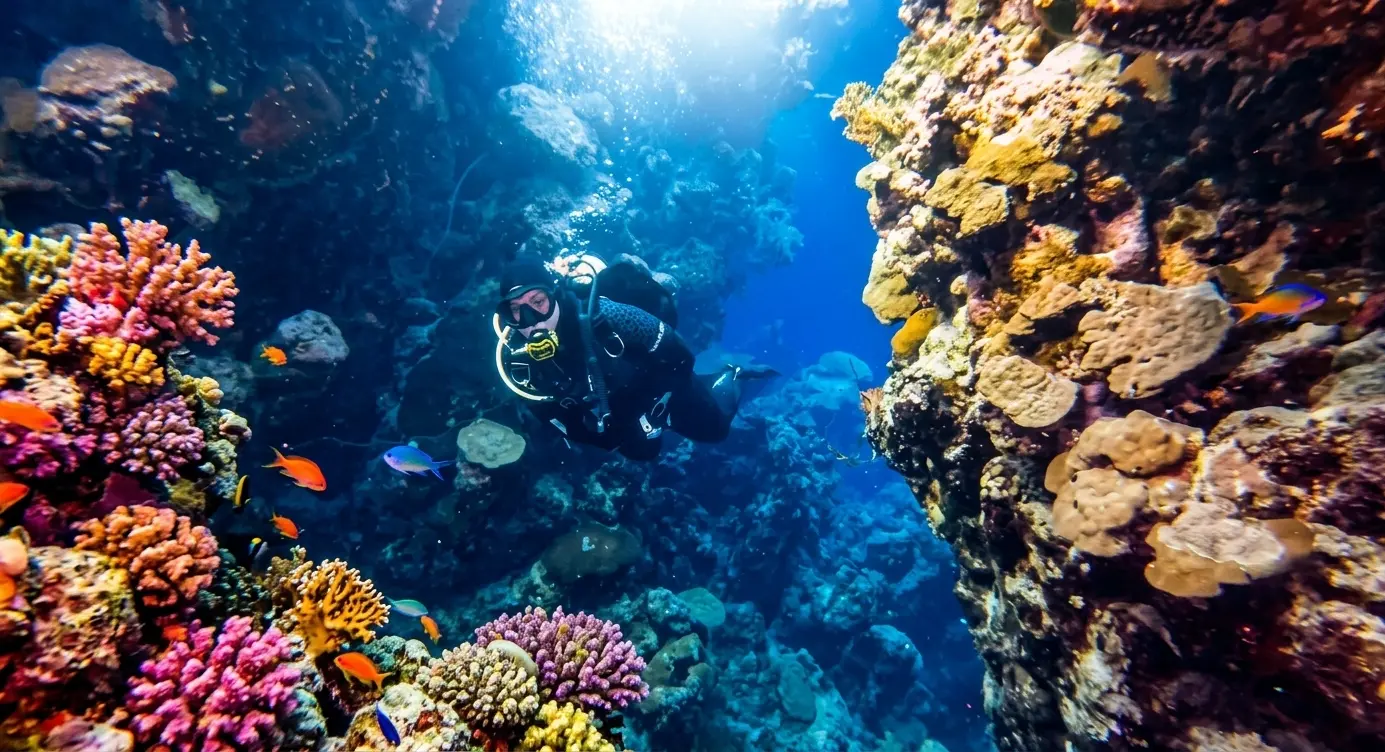
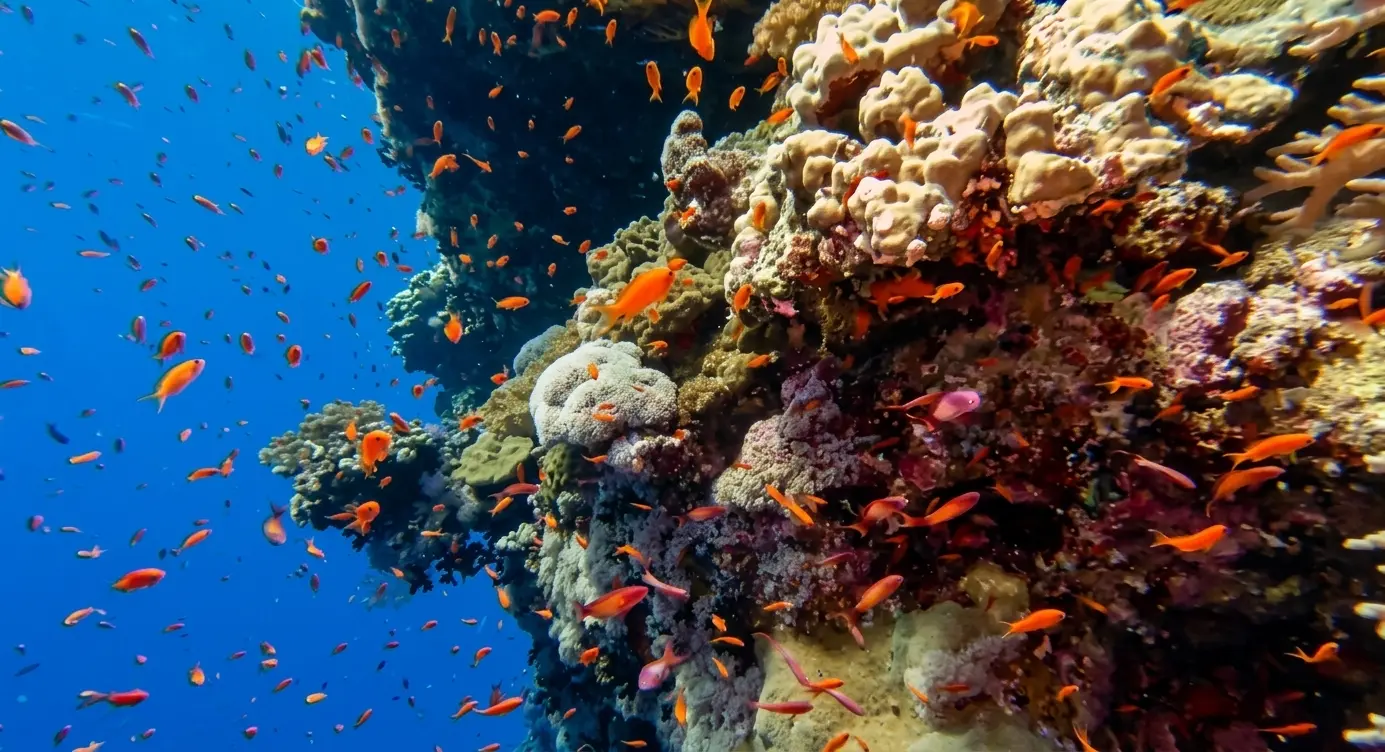
Diving Rocky Island, Egypt is a big-water, adrenaline experience. The topography is defined by sheer walls plunging to well over 100 metres, overhanging coral gardens, caves, tunnels, and swim-throughs. Visibility is routinely excellent — often 30 to 40 metres — and the reef itself is a riot of gorgonian fans, black coral, and dense soft-coral cover clinging to the vertical faces.
Signature Dive Zones Around the Island
Rather than a single dive, Rocky Island is best understood as a series of connected drift dives around its perimeter, each with its own character:
- The North Plateau: The prime spot for pelagic encounters. Divers typically drop onto the plateau, then hover on the edge of the blue to watch for sharks cruising the drop-off. Current here can be strong.
- The Eastern Wall: A dramatic, current-swept vertical face carpeted with soft corals and patrolled by schooling fish. This is classic drift territory — you fly along the wall as the reef unfolds beside you.
- The Southern & Southeastern Corners: Slightly more sheltered, with beautiful coral formations, swim-throughs, and reliable reef-fish density.
- The Western Arc: The gentler, more protected side. This is where hammerheads and dolphins are most often reported, and it offers a calmer profile when conditions on the exposed sides are too rough.
Typical Depth, Visibility and Current
The reef offers something across a wide depth range, but the truly deep water demands discipline. Below is a quick-reference snapshot of the conditions you should plan around.
| Condition | Typical Range at Rocky Island |
|---|---|
| Recommended dive depth | 15–40 metres (wall drops to 100 m+) |
| Visibility | 30–40 metres on a good day |
| Current | Medium to strong; drift diving is the norm |
| Water temperature | ~22°C (winter) to ~28–29°C (summer) |
| Dive type | Boat-based drift diving from a liveaboard |
| Access | Liveaboard only — no shore or day-boat access |
Marine Life at Rocky Island
If Rocky Island has a headline act, it is sharks. The site is one of the most reliable shark encounters in Egyptian waters, and the surrounding deep, exposed water gives you a genuine shot at pelagic species that shy away from busier reefs further north.
Sharks: The Main Attraction
The reef supports a resident population of grey reef sharks, which are the dominant predators here and are often seen patrolling the edge of the plateau in loose schools. Beyond them, Rocky Island offers seasonal and occasional sightings of some of the Red Sea’s most coveted species:
- Grey reef sharks — the ever-present locals, frequently seen on every dive.
- Scalloped hammerheads — most likely on the western side and in the warmer months, sometimes in schools.
- Oceanic whitetip (longimanus) — the bold, curious open-ocean shark that makes the deep south famous, best in autumn.
- Silvertip and silky sharks — pelagic wanderers drawn to the offshore drop-offs.
- Thresher sharks — occasional, rewarding lucky divers who watch the blue.
- Tiger sharks — rare, but not unheard of, adding to the site’s big-animal reputation.
Pelagics, Reef Fish and Rays
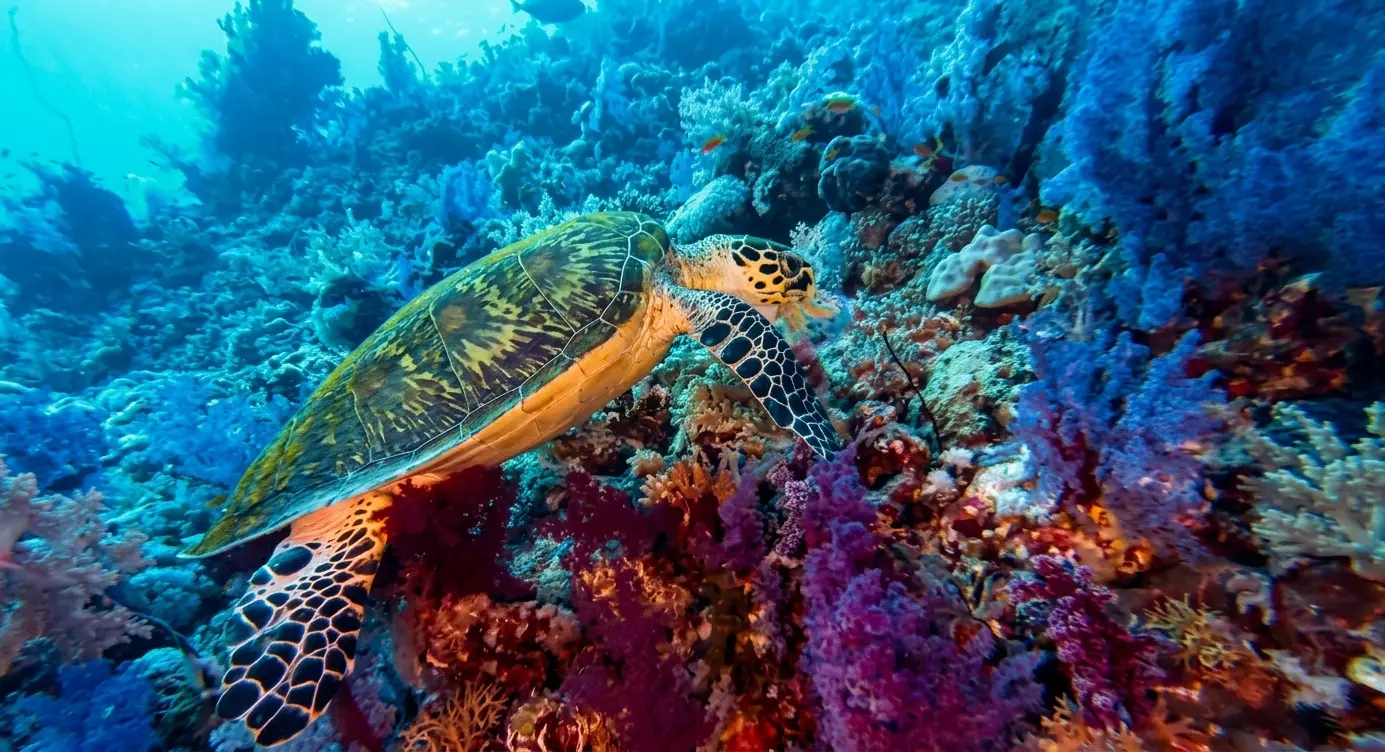
Sharks share the water with a supporting cast that would headline elsewhere. Expect schools of barracuda, big-eye trevally and giant trevally, tuna and amberjack hunting in the current, and pods of dolphins along the western arc. Rays cruise the sandy patches, and mantas are an occasional treat. On the reef itself, look for Napoleon (humphead) wrasse, giant moray eels, sea turtles, and dense clouds of anthias and glassfish shimmering over the coral.
Corals and Reef Structure
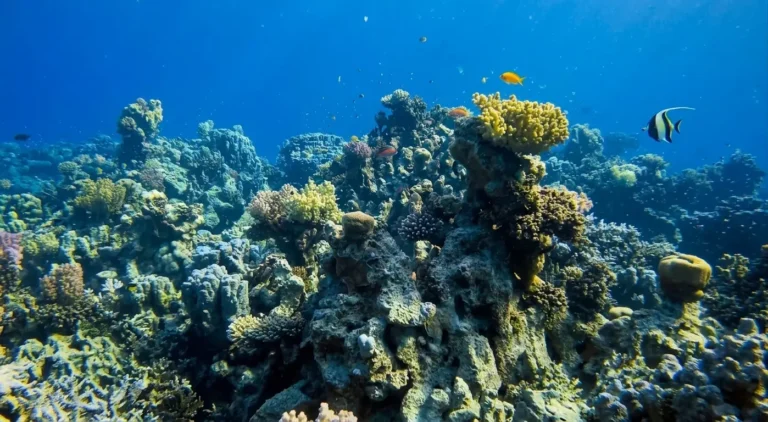
The walls of Rocky Island are among the most pristine in Egypt, precisely because so few divers reach them. Overhanging coral gardens spill down the drop-offs, studded with enormous gorgonian sea fans, black coral bushes in the deeper reaches, and a technicolour blanket of soft corals. Hard corals — brain, table and staghorn — dominate the shallower plateau. The caves and swim-throughs shelter lionfish, sweetlips, bannerfish, and clouds of smaller reef species.
Planning Your Rocky Island, Egypt Liveaboard Trip
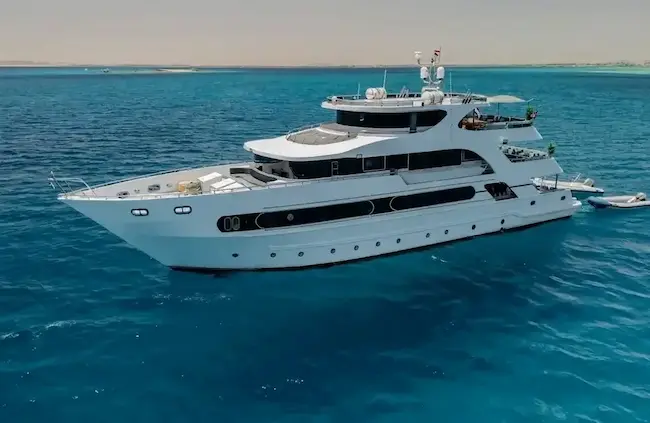
There is no way to day-trip Rocky Island. Diving Rocky Island, Egypt means committing to a multi-day liveaboard, and the journey is part of the adventure. Understanding the logistics upfront will help you choose the right itinerary and set the right expectations.
How to Get There
Liveaboards bound for Rocky Island typically depart from the southern ports of Port Ghalib, Marsa Alam, or Hamata, and occasionally from Hurghada on longer routes. Guests usually fly into Marsa Alam International Airport, which is the closest gateway and dramatically shortens the sailing time to the deep south compared with a Hurghada departure.
Popular Itineraries That Visit Rocky Island
Rocky Island rarely appears on a route by itself. It is almost always paired with its neighbours on classic southern itineraries:
- St. John’s & Rocky Island: The most direct route to the far south, combining the reef systems of St. John’s with Rocky Island and Zabargad.
- Deep South (BDE — Brothers, Daedalus, Elphinstone) extensions: Some longer itineraries link the famous offshore pinnacles with a push down to Rocky Island for the ultimate shark tour.
- Fury Shoals & the Deep South: Routes that blend easier reef diving with the more demanding southern sites for mixed-ability groups.
Most trips run seven nights, with the deep-south legs weather-dependent — captains will only push out to Rocky Island when conditions allow.
Permits and Marine Park Regulations
Rocky Island lies within a protected zone of the southern Red Sea, and diving it requires the appropriate marine park permits. In practice, these are arranged for you by the liveaboard operator — independent access is not possible. Park fees are usually folded into the trip price. Respecting the protected status matters: no gloves in many areas, no touching or collecting, careful buoyancy near the fragile walls, and reef-hook use only where permitted.
Best Time to Dive Rocky Island
Rocky Island can be dived year-round, but the sweet spots balance comfortable water, calm seas, and peak marine-life activity.
- Spring (March–June): Warming water, improving visibility, and reliable shark action. A strong all-round window.
- Autumn (September–November): Arguably the best season. Warm water, the highest chance of oceanic whitetip encounters, and excellent overall conditions.
- Summer (June–August): Warmest water (up to ~29°C) and prime hammerhead potential, though it can be hot topside and busier.
- Winter (December–February): Cooler water and rougher seas can make the exposed crossing to Rocky Island unpredictable; trips still run but weather may reshape the route.
Who Should Dive Rocky Island? Experience & Safety
This is where honesty matters. Rocky Island is a challenging, advanced site, and its remoteness raises the stakes on every dive.
Required Experience Level
At an absolute minimum, divers should hold an Advanced Open Water certification, and most operators strongly prefer 50+ logged dives with proven drift and deep-diving experience. You should be completely comfortable deploying a surface marker buoy (SMB), managing your gas at depth, and holding a controlled position in current along a wall with no bottom beneath you.
The Remoteness Factor
Rocky Island is far from the coast and far from medical facilities. The nearest recompression chamber is hours away. This means:
- Conservative dive profiles are essential — this is not the place to flirt with your no-decompression limits.
- Nitrox is highly recommended and widely available on southern liveaboards to add a margin of safety.
- Diligent surface-interval discipline and hydration reduce your DCS risk.
- Comprehensive dive insurance covering evacuation is non-negotiable.
Essential Gear and Preparation
Come prepared for self-sufficient, current-swept diving:
- A reliable dive computer (a backup is wise on a remote trip).
- A large, high-visibility SMB and a finger spool or reel.
- An audible and/or visual signalling device for pickup in swell.
- An exposure suit matched to the season — typically 5mm for most of the year.
- A reef hook, where local guidelines permit its use on the plateau.
Photography and Videography Tips
Rocky Island rewards underwater photographers who plan ahead. The big draws are wide-angle: sharks against the blue, the sweep of a coral wall, schooling fish backlit by the sun. Because the action often happens in the water column rather than on the reef, patience and positioning beat chasing. Hold your spot on the edge of the plateau, keep your bubbles under control, and let curious sharks come to you. In strong current, a reef hook (where allowed) frees your hands for the shot. For soft coral and gorgonian detail on the walls, drop into the shelter of an overhang and shoot upward toward the light.
Combining Rocky Island With Nearby Dive Sites
Half the magic of the deep south is the neighbourhood. A Rocky Island trip naturally pairs with some of Egypt’s finest reefs.
Zabargad Island
Just a few kilometres away, Zabargad (St. John’s) Island offers a completely different flavour — a larger island with a wreck, shallow lagoons, olivine-rich geology, and gentler reefs. It’s the perfect calm counterpoint to Rocky Island’s intensity and is almost always dived on the same itinerary.
The St. John’s Reef System
Sprawling south of Zabargad, the St. John’s reefs deliver caves, cathedral-like light beams, hard-coral gardens, and a huge diversity of reef life — ideal for balancing out the big-water shark dives with relaxed exploration.
Conclusion: Is Rocky Island, Egypt Worth It?
For the right diver, Rocky Island, Egypt is not just worth it — it’s a career highlight. This remote triangle of rock delivers everything that makes the Red Sea legendary: reliable sharks, prowling pelagics, pristine current-swept walls, and the electric feeling of diving somewhere genuinely wild and hard to reach. It demands respect, experience, and careful planning, and it gives back encounters you’ll be describing for years. If you have the logbook to back it up and a liveaboard berth to the deep south, Rocky Island belongs at the very top of your Egyptian bucket list.
Frequently Asked Questions
Where exactly is Rocky Island in Egypt?
Rocky Island sits in the far south of Egypt’s Red Sea, about 170 km southeast of Marsa Alam and roughly 6 km from Zabargad Island, close to the Sudanese border. It is the southernmost offshore island commonly dived on Egyptian liveaboards.
Do I need to be an advanced diver to dive Rocky Island, Egypt?
Yes. An Advanced Open Water certification is the minimum, and most operators recommend at least 50 logged dives with solid drift- and deep-diving experience. Strong currents, deep walls, and the site’s remoteness make it unsuitable for beginners.
What sharks can you see at Rocky Island?
Grey reef sharks are resident and seen regularly. Depending on the season, divers may also encounter scalloped hammerheads, oceanic whitetips (longimanus), silvertips, silky sharks, threshers, and — rarely — tiger sharks.
When is the best time to dive Rocky Island?
Spring (March–June) and autumn (September–November) offer the best balance of warm water and calm conditions. Autumn is prime time for oceanic whitetips, while summer boosts your chances of hammerheads.
How do you get to Rocky Island?
Only by liveaboard. Boats depart from southern ports such as Port Ghalib, Marsa Alam, or Hamata, usually on seven-night “St. John’s & Rocky Island” or deep-south itineraries. There is no day-boat or shore access.
Is diving at Rocky Island dangerous?
It carries higher risk than sheltered reefs due to strong currents, deep drop-offs, and distance from medical facilities. With advanced skills, conservative profiles, nitrox, an SMB, and proper insurance, it can be dived safely — but preparation is essential.
What is the water temperature and visibility like?
Water temperature ranges from around 22°C in winter to about 29°C in summer. Visibility is typically excellent, commonly 30–40 metres, thanks to the clear, open-ocean water surrounding the island.
Do I need a permit to dive Rocky Island, Egypt?
Yes. Rocky Island lies within a protected southern Red Sea zone, and marine park permits are required. These are arranged by your liveaboard operator and usually included in the trip cost — independent access is not possible.