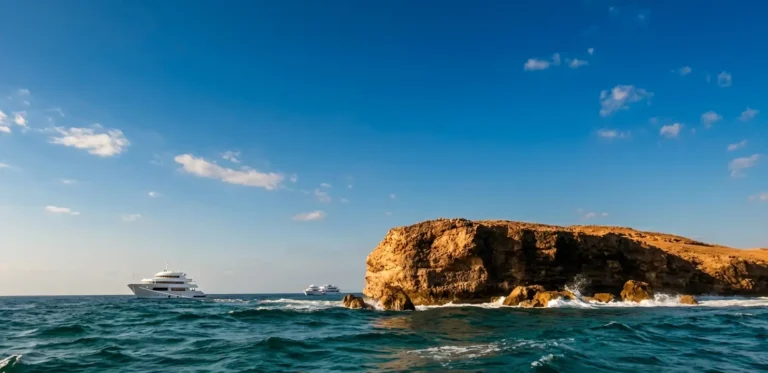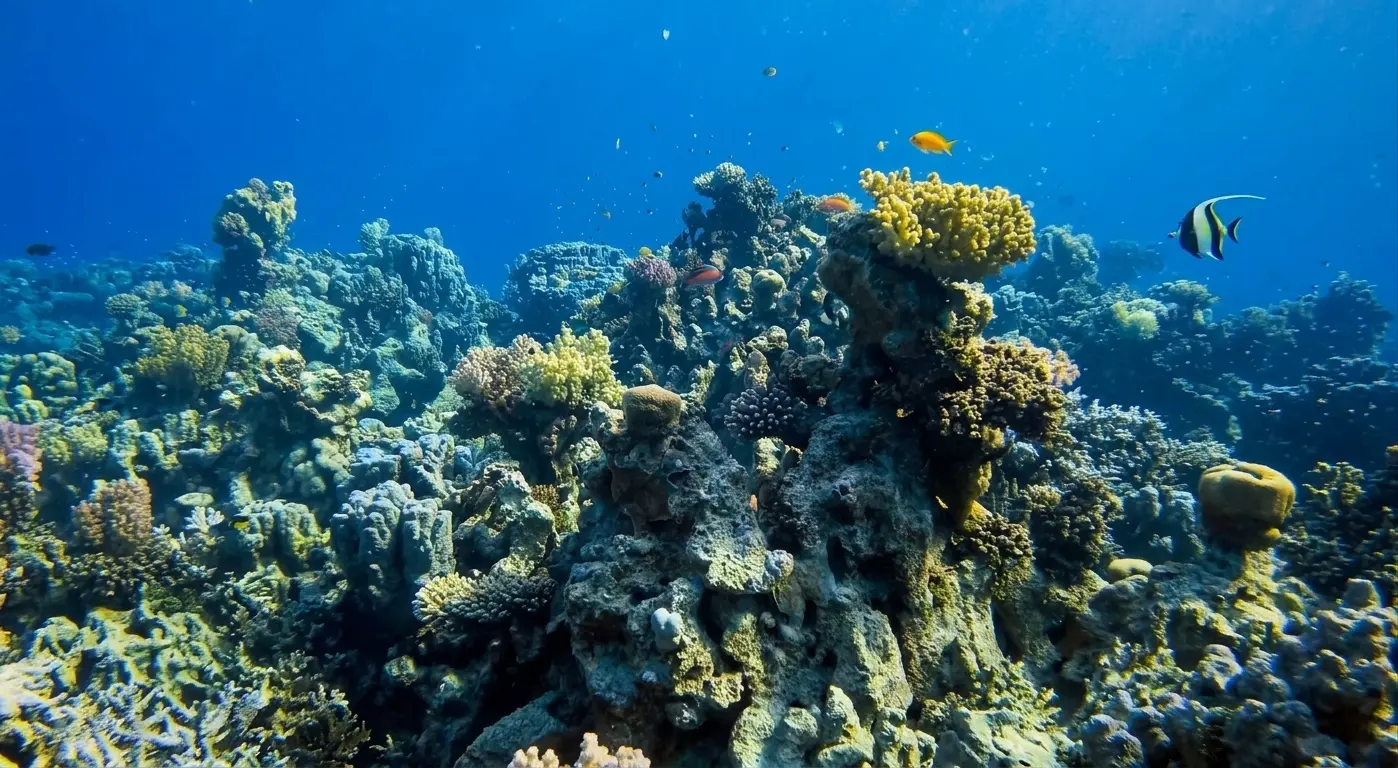
If you have ticked off the reefs of Hurghada and drifted the walls of the north, Zabargad Island diving is where the Red Sea stops feeling familiar and starts feeling wild. Marooned roughly 70 kilometres off Egypt’s southern coast, near the Sudanese border, this uninhabited triangular island is the largest marine park in the southern Red Sea — and one of the last genuinely remote dive destinations in Egyptian waters. There are no jetties, no dive centres, no crowds. Just steep walls smothered in soft coral, a Cold War-era wreck breaking the surface at low tide, resident sharks, nesting turtles, and water so clear it feels like flying.
What makes Zabargad extraordinary is that the island itself is a geological freak: a chunk of Earth’s upper mantle shoved to the surface along the Red Sea rift, made largely of peridotite and studded with the green gemstone peridot that ancient Egyptians mined here 3,500 years ago. That deep-Earth pedigree is a fitting backdrop for diving that consistently delivers big-animal encounters most Red Sea itineraries only promise.
This guide covers everything you need to plan a trip — the best dive sites, the marine life calendar, how to get there, who it’s suited to, safety and conditions, the island’s remarkable history, and answers to the questions divers ask most. Whether you’re comparing liveaboards or simply dreaming, here’s the honest, first-hand-informed picture of what Zabargad Island diving actually delivers.
Where Is Zabargad Island? Location, Geography and Access
Zabargad — also spelled Zabarghad and historically known as St. John’s Island — sits at roughly 23°37′N, 36°12′E in the deep southern Red Sea. It lies about 70–71 km off the Egyptian mainland and only 40–50 km from the Sudanese frontier, placing it firmly within Egypt’s Elba National Marine Park. The island is triangular, measuring approximately 2.6 km east-to-west and 3 km north-to-south, rising to a modest peridotite peak of around 235 metres.
Part of the “Deep South” triangle
Divers rarely visit Zabargad in isolation. It anchors a famous trio of remote sites, and most trips branded “Deep South” or “St. John’s, Rocky Island & Zabargad” thread all three together:
- Zabargad Island — the largest marine park, offering walls, coral gardens, a wreck and sheltered bays.
- Rocky Island — a tiny, barren islet roughly 5 km southeast, ringed by current-swept reef and prized for adrenaline shark action.
- St. John’s Reef — the southernmost reef complex in Egypt, celebrated for its healthy coral, tunnels and caverns.
Why access is liveaboard-only
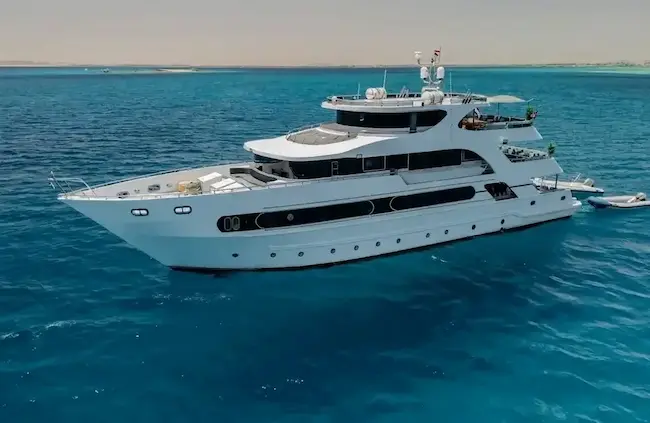
There is no day-boat diving here and no accommodation on the island. The only realistic way to experience Zabargad Island diving is aboard a Red Sea liveaboard on a southern itinerary, typically departing from Port Ghalib, Marsa Alam or Hamata. Because the island is exposed, deep and far offshore, permits and weather dictate the schedule, and most operators require a minimum of around 20 logged dives.
Zabargad Island Dive Sites: A Site-by-Site Breakdown
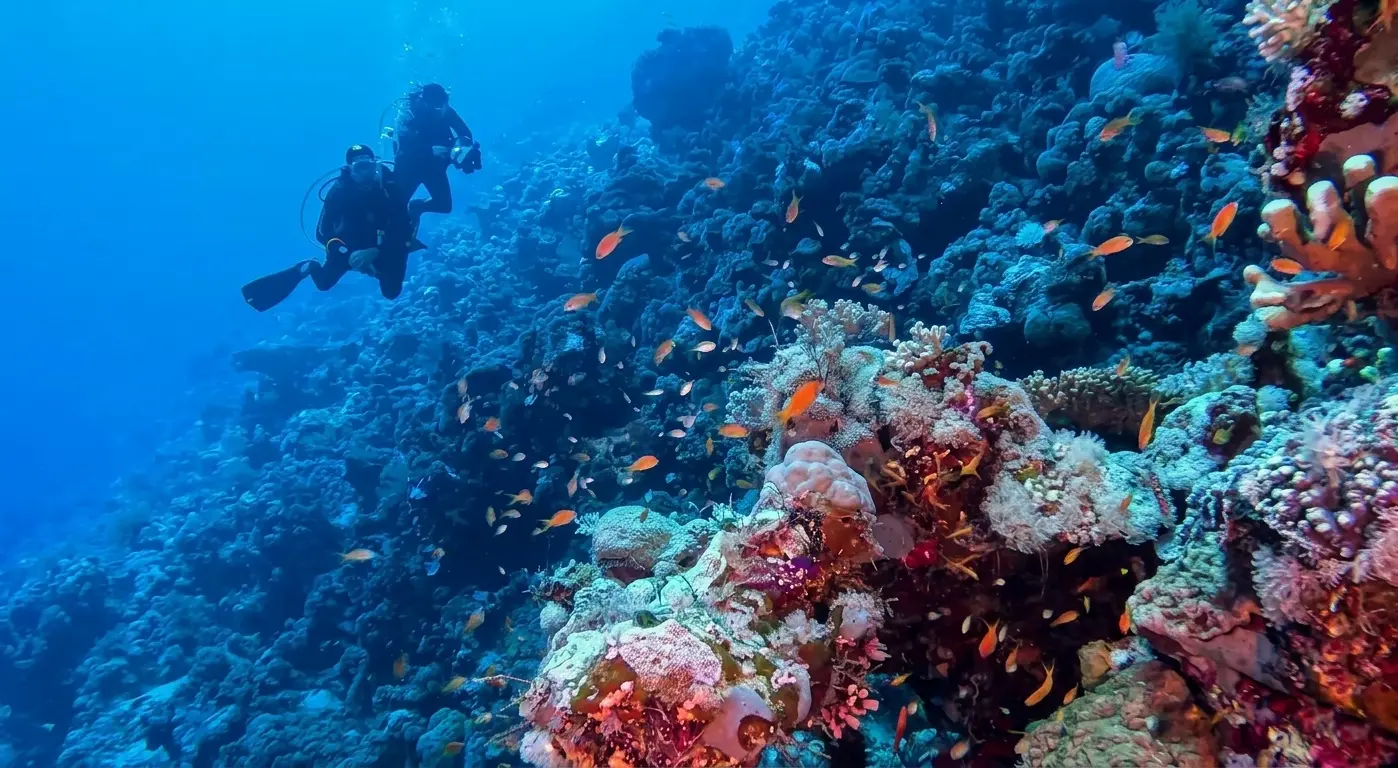
The beauty of Zabargad Island diving is variety within a single mooring. In one day you can drift a shark-patrolled wall in the morning, penetrate a wreck after lunch, and finish with a mellow night dive in a sheltered bay. Here are the signature sites.
Turtle Bay (Southern Fringing Reef)
On the island’s southern side, Turtle Bay is the gentle heart of Zabargad. The fringing reef edge drops to around 10–15 metres before a sandy, coral-dotted slope descends to about 35 metres. Sheltered from prevailing wind and swell, the bay is calm enough for less experienced divers and doubles as one of the finest night-dive sites in the Red Sea.
What you’ll see at Turtle Bay
- Green and hawksbill turtles — most reliably in summer, when females come ashore to nest (peak nesting around August).
- Cuttlefish, octopus, moray eels and crocodilefish on the slope.
- Blue-spotted rays, reef fish and the occasional narrow cave opening in the reef wall.
The North Plateau and Coral Pinnacles
The northern plateau is one of the most popular profiles on the island, where coral pinnacles rise from the seabed and currents concentrate schooling fish. This is prime pelagic-watching territory — hang near the drop-off, watch the blue, and let the big animals come to you.
The South Table and Eastern Walls
The “South Table” and the island’s eastern walls deliver classic Red Sea wall diving: sheer faces cloaked in soft coral, gorgonians and sponges, dropping into deep water. Dusk drift dives along Zabargad’s coral slopes are a highlight that seasoned guides plan the day around.
The Khanka Wreck (The “Russian Wreck”)
No account of Zabargad Island diving is complete without the wreck. Lying in the western/northern bay is a roughly 70–75-metre vessel identified as a Soviet MOMA-class ship, widely believed to be the Khanka — a Cold War-era Russian reconnaissance (“spy”) vessel. Details are famously murky, which only adds to the intrigue.
Diving the wreck
- Depth: The wreck rises from around 24 metres, with the mast breaking the surface at low tide — an eerie, unmistakable marker.
- Structure: The stern section is largely intact — railings, davits, stairs and bridge — and experienced divers can explore the engine room and bridge.
- Life: Decades underwater have transformed it into an artificial reef, dense with glassfish and encrusting invertebrates.
Rocky Island (The Neighbouring Adrenaline Site)
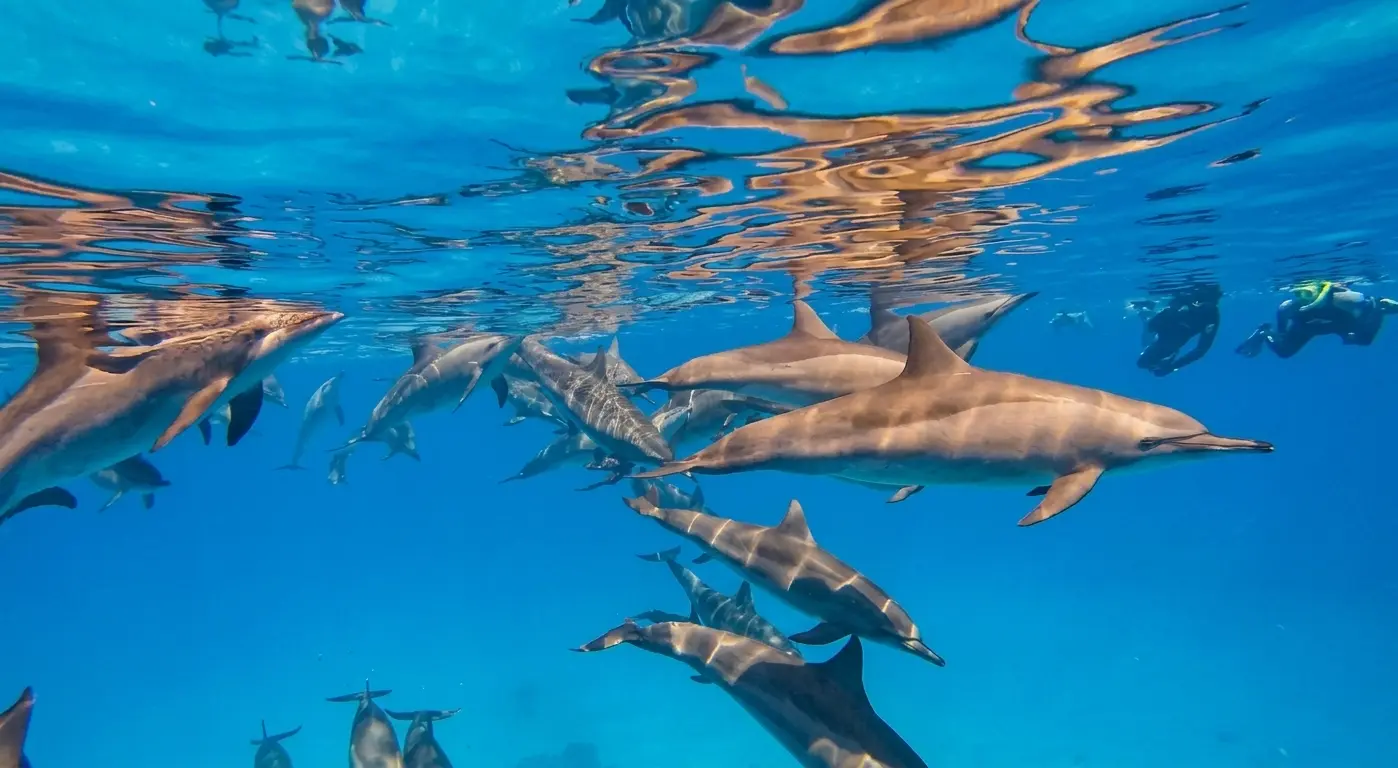
A short hop southeast, Rocky Island is a diver’s fever dream: a fringing reef circling the entire islet, dropping steeply into permanent current. That current fuels lavish soft-coral growth and concentrates life, drawing grey reef and silvertip sharks, giant barracuda, tuna, and — in season — mantas, sailfish and dolphins. The eastern point at dawn is legendary for schooling action and hunting sharks.
Marine Life: What You’ll Encounter Diving at Zabargad Island
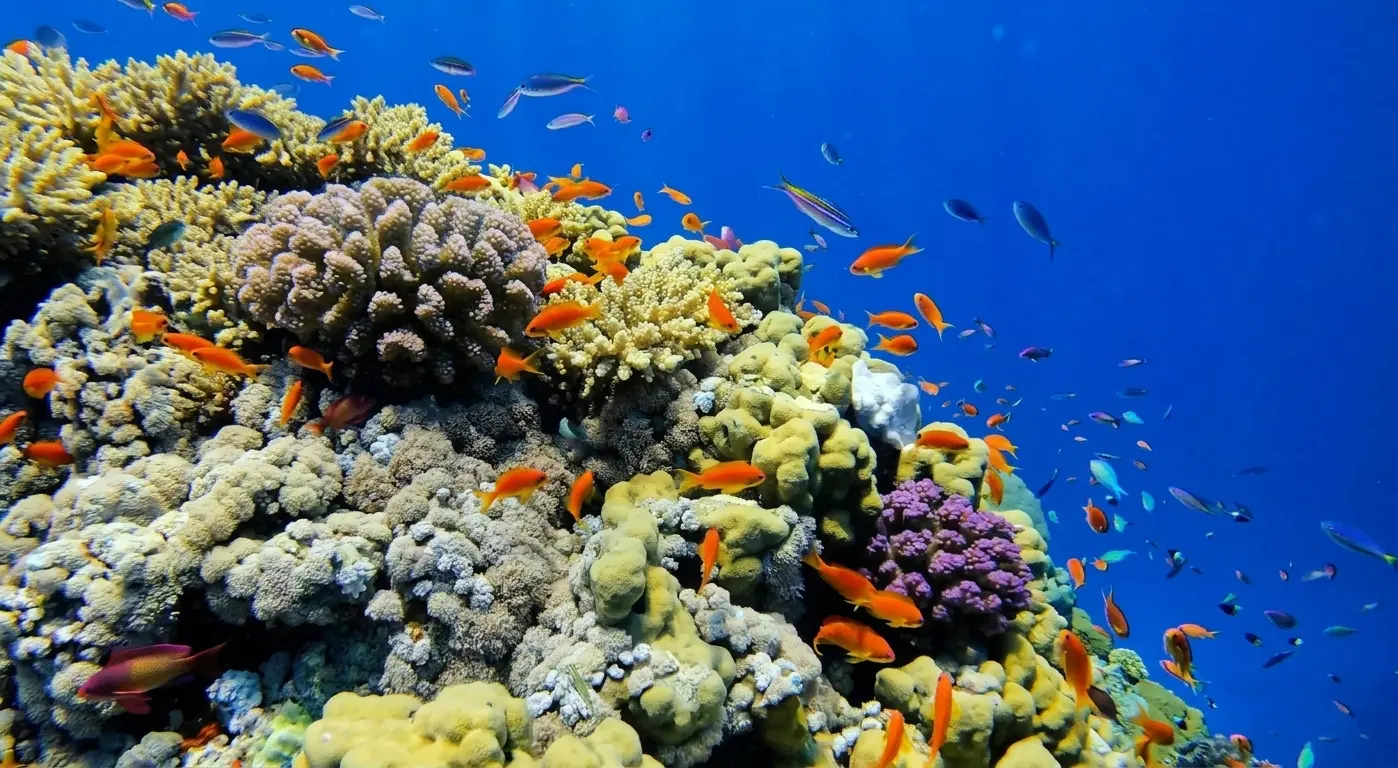
Because Zabargad sits far offshore in deep, nutrient-rich water, it delivers a higher pelagic hit-rate than the reefs and wrecks further north. But it’s not only about big animals — the resident life keeps you busy between the blue-water moments.
Sharks and pelagics
- Oceanic whitetip sharks — the charismatic star of the southern Red Sea, most frequent in autumn.
- Grey reef and silvertip sharks — patrolling the walls and plateaus year-round.
- Scalloped hammerheads — best chances in the warmer months.
- Manta rays — a seasonal treat, especially around the plateaus.
- Barracuda, trevally, tuna and snapper — often in dense, schooling walls.
Reef and resident species
- Green and hawksbill turtles (nesting in summer at Turtle Bay).
- Octopus, cuttlefish, crocodilefish, moray eels and blue-spotted rays.
- Large rays in the shallow bays from late December to early February.
- Vast schools of surgeonfish and snapper that in turn attract hunting sharks.
Best Time for Zabargad Island Diving: Seasons and Conditions
You can dive Zabargad year-round, but conditions and wildlife shift noticeably by season. Water is warmest from July to September (often 28–29°C) and coolest around February (low-to-mid 20s°C). Visibility is generally excellent, frequently exceeding 25–30 metres.
Season-by-season quick reference
| Season | Water & Conditions | Highlights |
|---|---|---|
| Spring (Mar–May) | Warming water, generally settled seas | Excellent all-round diving, building visibility, active reefs |
| Summer (Jun–Sep) | Warmest water, calmest seas | Turtle nesting (Aug), best hammerhead odds, ideal wreck and night dives |
| Autumn (Oct–Nov) | Warm water, some swell | Peak oceanic whitetip season, strong pelagic action |
| Winter (Dec–Feb) | Coolest water, occasional stronger winds/swell | Large rays in the bays (Dec–Feb), quiet, uncrowded sites |
Currents, depth and surface conditions
The southern Red Sea is exposed to strong offshore currents, deep profiles and frequent surface swell. That’s precisely what fuels the marine life, but it also means Zabargad is not a beginner playground. Guides read the current before every dive, and negative entries, drift techniques and good buoyancy are part of daily life here.
Planning Your Trip: Liveaboards, Experience and Logistics
Turning a dream of Zabargad Island diving into a booked trip comes down to choosing the right itinerary and matching it honestly to your experience.
Which itinerary should you book?
- Standard Deep South (7 nights): Departs Port Ghalib, Marsa Alam or Hamata; combines Fury Shoal, Zabargad, Rocky Island and St. John’s. The most common way to sample the region.
- Extended / exploratory itineraries (10–13 nights): More time at Zabargad and Rocky, sometimes with rare permits for overnight island stays and access to the less-dived west and north sides.
- Combination “far south” trips: Occasionally paired with Daedalus or St. John’s-focused routes for more shark walls.
Experience and certification
While there is no single fixed rule, most operators sensibly expect:
- A minimum of around 20 logged dives (often 30+ for the more exposed sites).
- Advanced Open Water certification or equivalent, with comfort to 30 metres.
- Prior experience diving in current and doing negative/drift entries.
- Nitrox (highly recommended) and, for the wreck’s interior, appropriate training and guiding.
What to pack and prepare
- A 3mm–5mm wetsuit depending on season (5mm for winter).
- An SMB and reef hook for current dives, plus a torch for night diving in Turtle Bay.
- Save-a-dive spares, as there are no shops for hundreds of kilometres.
- Travel and diving insurance that covers remote liveaboards and hyperbaric treatment.
The Geology and History Behind Zabargad Island Diving
Part of what elevates Zabargad Island diving above a simple shark trip is standing on — and swimming beside — one of the most geologically significant islands on Earth.
An island made of the mantle
Zabargad is an uplifted sliver of Earth’s sub-continental upper mantle, brought to the surface along the young Red Sea rift where the African and Arabian plates pull apart. The bulk of the island is peridotite, a coarse, olive-green igneous rock rich in olivine and pyroxene. Geologists prize it because it offers a rare, direct window into lithosphere that normally sits many kilometres below the crust — material from an ocean caught in the very act of being born.
The birthplace of peridot
Within that peridotite, gem-quality olivine forms the vivid green gemstone peridot (August’s birthstone). Zabargad is arguably the world’s most famous historical source. Ancient writers called both the island and the gem “topazos,” and mining here dates back to at least 1500 BC under the pharaohs, continuing intermittently into the early 20th century. The Smithsonian holds a 311.78-carat cut Zabargad peridot — long the largest known — and Cleopatra’s fabled “emeralds” are often thought to have been Zabargad peridots.
A modern marine sanctuary
With mining long gone and the island uninhabited, Zabargad’s isolation and strong national-park protection have combined to keep its reefs exceptionally healthy. Few boats visit on any given day, which is exactly why the diving still feels pristine and uncrowded.
How Zabargad Compares to Other Southern Red Sea Sites
To help you set expectations, here’s how Zabargad Island diving stacks up against its two closest neighbours on a typical Deep South route.
| Feature | Zabargad Island | Rocky Island | St. John’s Reef |
|---|---|---|---|
| Difficulty | Mixed — easy bays to demanding walls | Advanced — strong current | Mixed — caverns to walls |
| Signature draw | Wreck, coral gardens, turtles, walls | Sharks & schooling action | Healthy coral, tunnels & caves |
| Wreck diving | Yes (the Khanka) | No | No |
| Night diving | Excellent (Turtle Bay) | Rarely (exposed) | Good at sheltered spots |
| Best for | All-round variety | Adrenaline & sharks | Coral & topography lovers |
Responsible Diving and Conservation at Zabargad
Zabargad’s health is a direct result of its remoteness and protection — and keeping it that way is on us. A few principles matter more here than almost anywhere:
- Maintain flawless buoyancy near the walls and pinnacles; a single fin-kick can undo decades of coral growth.
- Never touch, chase or corner sharks, turtles or rays — observe from a respectful distance.
- Avoid diving Turtle Bay’s beaches during peak nesting and follow your guide’s briefing on nesting-season etiquette.
- Take only photos; the island’s peridot and reef are protected within the marine park.
Frequently Asked Questions About Zabargad Island Diving
Is Zabargad Island diving suitable for beginners?
Not really. While sheltered spots like Turtle Bay are gentle, the region’s strong currents, deep profiles and offshore exposure make it best for Advanced-certified divers with around 20+ logged dives and current experience. Beginners should build skills on northern or central Red Sea trips first.
How do I get to Zabargad Island?
Only by liveaboard. The island is roughly 70 km offshore with no facilities, so you’ll join a “Deep South” itinerary departing from Port Ghalib, Marsa Alam or Hamata. There are no day boats or resorts anywhere near it.
What is the Russian wreck at Zabargad?
It’s a roughly 70–75-metre Soviet MOMA-class vessel, widely believed to be the Khanka, thought to have sunk during the Cold War. It sits from about 24 metres with its mast breaking the surface at low tide, and is now covered in glassfish and marine growth.
When is the best time to dive Zabargad?
Summer (June–September) offers the warmest, calmest water, turtle nesting and strong hammerhead odds, while autumn is peak season for oceanic whitetip sharks. Winter brings large rays to the bays but cooler water and occasional swell.
What sharks can you see at Zabargad Island?
Commonly grey reef and silvertip sharks, with seasonal oceanic whitetips and scalloped hammerheads. Neighbouring Rocky Island significantly boosts your overall shark odds on the same itinerary.
Why is Zabargad Island geologically famous?
It’s an uplifted piece of Earth’s upper mantle exposed at the Red Sea rift, made largely of peridotite. It’s the historic source of the green gemstone peridot, mined here since ancient Egyptian times over 3,000 years ago.
Do I need Nitrox for Zabargad Island diving?
It’s not mandatory but strongly recommended. With repetitive dives, some deeper profiles and the wreck, Nitrox extends bottom time and adds a safety margin. Most southern liveaboards offer it, often as a paid add-on.
How many days do you need at Zabargad?
Zabargad is usually part of a 7-night Deep South trip, with one to two days at the island itself. To dive its lesser-explored west and north sides and enjoy the famous night dives, consider a longer 10–13-night exploratory itinerary.
Final Thoughts: Why Zabargad Belongs on Your Dive List
Few places distil the magic of the Red Sea as completely as this. Zabargad Island diving hands you sharks in the blue, a mysterious wreck with its mast piercing the surface, soft-coral walls in flawless visibility, turtles gliding through sheltered bays, and the quiet thrill of knowing you’re floating above a fragment of the planet’s own mantle. It rewards experience, respects the ocean, and — because so few boats make the journey — still feels like a genuine adventure rather than a scheduled stop.
If you’re ready for the deep south, book a reputable liveaboard, log your dives, brush up your drift technique, and go meet one of Egypt’s last great secrets. Zabargad is waiting — remote, wild, and unforgettable.