If you are searching for the single most iconic dive in the Straits of Tiran, the Jackson Reef Egypt dive site is the answer. Sitting at the northern tip of a chain of four submerged reefs between the Sinai Peninsula and Tiran Island, Jackson Reef delivers everything that made the Northern Red Sea legendary: sheer coral walls plunging into the blue, a haunting shipwreck perched on the reef top, exhilarating drift dives, and the summer promise of schooling hammerhead sharks. It is, quite simply, the reef every diver in Sharm El Sheikh wants to tick off.
What sets this site apart is variety. On a calm morning you can drift a gentle coral garden alongside turtles and glassfish; on a rising tide the same reef transforms into a high-voltage drift that seasoned divers travel across continents to ride. Nutrient-rich currents funnelling through the narrow strait feed some of the healthiest hard and soft coral in the entire Sinai region, while the wreck of the Lara stands as a rusting reminder of just how treacherous these waters can be.
This guide draws on the practical realities of diving Tiran — the topography, the marine life, the currents, the seasons, and the logistics from Sharm El Sheikh — so you can plan a dive that matches your experience and your ambitions. Whether you are a newly certified diver eyeing your first wall or a veteran chasing hammerheads in the open blue, here is everything you need to know before you giant-stride into Jackson Reef.
Why Jackson Reef Is Egypt’s Most Iconic Dive Site
Jackson Reef is the northernmost of the four mid-sea reefs that punctuate the Straits of Tiran, a narrow channel at the very mouth of the Gulf of Aqaba. Together with Woodhouse, Thomas, and Gordon reefs, it forms a submerged mountain range that once stood as a single ridge before erosion carved it into separate peaks that now rise to just beneath the surface. Of the four, Jackson is widely considered the healthiest and most spectacular.
Where Is Jackson Reef Located?
The reef lies roughly midway between the Sinai coast and Tiran Island, at a strategic crossroads where the Gulf of Aqaba meets the wider Red Sea. It is reached almost exclusively by boat, typically as a day trip from the marinas of Sharm El Sheikh (and, less commonly, from Dahab). The strait itself is split into two shipping lanes by the reef chain: the deep Enterprise Passage to the west (used by southbound vessels) and the shallower Grafton Passage to the east (northbound). Those two channels of differing depth are the reason Tiran’s currents behave the way they do.
How Jackson Reef Got Its Name
The four reefs were named after 19th-century British cartographers who first charted these waters. Jackson, Woodhouse, Thomas, and Gordon are not Arabic place names but colonial survey references that stuck — a small historical footnote that many divers find surprising given how “local” the sites feel today.
The Geology Behind the Straits of Tiran
The reef stands atop a deep-water ridge that marks the boundary between two slowly separating continental plates. This tectonic setting, combined with the constant flushing of nutrient-rich water, creates near-perfect conditions for coral. The currents that make Jackson challenging are also the reason its walls are among the most prolific in the Sinai — a trade-off every Tiran diver comes to respect.
The Lara Wreck: History Etched Into the Reef
No description of Jackson Reef is complete without the Lara, the shipwreck that made this site famous well beyond the diving community.
How the Lara Ran Aground
The Lara was a Cypriot merchant freighter, roughly 137 metres long, that ran aground on the reef’s northern edge in the early 1980s (most accounts cite 1981). She struck the reef at night, and the incident is often attributed to a navigational error compounded by fuel problems. She now serves as an unintended navigational marker — a stark warning to other seafarers about the hidden peaks lurking just below the waterline.
What Remains of the Wreck Today
Do not expect a picture-perfect, penetrable wreck. The Lara was systematically salvaged for scrap in 1996, and what remains is largely a skeletal metal frame leaning against the top of the northern reef. Broken sections of the hull have tumbled down the wall towards the northwest corner, with debris scattered well below recreational limits — the deeper structure sits in the domain of technical divers only. Most recreational divers glimpse the twisted metal on the reef top during a north-side dive rather than diving the wreck itself.
Diving the Jackson Reef Egypt Dive Site: Topography & Dive Profiles
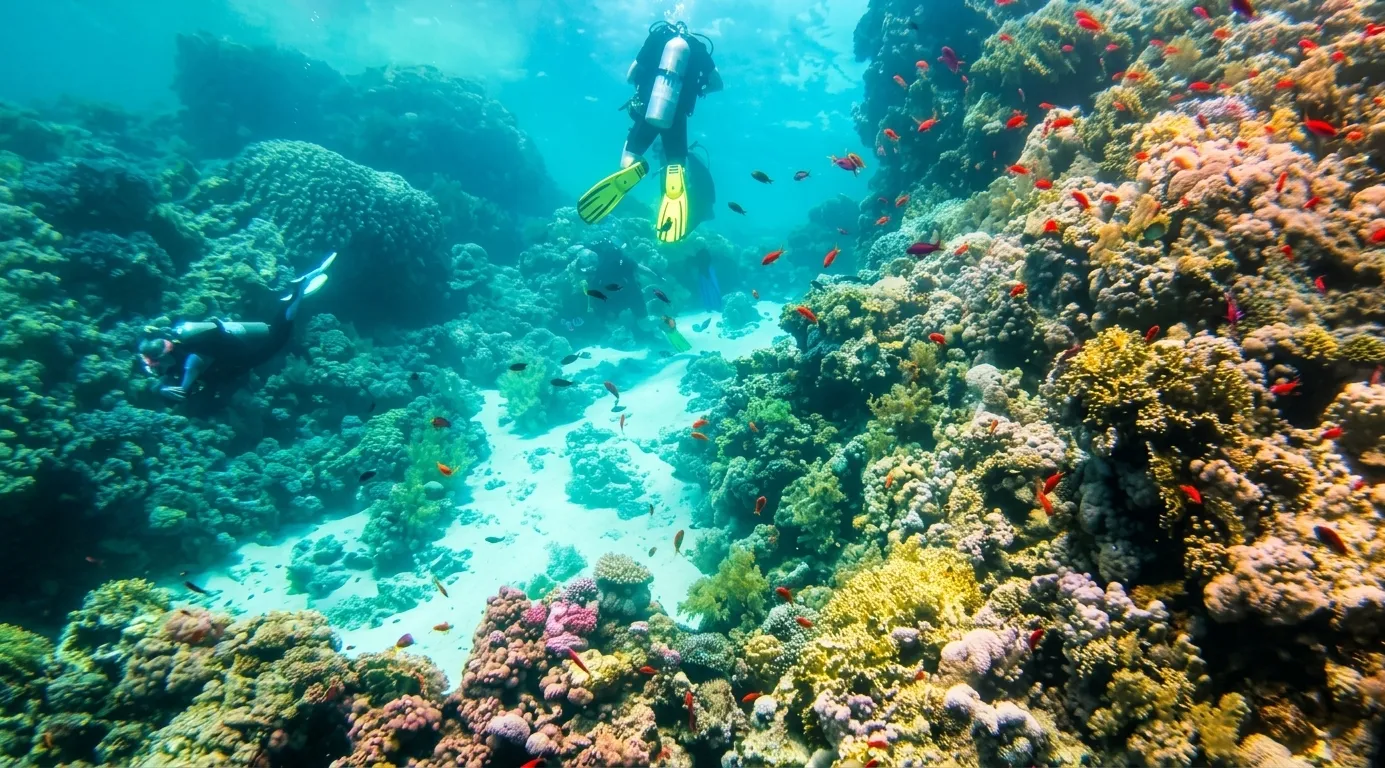
One of the reasons the Jackson Reef Egypt dive site earns its reputation is that it isn’t a single dive — it’s a cluster of very different experiences depending on where you drop in and what the sea is doing that day. Here are the main profiles.
The Sheltered South Side (The Main Dive)
The southern side is where most dives begin. It offers protection from the prevailing north wind and holds the mooring infrastructure: a large metal buoy, a fixed mooring set back from the reef, and additional mooring points at water level. The wall here drops steeply, cut by sandy gullies, to a sandy floor at around 45 metres.
Garden Eels and the Sandy Plateau
At the base of the wall, the sand hosts a colony of garden eels swaying in the current like a field of grass. The shallower plateaus on this side stay in the 3–22 metre range, making them ideal for building up your dive gradually — and, in the shallowest sandy patches, even for snorkellers.
The Western Route & the Saddle to Woodhouse
Heading west from the moorings (commonly called Dive A) takes you along a wall decorated with gorgonian sea fans and a striking red anemone at around 28 metres, before reaching a saddle that connects Jackson to neighbouring Woodhouse Reef.
Gorgonians, Red Anemones & Fire Coral
The southwest corner is carpeted with fire coral (Millepora dichotoma) — beautiful but not to be touched — and is notorious for strong, sometimes violent currents. This is the section that separates confident divers from nervous ones, so plan your turn point conservatively.
The Eastern Drift (Dive B)
When conditions allow — especially on an ebbing tide — divers can drift the eastern side of the reef (Dive B). Around 15 metres down there is a sandy ledge that drops away into the abyss to the north. This zone is a reliable place to spot hawksbill turtles and larger pelagics cruising past, including white-tip and grey reef sharks.
North Jackson & the Blue: Hammerhead Territory
The northern side is the famous “blue water” dive, undertaken only when the sea is calm — usually in high summer. Divers leave the reef behind and swim out into open water at 10–30 metres, scanning the blue for schooling scalloped hammerheads. It is a deep, exposed, current-prone dive with no reef reference for much of it, and it is strictly for experienced divers who are comfortable with blue-water navigation and boat pick-ups.
Named Sub-Sites: Lighthouse, Garden, Ras Goma & the “Washing Machine”
Local dive guides recognise several named zones around the reef, each with its own character:
- The Garden – a lush, sheltered coral garden on the internal side, often described as an underwater aquarium.
- The Lighthouse – the eastern area near old ruins on the plateau, rich in reef fish.
- North Jackson – the blue-water hammerhead dive described above.
- Ras Goma – a corner section exposed to the strait’s flow.
- Sella / “The Washing Machine” – aptly named for the turbulent, unpredictable water that can churn here when currents collide.
The convergence of currents between Jackson and Woodhouse is also known as the “Shark Lookout,” where a line fixed to the reef around 24 metres lets divers hang and watch the open water for passing sharks.
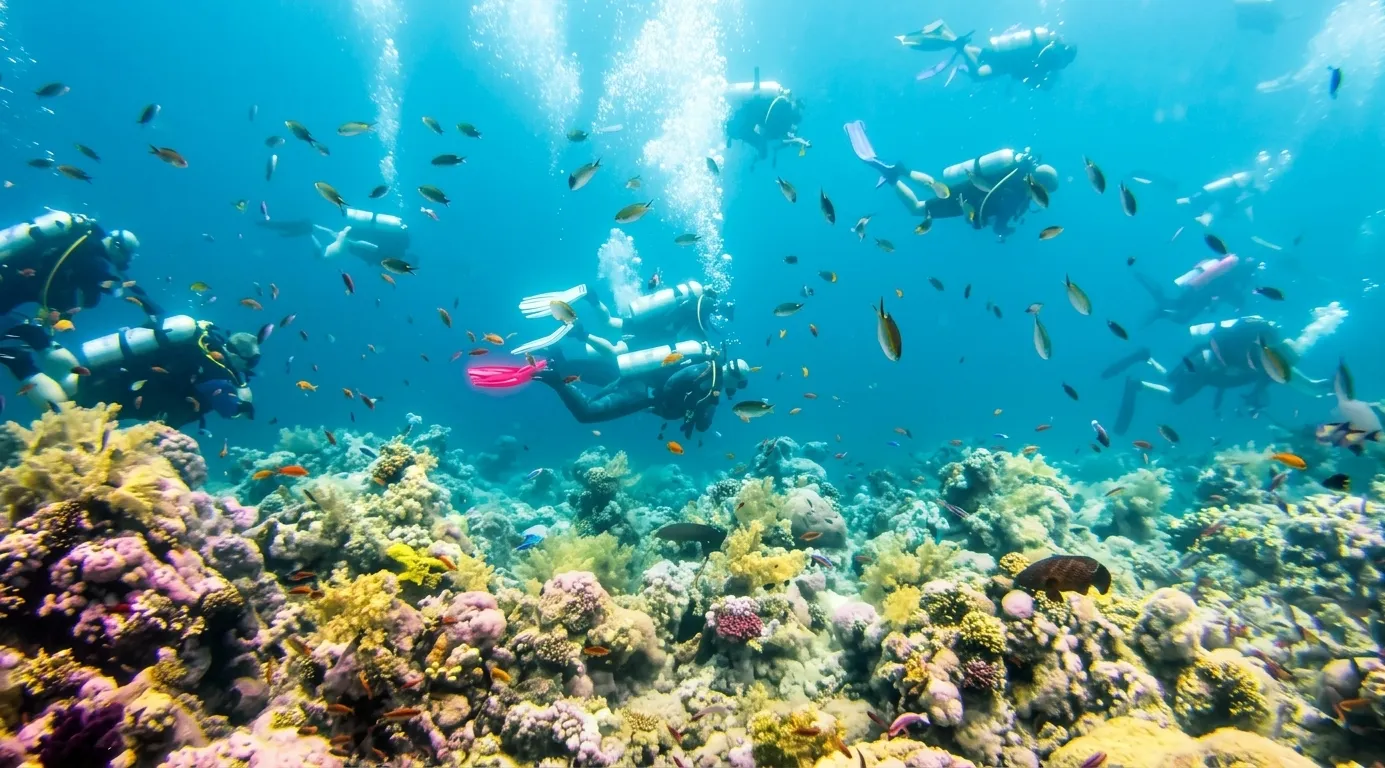
Marine Life at Jackson Reef
The same currents that demand respect also make Jackson one of the richest reefs in the Northern Red Sea.
Corals and Reef Structure
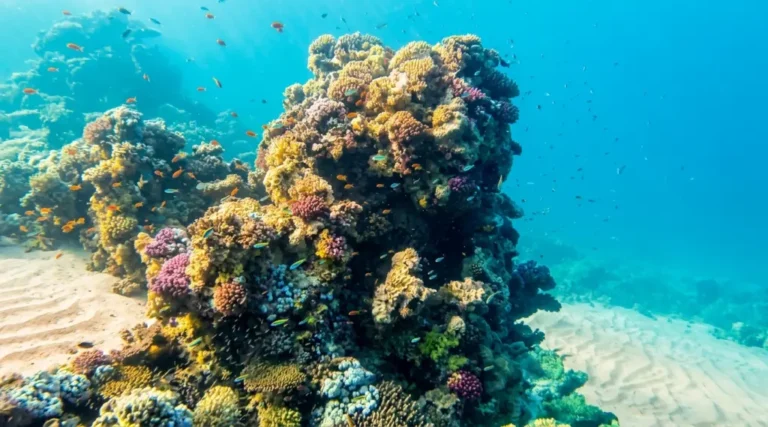
The reef remains in excellent health thanks to careful diver behaviour, thorough briefings, and the nutrient-rich flow. Expect vibrant soft corals, robust table and hard corals, towering gorgonian fans, black coral in the deeper sections, and dense stands of fire coral along the exposed corners.
Reef Fish and Pelagics
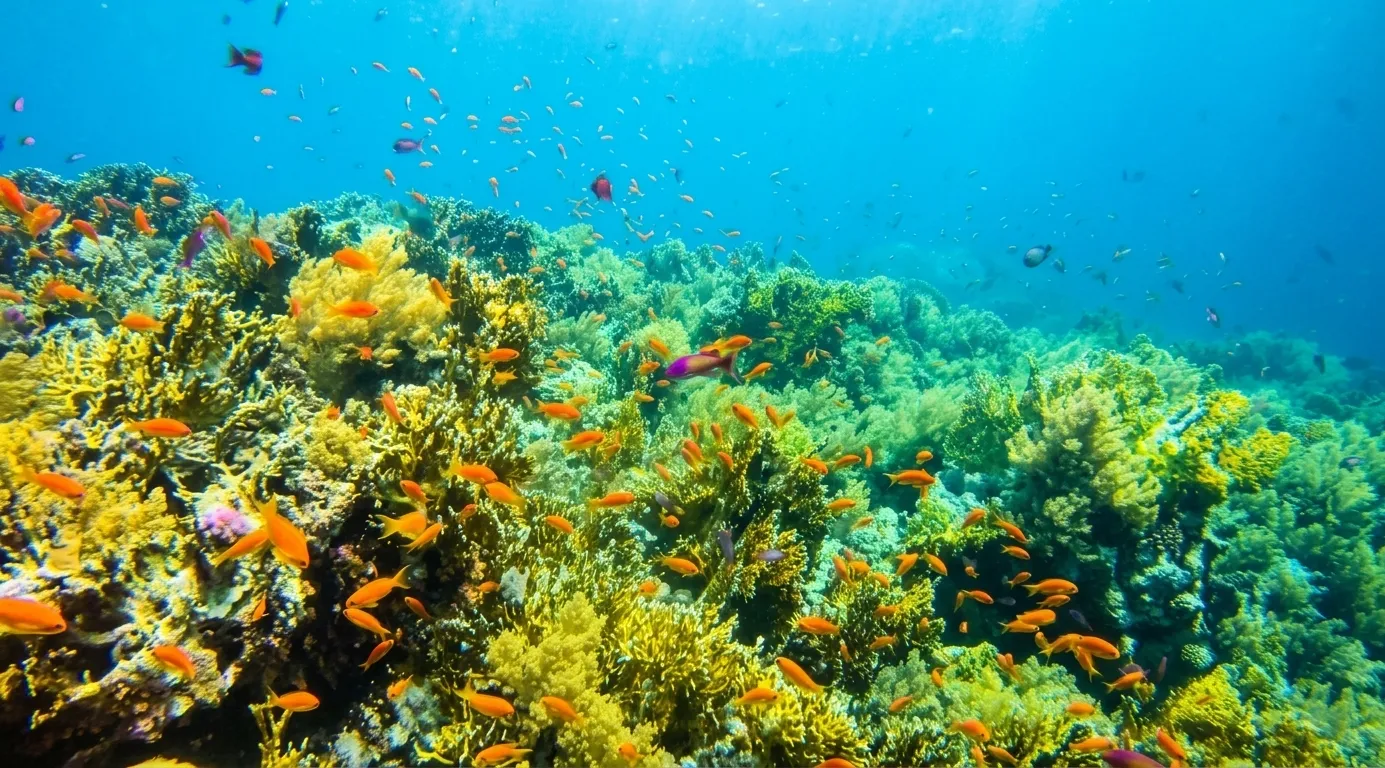
Clouds of orange anthias hover over the coral, while the reef supports groupers, snappers, surgeonfish, unicornfish, and glassfish. Out in the current you’ll often find barracuda, trevallies (jacks), and giant tuna hunting along the wall.
Sharks, Turtles & Rays
Jackson is a genuine shark reef. Depending on season and conditions, divers encounter:
- Scalloped hammerheads (summer highlight, north side)
- White-tip reef sharks and grey reef sharks
- Occasional leopard (zebra) sharks and, rarely, tiger sharks
- Green and hawksbill turtles grazing the shallows
- Eagle rays gliding along the wall, with occasional manta sightings
Diving Conditions, Currents & Safety
Understanding Tiran’s Currents
Currents are the defining feature of Jackson Reef. Because the strait’s two passages differ so sharply in depth, tidal changes funnel water unpredictably around the reef. On a benign day the site is suitable for a broad range of divers; when the current runs, the same site becomes an advanced, sometimes challenging drift. The golden rules are simple: listen to the local dive guide’s briefing, plan a conservative turn point, and never let the current push you off the reef and into the open blue unless that is the plan.
Water Temperature & Visibility
Visibility at Jackson is excellent almost year-round, frequently exceeding 20–30 metres, and it holds up even on the exposed blue-water dives. Water temperature swings meaningfully with the seasons, so gear choice matters.
Experience Level & Certification Requirements
Jackson caters to different levels, but honesty about your ability is essential:
- Open Water divers can enjoy the sheltered south side and coral garden in calm conditions.
- Advanced Open Water divers gain access to the deeper wall, drift profiles, and eastern route.
- Experienced/deep-trained divers only should attempt the north-side blue-water hammerhead dive.
- Technical divers are required for the deeper remains of the Lara.
Best Time to Dive Jackson Reef
The Straits of Tiran are among the most protected dive areas in the region, which means Jackson is divable virtually all year. That said, the experience changes dramatically by season.
Season-by-Season Breakdown
| Season | Water Temp (approx.) | Highlights | Notes |
|---|---|---|---|
| Winter (Dec–Feb) | 21–23°C | Great visibility, quiet reefs | 5mm (or hooded) wetsuit essential; Tiran stays sheltered when open sites are blown out |
| Spring (Mar–May) | 22–25°C | Balanced conditions, fewer crowds | Excellent shoulder season |
| Summer (Jun–Sep) | 26–29°C | Hammerhead season, warm water, calm north side | Hot on land; busiest and priciest period |
| Autumn (Oct–Nov) | 25–27°C | Warm water, tapering hammerheads, great value | Another ideal shoulder window |
When to See Hammerheads
The summer months are the prime window for scalloped hammerheads off North Jackson. Sightings typically run from around mid-June/July through early October, with the peak generally falling in August and September. Afternoon dives (often around mid-afternoon) on a falling tide, when the sea is calm enough for the captain to permit the blue-water dive, offer the best odds. Bear in mind that hammerhead numbers fluctuate year to year, so treat every sighting as a bonus rather than a guarantee.
Planning Your Trip: Sharm El Sheikh Logistics
Getting There by Day Boat
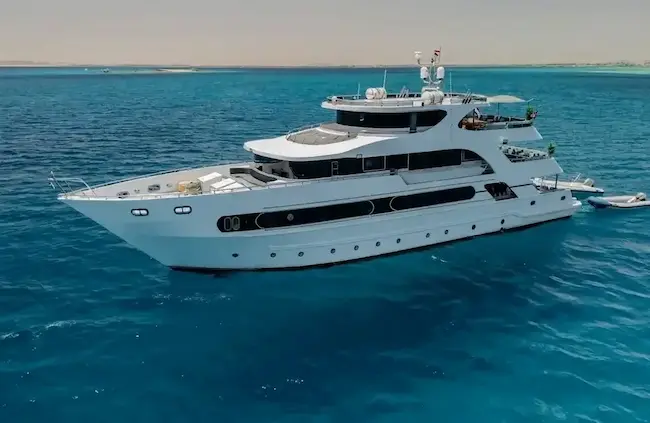
Jackson Reef is reached by day boat from Sharm El Sheikh, typically a scenic ride of roughly one hour from the main marinas. A standard Tiran day trip includes two or three dives, usually pairing Jackson with one of the neighbouring reefs (Woodhouse, Thomas, or Gordon). Because the boat moors on the sheltered south side and the north wind keeps it clear of the reef, Jackson is most often dived in the morning.
What to Pack & Gear Recommendations
- Exposure suit: 3mm in summer, 5mm (hooded optional) in winter.
- Surface marker buoy (SMB) and reel: essential for drift and blue-water dives.
- Nitrox certification: useful for extending bottom time on the walls; enriched air is widely available.
- Reef-safe sunscreen and sun protection: the boat decks get intense.
- A good torch: to bring out colour in overhangs and crevices.
Marine Park Rules & Responsible Diving
Tiran falls within a protected marine area, and part of the reason Jackson remains so pristine is disciplined diver behaviour. Maintain excellent buoyancy, never touch or stand on coral (fire coral will remind you sharply), take nothing but photos, and follow your guide’s briefing to the letter. Marine park fees usually apply and are typically arranged through your dive centre.
Snorkeling at Jackson Reef
Jackson is unusual among the Tiran reefs in offering a shallow sandy area only a few metres deep, which makes it one of the few sites in the strait genuinely suitable for snorkelling. Snorkellers floating over the southern plateau can enjoy vibrant coral, clouds of reef fish, and — on a lucky day — a turtle cruising below, all without descending. Currents can still be strong, so snorkellers should stay close to the boat and heed the crew’s guidance.
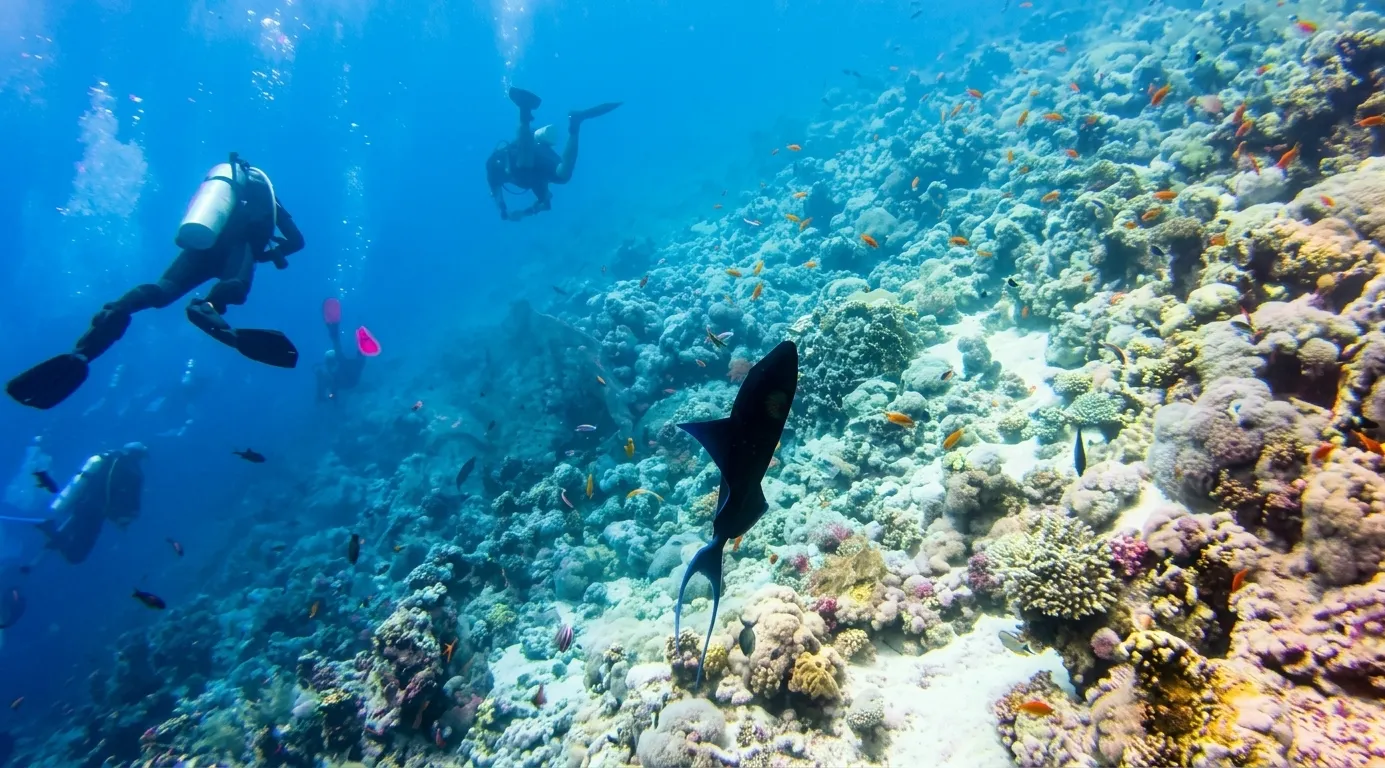
Jackson Reef vs. the Other Tiran Reefs
To understand why Jackson stands out, it helps to see it beside its three siblings in the strait.
| Reef | Position in Strait | Signature Feature | Best For |
|---|---|---|---|
| Jackson Reef | Northernmost | Lara wreck, hammerheads, healthiest coral | All-round diving, sharks, snorkelling |
| Woodhouse Reef | North-central | Long, narrow reef with a canyon; no moorings | Drift diving (weather permitting) |
| Thomas Reef | South-central | Small, rich reef with a dramatic canyon | Coral gardens, experienced divers |
| Gordon Reef | Southernmost | The Loullia wreck and garden eels | Easier conditions, wreck views |
Frequently Asked Questions
Is Jackson Reef suitable for beginner divers?
Yes, in calm conditions. The sheltered southern plateau and coral garden are gentle enough for Open Water divers. However, when currents pick up or on the deeper wall and north-side dives, Jackson becomes an advanced site, so beginners should dive it only under close guidance and skip the blue-water profile.
Can you dive the Lara wreck at Jackson Reef?
Not in any meaningful recreational sense. The Lara was salvaged in 1996 and its remaining structure is a skeletal frame on the reef top, with debris scattered well below recreational depth limits. The deeper wreckage is technical-diving territory, so most divers simply view the visible metal during a north-side dive.
When is the best time to see hammerheads at Jackson Reef?
Summer is the season, roughly mid-June through early October, with a peak in August and September. The blue-water dive off North Jackson is only possible when the sea is calm, and afternoon dives on a falling tide typically offer the best chance.
How do you get to Jackson Reef?
Jackson Reef is accessed by day boat, most commonly from the marinas of Sharm El Sheikh (about an hour’s ride) and occasionally from Dahab. Trips usually combine two to three dives across the Tiran reefs in a single day.
How strong are the currents at Jackson Reef?
They range from mild to genuinely powerful. Because the strait’s two shipping passages differ in depth, tidal changes create unpredictable currents, especially at the southwest corner and in the blue. Always follow your guide’s briefing and plan conservative turn points.
What marine life can you see at Jackson Reef?
Expect healthy hard and soft corals, gorgonians, anthias, groupers, snappers, barracuda, and tuna, plus turtles, eagle rays, white-tip and grey reef sharks, and — in summer — schooling hammerheads. It is one of the most biodiverse reefs in the Straits of Tiran.
What water temperature and wetsuit should I expect?
Water ranges from about 21–23°C in winter to 26–29°C in summer. A 5mm (or hooded) wetsuit is recommended in the cooler months, while a 3mm suit is usually comfortable in high summer.
Can you snorkel at Jackson Reef?
Yes. Jackson has a shallow sandy area only a few metres deep, making it one of the rare Tiran sites suited to snorkelling. Stay near the boat, as currents can still be strong even in the shallows.
Final Thoughts: Why Jackson Reef Belongs on Your Egypt Dive Site Bucket List
Few sites capture the drama and diversity of the Northern Red Sea like the Jackson Reef Egypt dive site. In a single location you have a shipwreck steeped in maritime history, coral walls flourishing on nutrient-rich currents, a snorkel-friendly shallow plateau, and the electric possibility of hammerheads materialising out of the blue. It rewards the cautious and the bold alike — a mellow garden dive one morning, a heart-racing drift the next.
Respect the currents, dive within your training, choose your season with intent, and book with a reputable Sharm El Sheikh operator who knows Tiran’s moods. Do that, and Jackson Reef won’t just be another entry in your logbook — it will be the dive you keep talking about long after you’ve surfaced.